Reagent Storage Tank
View system integration details
This page explains how Outlet Port with Valve is classified within Chemical Manufacturing. Technical values and manufacturer relationships are research references; confirm the current specification and supplier evidence for each order.
A controlled outlet connection on a reagent storage tank that regulates fluid discharge.
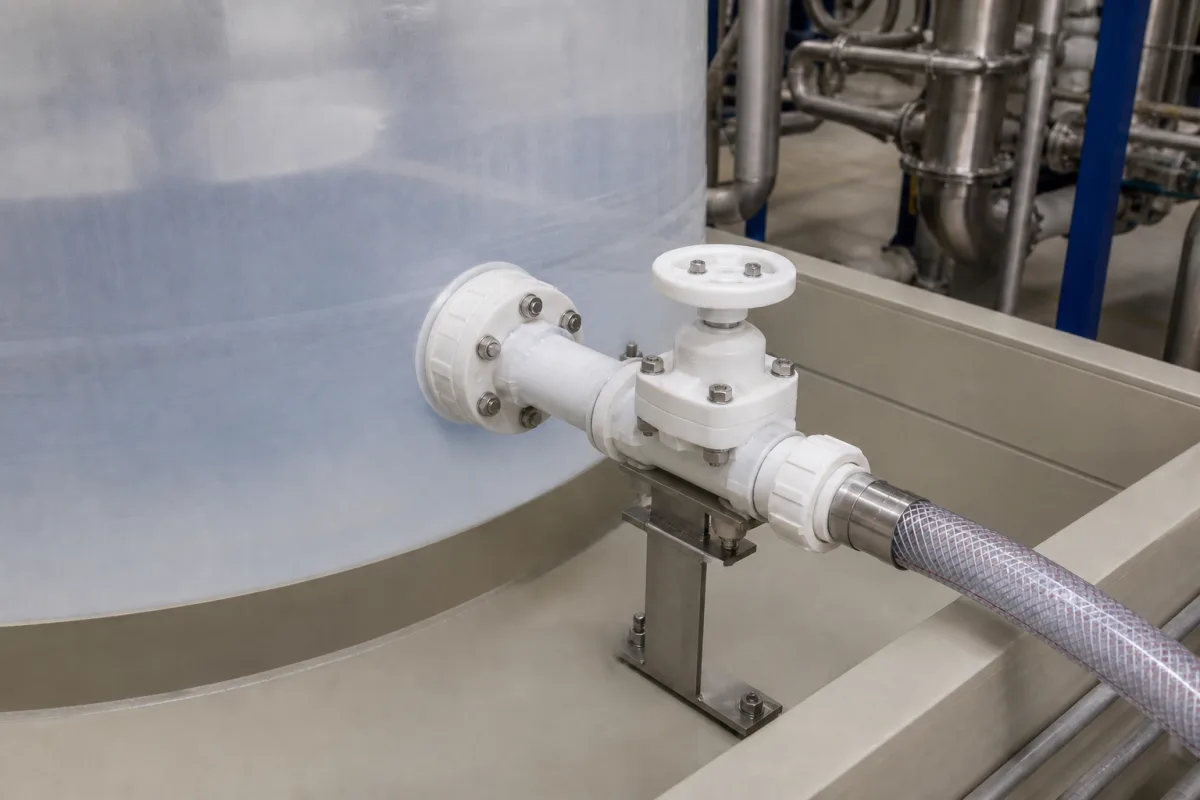
Technical details and manufacturing context for Outlet Port with Valve
| Parameter | Typical range | Notes & selection driver |
|---|---|---|
| Nominal Diameter | 15–100 mm | Common sizes for reagent tanksISO 6708 |
| Operating Temperature | -20–150 °C | Seal material limits range |
| Leakage Rate | 0.01 ml/min | Class A seat leakageISO 5208 |
| Flow Coefficient | 2.5–120 Cv | Depends on size and trim |
| Body Material | 316L | Corrosion resistant for chemicalsASTM A351 |
| Seat Material | PTFE | Chemical compatibilityASTM D4894 |
| Connection Type | Flanged | Standard for tank outletsISO 7005 |
| Actuation Type | Manual | Optional pneumatic/electric |
| Weight | 2–25 kg | Varies with size and material |
Ranges are indicative industry figures for RFQ preparation, not a supplier commitment. Confirm every value and standard with the legal manufacturer before ordering.
| pressure: | 0 to 10 bar (g) |
| flow rate: | 0.5 to 50 L/min |
| temperature: | -20°C to +150°C |
| slurry concentration: | Up to 30% solids by weight |
Indicative industry ranges for design and RFQ preparation. Confirm the exact figures and applicable standard with the manufacturer before specifying.
Quoted from the published standard.
A practical evidence checklist for RFQ preparation and supplier evaluation.
Compare the published product scope and source details, then include your specifications and quantity in an enquiry.
Manufacturer profiles associated with Outlet Port with Valve.
Explore company information and manufacturing capabilities, then discuss the scope of your project with a relevant supplier.
Ask for use case, specification boundaries, supplier type, and RFQ preparation information for this product.
The body material is stainless steel 316L (ASTM A351), and the seat material is PTFE (ASTM D4894). EPDM is also listed as a material on file, likely for seals or gaskets. Verify material compatibility with your specific chemicals.
The operating pressure range is 1.0 to 1.6 MPa. The operating temperature range is -20°C to 150°C, limited by the seal material. Confirm these values for your specific model and application.
The connection type is flanged, per ISO 7005. This is standard for tank outlets. Ensure your piping system matches the flange standard and size.
The standard actuation is manual, but optional pneumatic or electric actuation is available. This allows for remote or automated control of fluid discharge. Confirm the actuation type with the supplier.
This component is essential for the following industrial systems and equipment:
Editorial classification, named public sources where available, and source-reviewed manufacturer records.
Compare manufacturer profiles with relevant product and process capability.