Editorial Technical Reference

Backlight Unit

This page explains how Backlight Unit is classified within Computer, Electronic and Optical Product Manufacturing. Technical values and manufacturer relationships are research references; confirm the current specification and supplier evidence for each order.

Technical Definition & Core Assembly

A backlight unit is an essential component of LCD display panels that generates and distributes light behind the liquid crystal layer.
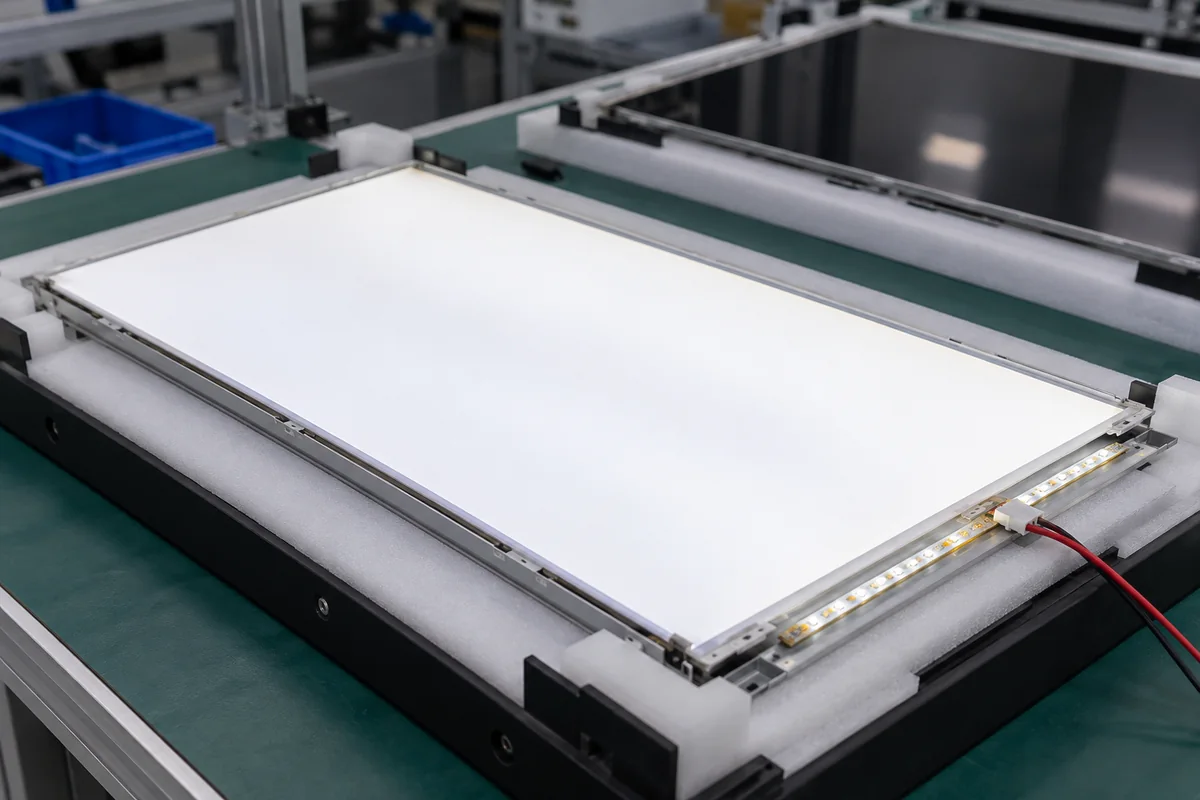
Representative product image. Confirm appearance and specifications with the manufacturer.

Product Specifications

Technical details and manufacturing context for Backlight Unit

Definition
A backlight unit is an essential component of LCD display panels that generates and distributes light behind the liquid crystal layer. It enables the display to be visible by illuminating the pixels from behind, as LCDs themselves do not emit light. The unit typically consists of light sources, light guides, diffusers, and optical films that work together to create uniform brightness across the entire display surface. In the context of the Computer, Electronic and Optical Product Manufacturing industry, this component is used in a wide range of applications, from small portable devices to large monitors and televisions. The backlight unit is designed to meet specific performance parameters, including screen size, luminance, uniformity, color gamut, operating and storage temperatures, input voltage, power consumption, thickness, weight, LED lifetime, and viewing angle. These parameters are provided as reference ranges and must be verified for the actual model or application. Materials commonly used include polycarbonate, PMMA, PET, LED chips, and aluminum. The unit operates by converting electrical energy into light through LED or CCFL sources, which is then guided and distributed evenly using light guide plates and optical films. For procurement, it is important to confirm model-specific values and standards with the legal manufacturer or supplier, as the directory does not guarantee compliance or certification.
Working Principle
The backlight unit operates by converting electrical energy into light through LED or CCFL light sources. This light is then guided and distributed evenly across the display area using light guide plates and optical films. The light passes through multiple layers including diffusers and brightness enhancement films to eliminate hotspots and create uniform illumination before reaching the LCD panel. The efficiency and uniformity of this process are critical for display quality, and the design must balance factors such as thickness, weight, and power consumption.
Common Materials
Polycarbonate, Polymethyl methacrylate (PMMA), Polyethylene terephthalate (PET), LED chips, Aluminum
Technical Parameters
ParameterTypical rangeNotes & selection driver
Screen Size7–65 inchDiagonal measurement of the LCD panel
Luminance300–1000 cd/m²Typical for indoor to high-brightness outdoor
Uniformity≥80 %Ratio of minimum to maximum luminance across the active area
Color Gamut72–100 % NTSCPercentage of NTSC color space coverage
Operating Temperature-20–70 °CNon-condensing humidity
Storage Temperature-30–80 °CFor non-operating conditions
Input Voltage9–36 V DCTypical for LED backlight units
Power Consumption5–50 WDepends on size and luminance
Thickness1.0–10.0 mmEdge-lit designs are thinner than direct-lit
Weight0.1–5.0 kgVaries with size and materials
LED Lifetime30000–50000 hTime to 70% lumen maintenance (L70)
Viewing Angle70–89 °Typical for LCD backlight

Ranges are indicative industry figures for RFQ preparation, not a supplier commitment. Confirm every value and standard with the legal manufacturer before ordering.

Components / BOM
  • LED Array
    Primary light source that converts electrical energy to light
    Material: Gallium nitride semiconductor
  • Light Guide Plate Part
    Distributes light evenly across the display area
    Material: PMMA or polycarbonate
  • Diffuser Sheet Part
    Scatters light to eliminate hotspots and create uniform illumination
    Material: PET with microstructures
  • Reflector Sheet Part
    Redirects backward light toward the display
    Material: PET with reflective coating
  • Prism Sheet Part
    Enhances brightness and viewing angle
    Material: PET with prismatic structures
  • CCFL Light Source Optional
    Cold-cathode lamp version of the light source, used instead of an LED array.

Applied To / Applications

This component is essential for the following industrial systems and equipment:

Industrial Ecosystem & Supply Chain Structure

Complementary Systems
Downstream Applications
Specialized Tooling

Application Fit & Sizing Matrix

Operational Limits
pressure: Atmospheric (non-pressurized)
other spec: Humidity: 10-90% RH non-condensing
temperature: -20°C to +70°C
Media Compatibility
✓ Clean room environments ✓ Electronics assembly lines ✓ Display testing stations
Unsuitable: High-vibration industrial machinery
Sizing Data Required
  • LCD panel dimensions (mm)
  • Required luminance (nits)
  • Power supply voltage (VDC)

Reliability & Engineering Risk Analysis

Failure Mode & Root Cause
LED Degradation
Cause: Thermal stress from prolonged operation exceeding design temperature limits, leading to phosphor deterioration and lumen depreciation.
Inverter/Driver Circuit Failure
Cause: Capacitor aging (electrolytic drying) and voltage spikes causing component breakdown in power supply circuits.
Maintenance Indicators
  • Flickering or intermittent illumination indicating power instability
  • Dark spots or uneven brightness across display surface
Engineering Tips
  • Implement active thermal management with proper heat sinking and maintain ambient temperature below 40°C
  • Use surge protection devices and maintain stable input voltage within ±10% of rated specification

Indicative industry ranges for design and RFQ preparation. Confirm the exact figures and applicable standard with the manufacturer before specifying.

Compliance & Manufacturing Standards

Applicable Standards
ISO 9241-307:2008 (Ergonomic requirements for display devices) ANSI/IES RP-16-17 (Nomenclature and Definitions for Illuminating Engineering) CE marking (EU compliance for electrical safety and EMC under Low Voltage Directive 2014/35/EU and EMC Directive 2014/30/EU)

Quoted from the published standard.

Manufacturing Precision
  • Luminance uniformity: +/- 15% across display area
  • Thickness variation: +/- 0.2mm across panel surface
Quality Inspection
  • Luminance and color uniformity test using spectroradiometer
  • Thermal cycling test (-20°C to +70°C for 500 cycles)

Manufacturers of Backlight Unit

Manufacturer profiles associated with Backlight Unit.

Sourcing Backlight Unit from China?
Tell us your specification and target quantity — we will match it against manufacturer records and come back with the factories that fit.
Request manufacturers We manufacture this

Manufacturer listings support early research and capability understanding. They are not certification, ranking, or transaction guarantees.

Technical documentation
Request current drawings, revision history, and a signed specification sheet.
Manufacturing capability
Verify equipment lists, process limits, capacity, and representative production evidence.
Inspection readiness
Confirm test methods, calibrated equipment, sampling plans, and traceable reports.
Supplier transparency
Check the legal entity, factory address, ownership, certifications, and direct contacts.

CNFX does not score or rank suppliers. Buyers must verify all claims and documents with the legal manufacturer before ordering.

Supply Chain Compatible Machinery & Devices

Industrial Smart Camera Module

The Industrial Smart Camera Module is a compact, self-contained vision processing unit designed for integration into industrial machinery and production lines.

Explore Specs →
Surface Mount Resistor

Passive electronic component for current limiting and voltage division in circuits

Explore Specs →
Surface Mount Capacitor

A surface mount capacitor is a fundamental electronic component used for energy storage, filtering, coupling, and decoupling in electronic circuits.

Explore Specs →
Surface Mount Technology (SMT) Pick-and-Place Machine

Automated machine that precisely places electronic components onto printed circuit boards.

Explore Specs →

Frequently Asked Questions

What is the primary function of a backlight unit?

The primary function is to provide uniform illumination behind the liquid crystal layer of an LCD panel, making the display visible. Since LCDs do not emit light themselves, the backlight unit is essential for image visibility.

What materials are commonly used in backlight units?

Common materials include polycarbonate, polymethyl methacrylate (PMMA), polyethylene terephthalate (PET), LED chips, and aluminum. These are used for light guides, diffusers, and structural support.

What are typical performance parameters for backlight units?

Typical parameters include screen size from 7 to 65 inches, luminance from 300 to 1000 cd/m², uniformity of at least 80%, color gamut of 72-100% NTSC, operating temperature -20 to 70°C, storage temperature -30 to 80°C, input voltage 9-36 V DC, power consumption 5-50 W, thickness 1.0-10.0 mm, weight 0.1-5.0 kg, LED lifetime 30,000-50,000 hours, and viewing angle 70-89 degrees. These are reference ranges and must be confirmed for specific models.

How should I verify the suitability of a backlight unit for my application?

You should consult the legal manufacturer or supplier to confirm model-specific values for parameters such as luminance, uniformity, and electrical specifications, as well as any applicable standards. The directory provides reference ranges only and does not certify compliance.

Data Basis

Editorial classification, named public sources where available, and source-reviewed manufacturer records.

Preliminary Technical Classification
This page supports structured research, RFQ preparation, and supplier evaluation. It does not replace buyer-led supplier qualification, standards review, or technical approval.
Buyer enquiry

Request manufacturing insight for Backlight Unit

Ask for use case, specification boundaries, supplier type, and RFQ preparation information for this product.

Where it goes
Straight to the CNFX editorial desk, and to the manufacturer if this product is linked to a claimed profile. Nothing is broadcast to a supplier list.
Your details stay here
We do not sell or rent enquiry data, and we do not add you to a mailing list. Used only to answer this request.
No commission, no middleman
CNFX is a directory. We take no cut of any order and never negotiate on a supplier's behalf.
What we don't claim
A listing is not an endorsement. Qualify every supplier and verify every figure yourself before ordering.

Your business information is used only to process this request.

Thank you! Your message has been sent. We'll respond within 1–3 business days.
Sorry, we couldn't send your message. Please try again, or email us at contact@cnfx.com.

Need to Manufacture Backlight Unit?

Compare manufacturer profiles with relevant product and process capability.

Previous Product
XY Positioning Stage
Last Product
Get QuotesChat