Industry-Verified Manufacturing Data (2026)

Central Processing Unit (CPU)/Microprocessor

Based on aggregated insights from multiple verified factory profiles within the CNFX directory, the standard Central Processing Unit (CPU)/Microprocessor used in the Computer, Electronic and Optical Product Manufacturing sector typically supports operational capacities ranging from standard industrial configurations to heavy-duty production requirements.

Technical Definition & Core Assembly

A canonical Central Processing Unit (CPU)/Microprocessor is characterized by the integration of Arithmetic Logic Unit (ALU) and Control Unit. In industrial production environments, manufacturers listed on CNFX commonly emphasize Silicon construction to support stable, high-cycle operation across diverse manufacturing scenarios.

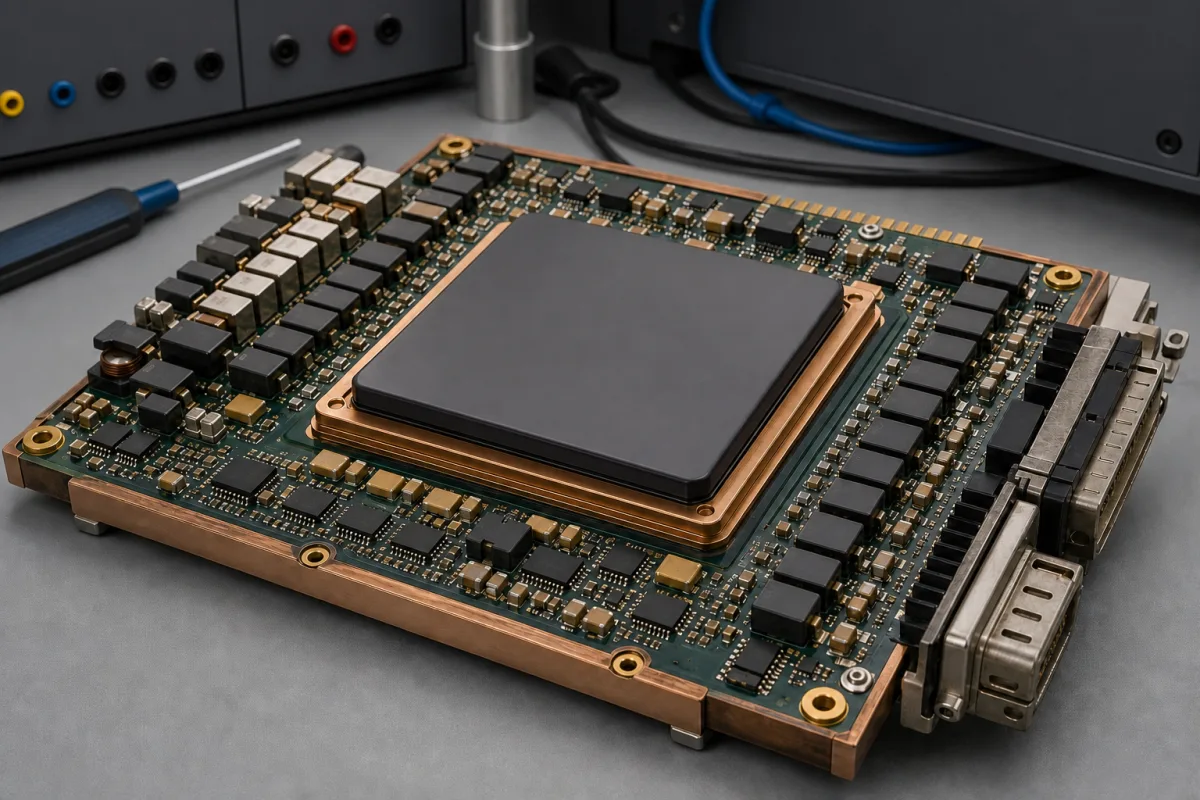
The primary electronic circuitry within a computer's control unit that executes instructions and performs calculations.
Product Specifications

Technical details and manufacturing context for Central Processing Unit (CPU)/Microprocessor

Definition
As the core component of the control unit in a computer system, the CPU/microprocessor interprets and executes most of the commands from the computer's hardware and software. It performs arithmetic, logic, controlling, and input/output operations specified by the instructions in the program, acting as the brain of the computer where most calculations take place.
Working Principle
The CPU operates by fetching instructions from memory, decoding them to understand what operation is required, executing the operation using its arithmetic logic unit (ALU) and control unit, and then storing the results back in memory or registers. This fetch-decode-execute cycle occurs billions of times per second, synchronized by a clock signal.
Common Materials
Silicon, Copper, Gold
Technical Parameters
  • Clock speed indicating how many cycles the CPU can execute per second (GHz) Per Request
Components / BOM
  • Arithmetic Logic Unit (ALU)
    Performs arithmetic and logical operations on data
    Material: silicon
  • Control Unit
    Directs operation of the processor by controlling data flow between CPU components
    Material: silicon
  • Registers
    Small, fast storage locations that hold data and instructions currently being processed
    Material: silicon
  • Cache Memory
    High-speed memory that stores frequently accessed data to reduce access time
    Material: silicon
Engineering Reasoning
0.6-1.4 V core voltage, 2.0-5.0 GHz clock frequency, -40°C to 125°C junction temperature
Silicon junction temperature exceeds 150°C, electromigration reaches 10^6 A/cm² current density, gate oxide breakdown at 5-10 MV/cm electric field
Design Rationale: Thermal runaway from power density exceeding 100 W/cm², electromigration at current densities above 10^5 A/cm², time-dependent dielectric breakdown at electric fields exceeding 4 MV/cm
Risk Mitigation (FMEA)
Trigger Electromigration at current densities exceeding 10^5 A/cm²
Mode: Open circuit in interconnect metallization
Strategy: Copper interconnects with barrier layers, current density limits of 5×10^5 A/cm², redundant vias
Trigger Thermal cycling between -40°C and 125°C at 1000 cycles
Mode: Solder joint fatigue cracking
Strategy: Underfill encapsulation, low-CTE substrate materials, controlled collapse chip connection

Industry Taxonomies & Aliases

Commonly used trade names and technical identifiers for Central Processing Unit (CPU)/Microprocessor.

Applied To / Applications

This component is essential for the following industrial systems and equipment:

Industrial Ecosystem & Supply Chain DNA

Complementary Systems
Downstream Applications
Specialized Tooling

Application Fit & Sizing Matrix

Operational Limits
pressure: Atmospheric (1 atm) with cooling system maintaining thermal limits
other spec: Power consumption: 35W to 250W typical, Clock speed: 1.5GHz to 5.5GHz, Voltage: 0.6V to 1.5V
temperature: 0°C to 85°C (operational), -40°C to 125°C (storage)
Media Compatibility
✓ Clean air environments with controlled humidity (40-60% RH) ✓ Electrically isolated mounting with thermal interface material ✓ Stable DC power supply with proper voltage regulation
Unsuitable: High-vibration industrial environments without shock absorption, conductive dust/particulates, or liquid immersion
Sizing Data Required
  • Required computational throughput (instructions per second)
  • Thermal design power (TDP) and cooling solution constraints
  • Memory bandwidth requirements and supported interfaces

Reliability & Engineering Risk Analysis

Failure Mode & Root Cause
Thermal throttling and degradation
Cause: Excessive heat accumulation due to inadequate cooling, dust buildup on heatsinks, or degraded thermal interface material, leading to reduced performance, electromigration, and eventual silicon failure.
Electrostatic discharge (ESD) damage
Cause: Sudden voltage spikes from improper handling, poor grounding during installation, or power supply irregularities, resulting in microscopic gate oxide breakdown or latch-up events that permanently impair transistor functionality.
Maintenance Indicators
  • Unexpected system shutdowns or frequent blue screen errors under normal load conditions
  • Audible fan speed fluctuations or persistent high-pitched coil whine from the CPU voltage regulator module (VRM) area
Engineering Tips
  • Implement proactive thermal management: Regularly clean CPU heatsinks and fans to prevent dust accumulation, replace thermal paste every 2-3 years, and ensure case airflow optimization to maintain junction temperatures below manufacturer specifications.
  • Enhance electrical protection: Use anti-static protocols during all handling, install high-quality surge protectors and uninterruptible power supplies (UPS), and verify motherboard VRM health through periodic voltage monitoring to prevent transient voltage damage.

Compliance & Manufacturing Standards

Reference Standards
ISO/IEC 15408:2022 (Common Criteria for IT security evaluation) ANSI/ESD S20.20:2021 (Electrostatic discharge control program) CE Marking (EU compliance for electromagnetic compatibility and low voltage directives)
Manufacturing Precision
  • Die thickness: +/-0.01mm
  • Substrate flatness: 0.05mm across 300mm wafer
Quality Inspection
  • Automated Optical Inspection (AOI) for die defects
  • Thermal cycling test (-40°C to +125°C for 1000 cycles)

Factories Producing Central Processing Unit (CPU)/Microprocessor

Verified manufacturers with capability to produce this product in China

✓ 96% Supplier Capability Match Found

S Sourcing Manager from Australia Jan 04, 2026
★★★★★
"Testing the Central Processing Unit (CPU)/Microprocessor now; the technical reliability results are within 1% of the laboratory datasheet."
Technical Specifications Verified
P Procurement Specialist from Singapore Jan 01, 2026
★★★★☆
"Impressive build quality. Especially the technical reliability is very stable during long-term operation. (Delivery took slightly longer than expected, but technical support was excellent.)"
Technical Specifications Verified
T Technical Director from Germany Dec 29, 2025
★★★★★
"As a professional in the Computer, Electronic and Optical Product Manufacturing sector, I confirm this Central Processing Unit (CPU)/Microprocessor meets all ISO standards."
Technical Specifications Verified
Verification Protocol

“Feedback is collected from verified sourcing managers during RFQ (Request for Quote) and factory evaluation processes on CNFX. These reports represent historical performance data and technical audit summaries from our B2B manufacturing network.”

5 sourcing managers are analyzing this specification now. Last inquiry for Central Processing Unit (CPU)/Microprocessor from Vietnam (1h ago).

Supply Chain Compatible Machinery & Devices

Industrial Smart Camera Module

Embedded vision system for industrial automation and quality inspection.

Explore Specs →
Industrial Wireless Power Transfer Module

Wireless power transfer module for industrial equipment applications

Explore Specs →
Industrial Smart Sensor Module

Modular industrial sensor with embedded processing and wireless connectivity

Explore Specs →
Surface Mount Resistor

Passive electronic component for current limiting and voltage division in circuits

Explore Specs →

Frequently Asked Questions

What are the key components of a CPU's Bill of Materials (BOM)?

The essential BOM components include the Arithmetic Logic Unit (ALU) for calculations, Cache Memory for data access speed, Control Unit for instruction management, and Registers for temporary data storage during processing.

Why are materials like silicon, copper, and gold used in CPU manufacturing?

Silicon forms the semiconductor substrate, copper enables efficient electrical conductivity in interconnects, and gold provides corrosion-resistant contacts for reliable long-term performance in electronic circuits.

How does a CPU's control unit function within computer systems?

The control unit directs operations by fetching instructions from memory, decoding them, and coordinating the ALU, registers, and cache to execute calculations and data processing tasks efficiently.

Can I contact factories directly on CNFX?

CNFX is an open directory, not a transaction platform. Each factory profile provides direct contact information and production details to help you initiate direct inquiries with Chinese suppliers.

Get Quote for Central Processing Unit (CPU)/Microprocessor

Request technical pricing, lead times, or customized specifications for Central Processing Unit (CPU)/Microprocessor directly from verified manufacturing units.

Your business information is encrypted and only shared with verified Central Processing Unit (CPU)/Microprocessor suppliers.

Thank you! Your message has been sent. We'll respond within 1–3 business days.

Need to Manufacture Central Processing Unit (CPU)/Microprocessor?

Connect with verified factories specializing in this product category

Add Your Factory Contact Us
Previous Product
Central Processing Unit (CPU)/Microcontroller
Next Product
Character Reader