Industry-Verified Manufacturing Data (2026)

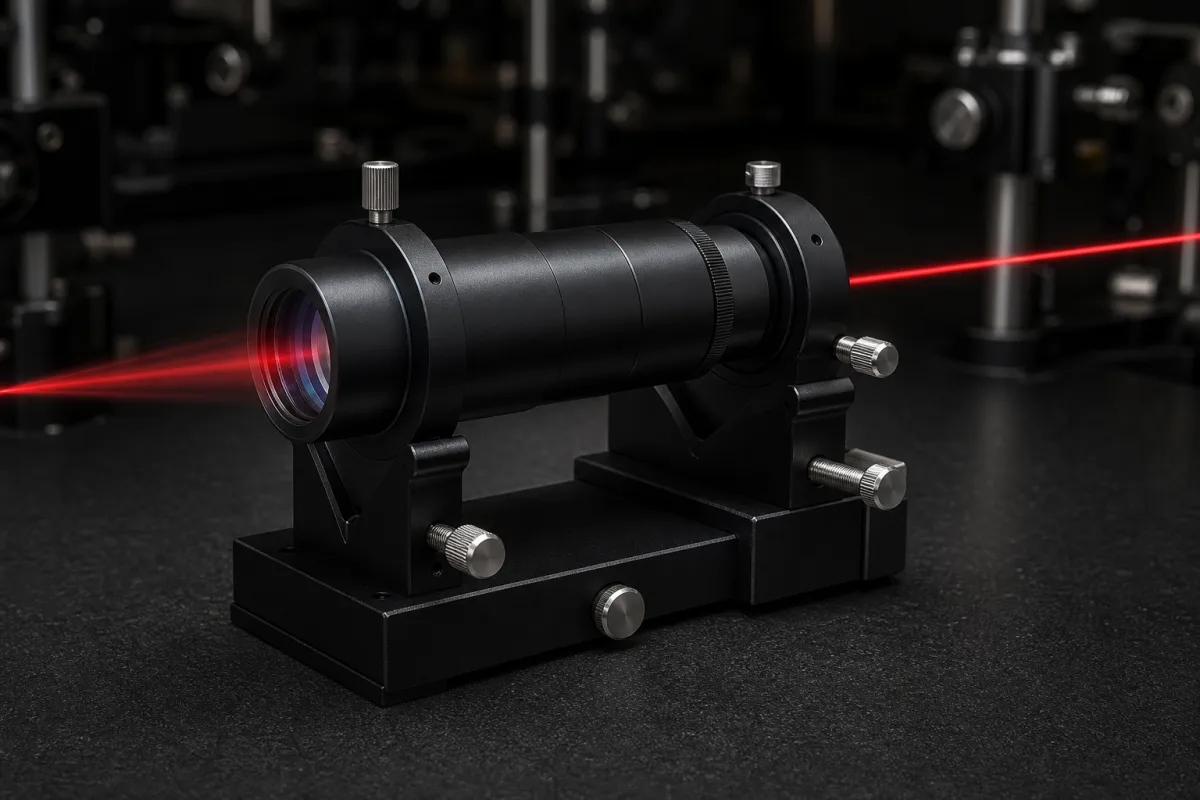
Collimating Lens System

Based on aggregated insights from multiple verified factory profiles within the CNFX directory, the standard Collimating Lens System used in the Computer, Electronic and Optical Product Manufacturing sector typically supports operational capacities ranging from standard industrial configurations to heavy-duty production requirements.

Technical Definition & Core Assembly

A canonical Collimating Lens System is characterized by the integration of Collimating Lens Element and Lens Housing. In industrial production environments, manufacturers listed on CNFX commonly emphasize Optical glass (e.g., BK7, Fused Silica) construction to support stable, high-cycle operation across diverse manufacturing scenarios.

An optical system designed to convert divergent or convergent light beams into parallel (collimated) beams.
Product Specifications

Technical details and manufacturing context for Collimating Lens System

Definition
A critical optical component within a Laser Alignment Module that precisely aligns and directs laser beams by converting them into parallel rays, ensuring accurate targeting and measurement in alignment applications.
Working Principle
Utilizes one or more lenses with specific curvatures and arrangements to refract incoming light rays. Divergent rays from a laser source are refracted by the lens elements so that their paths become parallel to each other, creating a collimated beam with minimal divergence over distance.
Common Materials
Optical glass (e.g., BK7, Fused Silica), Anti-reflective coating materials
Technical Parameters
  • Focal length and aperture diameter are primary specifications determining collimation performance and beam diameter. (mm) Per Request
Components / BOM
  • Collimating Lens Element
    Primary optical element that refracts light to create parallel rays.
    Material: Optical glass with anti-reflective coating
  • Lens Housing
    Mechanical structure that holds and aligns lens elements precisely.
    Material: Aluminum alloy or stainless steel
  • Adjustment Mechanism
    Allows fine-tuning of lens position for optimal collimation.
    Material: Precision machined metal components
Engineering Reasoning
0.5-5.0 mrad beam divergence angle, 400-700 nm wavelength range, 20-80°C operating temperature
Beam divergence exceeding 10 mrad, surface roughness > λ/10 RMS at 632.8 nm, wavefront error > λ/4 PV at 632.8 nm
Design Rationale: Thermal lensing from coefficient of thermal expansion mismatch (CTE Δ > 5×10⁻⁶/K), surface contamination causing Mie scattering (particles > λ/2), mechanical stress-induced birefringence (>10 nm/cm retardance)
Risk Mitigation (FMEA)
Trigger Thermal gradient >15°C/mm across lens elements
Mode: Wavefront distortion exceeding λ/2 RMS at 632.8 nm
Strategy: Active thermal stabilization with PID control (±0.1°C), low-CTE materials (Zerodur CTE=0±0.02×10⁻⁶/K), conductive mounting
Trigger Particulate contamination density >100 particles/cm² (≥0.5 μm)
Mode: Beam intensity loss >3% due to Mie scattering
Strategy: Class 100 cleanroom assembly, hermetic sealing with <10⁻⁶ mbar·l/s leak rate, anti-static coatings

Industry Taxonomies & Aliases

Commonly used trade names and technical identifiers for Collimating Lens System.

Applied To / Applications

This component is essential for the following industrial systems and equipment:

Industrial Ecosystem & Supply Chain DNA

Complementary Systems
Downstream Applications
Specialized Tooling

Application Fit & Sizing Matrix

Operational Limits
pressure: Atmospheric to 2 bar
other spec: Wavelength range: 400-1600 nm, Beam divergence: <0.5 mrad
temperature: -40°C to +85°C
Media Compatibility
✓ Laser diode emission ✓ Fiber optic output ✓ LED light sources
Unsuitable: High particulate environments (dust, smoke)
Sizing Data Required
  • Input beam diameter (mm)
  • Required collimation distance (m)
  • Wavelength of light source (nm)

Reliability & Engineering Risk Analysis

Failure Mode & Root Cause
Surface contamination and coating degradation
Cause: Accumulation of dust, oil, or chemical residues from industrial environments, combined with UV exposure or improper cleaning agents, leading to reduced optical transmission and permanent damage to anti-reflective coatings.
Thermal stress cracking
Cause: Rapid temperature fluctuations or localized overheating from high-intensity light sources, causing differential expansion between lens materials and mounts, resulting in microfractures or delamination.
Maintenance Indicators
  • Visible dark spots, haze, or rainbow-like interference patterns on the lens surface during routine inspection
  • Audible high-frequency buzzing or crackling sounds from the lens housing during operation, indicating thermal stress or mounting instability
Engineering Tips
  • Implement strict environmental controls: maintain positive air pressure in enclosures with HEPA filtration to minimize particulate ingress, and regulate ambient temperature within ±5°C of operating specifications to prevent thermal cycling damage.
  • Establish precision cleaning protocols: use only manufacturer-approved, residue-free optical cleaning solutions with lint-free wipes in cleanroom conditions, and perform alignment verification after each maintenance intervention using laser interferometry or autocollimators.

Compliance & Manufacturing Standards

Reference Standards
ISO 10110-7:2017 Optics and photonics -- Preparation of drawings for optical elements and systems -- Part 7: Surface imperfection tolerances ANSI Z136.1 Safe Use of Lasers DIN 3140-7:2016-08 Dimensions and tolerances for optical systems -- Part 7: Collimators
Manufacturing Precision
  • Wavefront Error: λ/10 RMS (at 632.8 nm)
  • Centering (beam deviation): < 0.5 mrad
Quality Inspection
  • Interferometric Wavefront Testing
  • Beam Profile Analysis (M² measurement)

Factories Producing Collimating Lens System

Verified manufacturers with capability to produce this product in China

✓ 94% Supplier Capability Match Found

T Technical Director from United Arab Emirates Jan 22, 2026
★★★★★
"Testing the Collimating Lens System now; the technical reliability results are within 1% of the laboratory datasheet."
Technical Specifications Verified
P Project Engineer from Australia Jan 19, 2026
★★★★☆
"Impressive build quality. Especially the technical reliability is very stable during long-term operation. (Delivery took slightly longer than expected, but technical support was excellent.)"
Technical Specifications Verified
S Sourcing Manager from Singapore Jan 16, 2026
★★★★★
"As a professional in the Computer, Electronic and Optical Product Manufacturing sector, I confirm this Collimating Lens System meets all ISO standards."
Technical Specifications Verified
Verification Protocol

“Feedback is collected from verified sourcing managers during RFQ (Request for Quote) and factory evaluation processes on CNFX. These reports represent historical performance data and technical audit summaries from our B2B manufacturing network.”

19 sourcing managers are analyzing this specification now. Last inquiry for Collimating Lens System from Mexico (13m ago).

Supply Chain Compatible Machinery & Devices

Industrial Smart Camera Module

Embedded vision system for industrial automation and quality inspection.

Explore Specs →
Industrial Wireless Power Transfer Module

Wireless power transfer module for industrial equipment applications

Explore Specs →
Industrial Smart Sensor Module

Modular industrial sensor with embedded processing and wireless connectivity

Explore Specs →
Surface Mount Resistor

Passive electronic component for current limiting and voltage division in circuits

Explore Specs →

Frequently Asked Questions

What are the primary applications of this collimating lens system?

This system is used in laser alignment, optical testing, microscopy, telecommunications, and industrial measurement systems where parallel light beams are required for accuracy.

How does the adjustment mechanism improve performance?

The precision adjustment mechanism allows fine-tuning of lens position to achieve optimal collimation, compensating for thermal expansion and ensuring consistent parallel beam output.

What advantages do BK7 and fused silica materials provide?

BK7 offers excellent transmission in visible spectrum with good chemical stability, while fused silica provides superior UV transmission and low thermal expansion for high-precision applications.

Can I contact factories directly on CNFX?

CNFX is an open directory, not a transaction platform. Each factory profile provides direct contact information and production details to help you initiate direct inquiries with Chinese suppliers.

Get Quote for Collimating Lens System

Request technical pricing, lead times, or customized specifications for Collimating Lens System directly from verified manufacturing units.

Your business information is encrypted and only shared with verified Collimating Lens System suppliers.

Thank you! Your message has been sent. We'll respond within 1–3 business days.

Need to Manufacture Collimating Lens System?

Connect with verified factories specializing in this product category

Add Your Factory Contact Us
Previous Product
Collimating Lens Assembly
Next Product
Collimating Mirror