Industry-Verified Manufacturing Data (2026)

Detector Element

Based on aggregated insights from multiple verified factory profiles within the CNFX directory, the standard Detector Element used in the Computer, Electronic and Optical Product Manufacturing sector typically supports operational capacities ranging from standard industrial configurations to heavy-duty production requirements.

Technical Definition & Core Assembly

A canonical Detector Element is characterized by the integration of Sensing Layer and Electrodes. In industrial production environments, manufacturers listed on CNFX commonly emphasize Semiconductor (e.g., Silicon, Germanium) construction to support stable, high-cycle operation across diverse manufacturing scenarios.

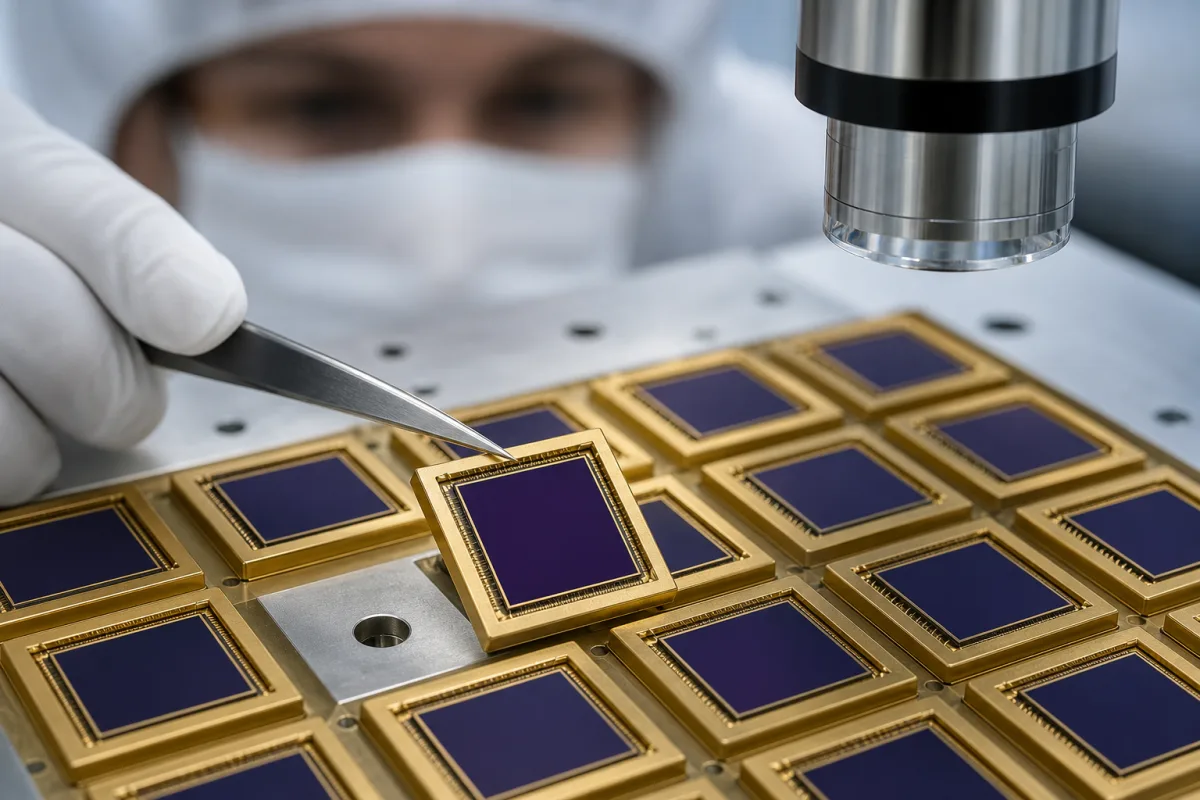
Individual sensing unit within a detector array that converts physical signals into measurable electrical outputs.
Product Specifications

Technical details and manufacturing context for Detector Element

Definition
A detector element is the fundamental sensing component within a detector array, responsible for detecting specific physical phenomena (such as radiation, light, pressure, or temperature) and converting them into electrical signals. In arrays, multiple elements work collectively to provide spatial resolution, sensitivity, and coverage for applications in imaging, monitoring, and measurement systems.
Working Principle
Operates based on its specific sensing mechanism (e.g., photoelectric effect for optical detectors, ionization for radiation detectors, piezoelectric effect for pressure sensors). When exposed to the target stimulus, the element generates an electrical signal (current, voltage, or resistance change) proportional to the stimulus intensity, which is then processed by associated electronics.
Common Materials
Semiconductor (e.g., Silicon, Germanium), Scintillator crystals (e.g., NaI, BGO), Photodiode/Photomultiplier tubes
Technical Parameters
  • Physical dimensions (e.g., pixel size, thickness) affecting spatial resolution and sensitivity. (mm) Customizable
Components / BOM
  • Sensing Layer
    Interacts directly with the target stimulus to initiate signal conversion.
    Material: Semiconductor or scintillator material
  • Electrodes
    Collect and transmit the generated electrical signals to readout circuitry.
    Material: Metal (e.g., Aluminum, Gold)
  • Protective Housing
    Shields the sensitive components from environmental factors and physical damage.
    Material: Ceramic or epoxy resin
Engineering Reasoning
0.1-1000 μV output range, -40°C to +125°C ambient temperature, 0-100% relative humidity non-condensing
Signal-to-noise ratio drops below 3:1 at 150°C junction temperature, quantum efficiency degradation exceeds 15% at 10^12 photon cumulative exposure
Design Rationale: Thermionic emission at Schottky barrier exceeding 0.7 eV work function, dopant diffusion at 150°C causing p-n junction degradation, lattice displacement damage from 1 MeV neutron fluence exceeding 10^14 n/cm²
Risk Mitigation (FMEA)
Trigger Electromigration at current density exceeding 10^6 A/cm² in aluminum interconnects
Mode: Open circuit in signal path, 100% responsivity loss
Strategy: Copper damascene process with 45 nm line width, current density limited to 5×10^5 A/cm² with 3× design margin
Trigger Dielectric breakdown at electric field strength exceeding 10 MV/cm in 7 nm SiO₂ gate oxide
Mode: Short circuit between gate and channel, permanent 0 V output
Strategy: High-k dielectric (HfO₂) with 25 dielectric constant, 1.2 nm equivalent oxide thickness, field strength limited to 5 MV/cm

Industry Taxonomies & Aliases

Commonly used trade names and technical identifiers for Detector Element.

Applied To / Applications

This component is essential for the following industrial systems and equipment:

Industrial Ecosystem & Supply Chain DNA

Complementary Systems
Downstream Applications
Specialized Tooling

Application Fit & Sizing Matrix

Operational Limits
pressure: 0 to 100 bar
flow rate: 0.1 to 10 m/s
temperature: -40°C to +150°C
slurry concentration: Up to 30% solids by weight
Media Compatibility
✓ Water-based fluids ✓ Non-corrosive gases ✓ Petroleum-based oils
Unsuitable: Concentrated sulfuric acid environments
Sizing Data Required
  • Signal frequency range (Hz)
  • Required spatial resolution (mm)
  • Target signal-to-noise ratio (dB)

Reliability & Engineering Risk Analysis

Failure Mode & Root Cause
Sensor Drift/Calibration Loss
Cause: Environmental contamination (dust, moisture, chemical exposure), thermal cycling, or aging electronic components leading to inaccurate readings.
Mechanical Fatigue/Fracture
Cause: Vibration-induced stress, improper mounting/installation, or material degradation from corrosive atmospheres causing structural failure.
Maintenance Indicators
  • Erratic or inconsistent output readings (e.g., fluctuating signals when conditions are stable)
  • Visible physical damage (cracks, corrosion, loose connections) or abnormal audible noise (humming, buzzing from electronics)
Engineering Tips
  • Implement regular calibration schedules and environmental protection (sealed enclosures, desiccants) to maintain sensor accuracy.
  • Use vibration-damping mounts and proper torque specifications during installation to reduce mechanical stress and prevent premature failure.

Compliance & Manufacturing Standards

Reference Standards
ISO 9001:2015 (Quality Management Systems) IEC 60079-0:2017 (Explosive Atmospheres - Equipment General Requirements) ASTM E1316-24 (Standard Terminology for Nondestructive Testing)
Manufacturing Precision
  • Dimensional Accuracy: +/-0.05 mm for critical interfaces
  • Surface Flatness: 0.02 mm across active detection area
Quality Inspection
  • Leak Testing (Helium Mass Spectrometry for hermetic seals)
  • Functional Performance Testing (Signal-to-Noise Ratio verification)

Factories Producing Detector Element

Verified manufacturers with capability to produce this product in China

✓ 95% Supplier Capability Match Found

T Technical Director from Brazil Jan 18, 2026
★★★★★
"As a professional in the Computer, Electronic and Optical Product Manufacturing sector, I confirm this Detector Element meets all ISO standards."
Technical Specifications Verified
P Project Engineer from Canada Jan 15, 2026
★★★★☆
"Standard OEM quality for Computer, Electronic and Optical Product Manufacturing applications. The Detector Element arrived with full certification. (Delivery took slightly longer than expected, but technical support was excellent.)"
Technical Specifications Verified
S Sourcing Manager from United States Jan 12, 2026
★★★★★
"Great transparency on the Detector Element components. Essential for our Computer, Electronic and Optical Product Manufacturing supply chain."
Technical Specifications Verified
Verification Protocol

“Feedback is collected from verified sourcing managers during RFQ (Request for Quote) and factory evaluation processes on CNFX. These reports represent historical performance data and technical audit summaries from our B2B manufacturing network.”

5 sourcing managers are analyzing this specification now. Last inquiry for Detector Element from Germany (1h ago).

Supply Chain Compatible Machinery & Devices

Industrial IoT Gateway

Edge computing device connecting industrial equipment to cloud platforms.

Explore Specs →
Modular Industrial Edge Computing Device

Rugged computing platform for industrial data processing at the network edge

Explore Specs →
Industrial Smart Camera Module

Embedded vision system for industrial automation and quality inspection.

Explore Specs →
Industrial Wireless Power Transfer Module

Wireless power transfer module for industrial equipment applications

Explore Specs →

Frequently Asked Questions

What is the primary function of a detector element in electronic systems?

A detector element serves as the fundamental sensing unit within detector arrays, converting physical signals (like radiation, light, or particles) into measurable electrical outputs for processing and analysis in electronic and optical systems.

How do semiconductor materials like silicon enhance detector element performance?

Semiconductor materials like silicon provide excellent signal-to-noise ratios, fast response times, and precise energy resolution, making them ideal for applications requiring high sensitivity and accuracy in radiation detection and optical sensing.

What applications commonly use scintillator crystal detector elements?

Scintillator crystal detector elements (e.g., NaI, BGO) are widely used in medical imaging (PET/CT scanners), security screening, nuclear physics research, and environmental monitoring due to their high detection efficiency for gamma rays and other ionizing radiation.

Can I contact factories directly on CNFX?

CNFX is an open directory, not a transaction platform. Each factory profile provides direct contact information and production details to help you initiate direct inquiries with Chinese suppliers.

Get Quote for Detector Element

Request technical pricing, lead times, or customized specifications for Detector Element directly from verified manufacturing units.

Your business information is encrypted and only shared with verified Detector Element suppliers.

Thank you! Your message has been sent. We'll respond within 1–3 business days.

Need to Manufacture Detector Element?

Connect with verified factories specializing in this product category

Add Your Factory Contact Us
Previous Product
Detector
Next Product
Diagnostic Display