Editorial Technical Reference

Dose Calculation Engine

This page explains how Dose Calculation Engine is classified within Computer, Electronic and Optical Product Manufacturing. Technical values and manufacturer relationships are research references; confirm the current specification and supplier evidence for each order.

Technical Definition & Core Assembly

A computational software component within a Treatment Planning Station that calculates radiation dose distributions for medical radiotherapy.
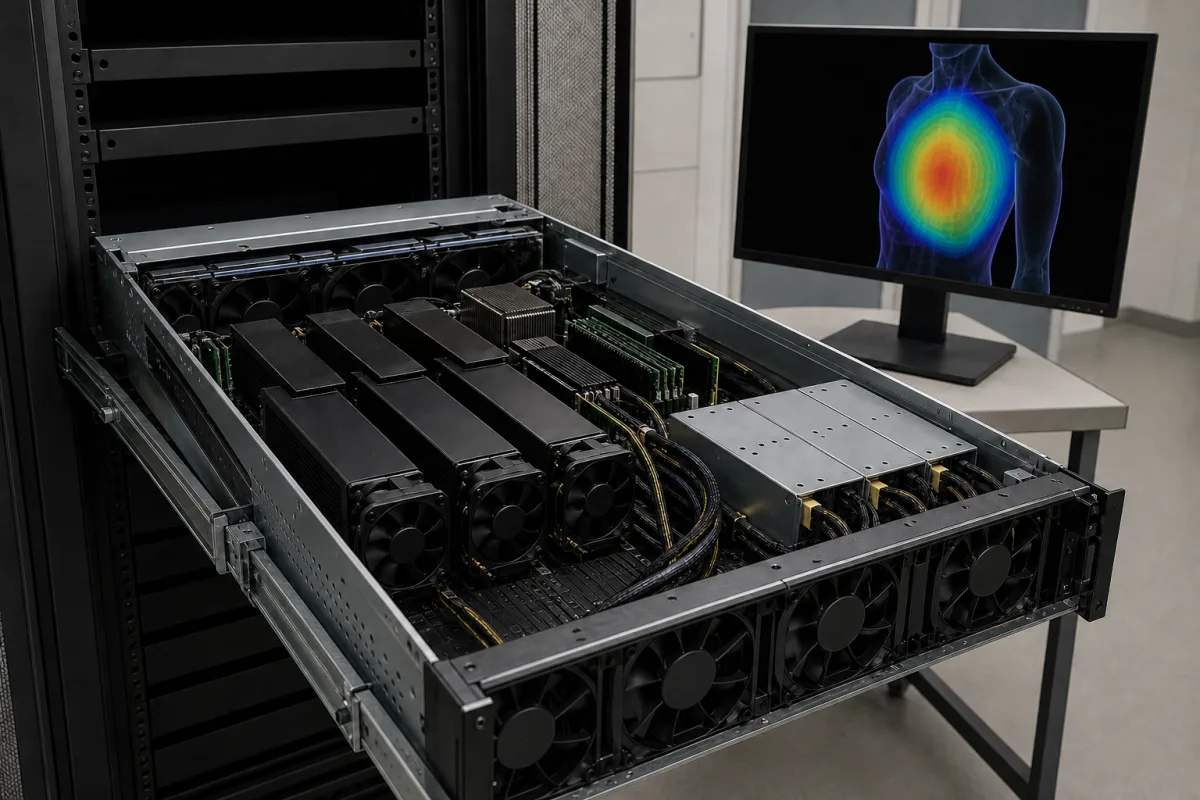
Representative product image. Confirm appearance and specifications with the manufacturer.

Product Specifications

Technical details and manufacturing context for Dose Calculation Engine

Definition
The Dose Calculation Engine is a critical software component embedded within a Treatment Planning Station (TPS) used in radiation oncology. It performs complex mathematical calculations to simulate and predict radiation dose distributions in patient anatomy based on treatment parameters, imaging data, and radiation physics models. This engine enables clinicians to optimize treatment plans by accurately modeling how radiation interacts with tissues to ensure therapeutic doses to tumors while minimizing exposure to healthy organs. The engine uses advanced algorithms such as Monte Carlo, pencil beam, or collapsed cone convolution methods to simulate radiation transport through patient anatomy. It processes CT/MRI imaging data to create a 3D patient model, applies radiation physics principles to calculate dose deposition at each voxel, and iteratively refines calculations based on beam parameters, tissue densities, and treatment geometry to generate accurate dose distribution maps. Key parameters include dose calculation accuracy of ±2% relative to measured dose in a homogeneous phantom (per IEC 62083), grid resolution of 1–3 mm, calculation time of 10–60 seconds for a typical IMRT plan on a standard workstation, supported beam energies of 6–18 MV for photon beams from a linac, memory requirement of 8–32 GB RAM, and compatibility with 64-bit Windows 10/11 or Linux x64 operating systems. The engine supports algorithms such as AAA, Acuros XB, and Monte Carlo, includes heterogeneity correction for tissue density variations, and can handle dose grids up to 512x512x512 voxels. Output is in DICOM RT Dose format (per DICOM PS3.3). It conforms to IEC 62083 safety requirements for medical electrical systems. Operating conditions include ambient temperature of 10–35 °C and relative humidity of 20–80% (non-condensing) per IEC 60601-1. All values are reference ranges; verify model-specific specifications with the legal manufacturer or supplier.
Working Principle
The engine uses advanced algorithms (such as Monte Carlo, pencil beam, or collapsed cone convolution methods) to simulate radiation transport through patient anatomy. It processes CT/MRI imaging data to create a 3D patient model, applies radiation physics principles to calculate dose deposition at each voxel, and iteratively refines calculations based on beam parameters, tissue densities, and treatment geometry to generate accurate dose distribution maps.
Common Materials
Software algorithms, Computational hardware interfaces
Technical Parameters
ParameterTypical rangeNotes & selection driver
Dose Calculation Accuracy±2 %Relative to measured dose in homogeneous phantomIEC 62083
Grid Resolution1–3 mmVoxel size for dose calculation
Calculation Time10–60 sFor typical IMRT plan on standard workstation
Supported Beam Energies6–18 MVPhoton beams for linac
Memory Requirement8–32 GBRAM for dose calculation engine
Operating System CompatibilityWindows 10/11, Linux x6464-bit OS required
Dose Calculation AlgorithmAAA, Acuros XB, MCType of algorithm (e.g., analytical, deterministic, Monte Carlo)
Heterogeneity CorrectionYesAccounts for tissue density variations
Dose Grid Dimensions512x512x512 voxelsMaximum grid size
Output Data FormatDICOM RT DoseStandard format for dose distributionDICOM PS3.3
Conformance to IEC 62083YesSafety requirements for medical electrical systemsIEC 62083
Operating Temperature10–35 °CAmbient temperature for normal operationIEC 60601-1
Relative Humidity20–80 %Non-condensingIEC 60601-1

Ranges are indicative industry figures for RFQ preparation, not a supplier commitment. Confirm every value and standard with the legal manufacturer before ordering.

Components / BOM
  • Dose Calculation Algorithm Core
    Performs the fundamental radiation transport calculations using mathematical models
    Material: Software code
  • Patient Data Interface
    Processes and formats patient imaging and anatomical data for dose calculations
    Material: Software interface
  • Beam Modeling Module
    Models radiation beam characteristics and interactions with patient anatomy
    Material: Software algorithms
  • Dose Grid Generator
    Creates and manages the spatial grid system for dose calculation and display
    Material: Software module

Applied To / Applications

This component is essential for the following industrial systems and equipment:

Industrial Ecosystem & Supply Chain Structure

Complementary Systems
Downstream Applications
Specialized Tooling

Application Fit & Sizing Matrix

Operational Limits
pressure: N/A (software component)
other spec: Hardware: Minimum 8-core CPU, 32GB RAM, 1TB SSD; Software: Windows/Linux OS, .NET Framework 4.8+ or equivalent; Network: 1Gbps Ethernet; Safety: IEC 62304 Class C compliance
temperature: 15-25°C (operating environment for hardware hosting software)
Media Compatibility
✓ Medical-grade server hardware ✓ Virtualized cloud environments (HIPAA compliant) ✓ Integrated radiotherapy treatment planning systems
Unsuitable: Industrial environments with high electromagnetic interference or uncontrolled temperature fluctuations
Sizing Data Required
  • Patient CT/MRI dataset size and resolution
  • Number of concurrent treatment plan calculations required
  • Radiation beam configuration complexity (energy, angles, modulation)

Reliability & Engineering Risk Analysis

Failure Mode & Root Cause
Software Algorithm Drift
Cause: Cumulative rounding errors, calibration data degradation, or software updates introducing unintended calculation biases over time, leading to inaccurate dose outputs.
Sensor/Input Signal Degradation
Cause: Fouling, calibration drift, or electrical noise in critical input sensors (e.g., flow meters, concentration probes) causing erroneous data feeding the calculation engine, resulting in incorrect dose calculations.
Maintenance Indicators
  • Audible or visual alarm from the control system indicating 'Calculation Error', 'Input Signal Fault', or 'Dose Out of Tolerance'.
  • Trending data showing increasing deviation between calculated dose setpoints and actual process measurements (e.g., pH, conductivity) over successive cycles, indicating declining calculation accuracy.
Engineering Tips
  • Implement rigorous, periodic validation of the calculation engine's output against known benchmark cases or a secondary, independent calculation method to detect and correct algorithmic drift early.
  • Establish a proactive calibration and health-check schedule for all critical input sensors and signal conditioning hardware, using statistical process control (SPC) to monitor for signal degradation trends before they cause calculation errors.

Indicative industry ranges for design and RFQ preparation. Confirm the exact figures and applicable standard with the manufacturer before specifying.

Compliance & Manufacturing Standards

Applicable Standards
IEC 60601-1:2005 - Medical electrical equipment - Part 1: General requirements for basic safety and essential performance IEC 62304:2006 - Medical device software - Software life cycle processes

Quoted from the published standard.

Manufacturing Precision
  • Dose output accuracy: +/- 2% of prescribed dose
  • Beam energy stability: +/- 1% over 8-hour operation
Quality Inspection
  • End-to-end dosimetry verification with ionization chamber array
  • Monte Carlo simulation validation against clinical treatment plans

Manufacturers of Dose Calculation Engine

Manufacturer profiles associated with Dose Calculation Engine.

Sourcing Dose Calculation Engine from China?
Tell us your specification and target quantity — we will match it against manufacturer records and come back with the factories that fit.
Request manufacturers We manufacture this

Manufacturer listings support early research and capability understanding. They are not certification, ranking, or transaction guarantees.

Technical documentation
Request current drawings, revision history, and a signed specification sheet.
Manufacturing capability
Verify equipment lists, process limits, capacity, and representative production evidence.
Inspection readiness
Confirm test methods, calibrated equipment, sampling plans, and traceable reports.
Supplier transparency
Check the legal entity, factory address, ownership, certifications, and direct contacts.

CNFX does not score or rank suppliers. Buyers must verify all claims and documents with the legal manufacturer before ordering.

Supply Chain Compatible Machinery & Devices

Industrial IoT Gateway

The Industrial IoT Gateway is a ruggedized edge computing device designed for industrial environments.

Explore Specs →
Modular Industrial Edge Computing Device

This modular industrial edge computing device is a ruggedized system designed for deployment in harsh industrial environments to perform real-time data processing, analytics, and control functions at the network edge.

Explore Specs →
Industrial Smart Camera Module

The Industrial Smart Camera Module is a compact, self-contained vision processing unit designed for integration into industrial machinery and production lines.

Explore Specs →
Surface Mount Resistor

Passive electronic component for current limiting and voltage division in circuits

Explore Specs →

Frequently Asked Questions

What is the typical dose calculation accuracy of this engine?

The directory lists a dose calculation accuracy of ±2% relative to measured dose in a homogeneous phantom, per IEC 62083. This is a reference range; the actual accuracy for a specific model or configuration must be confirmed with the legal manufacturer or supplier.

Which dose calculation algorithms are supported?

The engine supports algorithms such as AAA, Acuros XB, and Monte Carlo (MC). These are listed as reference types; the availability of specific algorithms may vary by version or configuration, so verify with the manufacturer.

What are the operating system and hardware requirements?

The engine requires a 64-bit operating system, either Windows 10/11 or Linux x64. Memory requirement is 8–32 GB RAM. These are reference ranges; check the specific system requirements for your intended deployment.

Does the engine provide heterogeneity correction?

Yes, the engine accounts for tissue density variations with heterogeneity correction. This is a standard feature listed in the directory; however, the implementation may vary, so confirm with the manufacturer for your specific use case.

Data Basis

Editorial classification, named public sources where available, and source-reviewed manufacturer records.

Preliminary Technical Classification
This page supports structured research, RFQ preparation, and supplier evaluation. It does not replace buyer-led supplier qualification, standards review, or technical approval.
Buyer enquiry

Request manufacturing insight for Dose Calculation Engine

Ask for use case, specification boundaries, supplier type, and RFQ preparation information for this product.

Where it goes
Straight to the CNFX editorial desk, and to the manufacturer if this product is linked to a claimed profile. Nothing is broadcast to a supplier list.
Your details stay here
We do not sell or rent enquiry data, and we do not add you to a mailing list. Used only to answer this request.
No commission, no middleman
CNFX is a directory. We take no cut of any order and never negotiate on a supplier's behalf.
What we don't claim
A listing is not an endorsement. Qualify every supplier and verify every figure yourself before ordering.

Your business information is used only to process this request.

Thank you! Your message has been sent. We'll respond within 1–3 business days.
Sorry, we couldn't send your message. Please try again, or email us at contact@cnfx.com.

Need to Manufacture Dose Calculation Engine?

Compare manufacturer profiles with relevant product and process capability.

Previous Product
XY Positioning Stage
Last Product
Get QuotesChat