Position Feedback Sensor
View system integration details
This page explains how Electrical Connection is classified within Computer, Electronic and Optical Product Manufacturing. Technical values and manufacturer relationships are research references; confirm the current specification and supplier evidence for each order.
The interface that provides electrical power and signal transmission to and from the position feedback sensor.
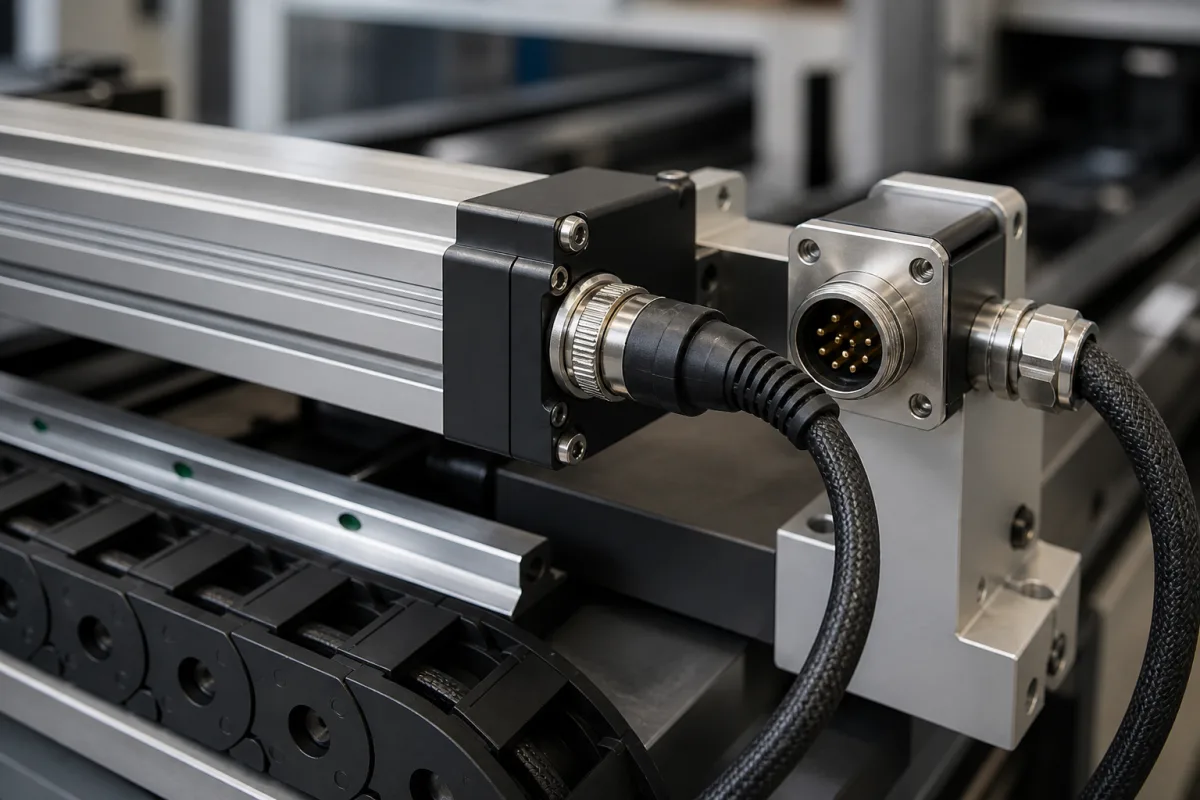
Technical details and manufacturing context for Electrical Connection
What to specify in your RFQ
These are the quantities to specify to the manufacturer when sizing or requesting a quote. The manufacturer's own documentation governs the exact figures and applicable standard.
This component is essential for the following industrial systems and equipment:
| current: | Up to 20A continuous |
| voltage: | Up to 600V AC/DC |
| temperature: | -40°C to +125°C |
| ingress protection: | IP67/IP69K (typical) |
| vibration resistance: | Up to 10g, 10-2000 Hz |
| insulation resistance: | ≥100 MΩ at 500V DC |
Indicative industry ranges for design and RFQ preparation. Confirm the exact figures and applicable standard with the manufacturer before specifying.
Quoted from the published standard.
Manufacturer profiles associated with Electrical Connection.
Manufacturer listings support early research and capability understanding. They are not certification, ranking, or transaction guarantees.
A practical evidence checklist for RFQ preparation and supplier evaluation.
CNFX does not score or rank suppliers. Buyers must verify all claims and documents with the legal manufacturer before ordering.
The electrical connection provides the physical and electrical interface between the sensor's internal circuitry and external cables or a connector. It supplies power to operate the sensor and carries the output signal (analog or digital) to the control system, ensuring reliable transmission without significant loss or noise.
Key parameters include connection type (e.g., M12 connector, terminal block, flying leads), pin count, voltage and current ratings, ingress protection (IP) rating, and signal type compatibility (e.g., analog, digital PNP/NPN). These must match the sensor's requirements and the application environment.
Typical materials include copper alloy for conductive contacts and insulating polymers such as PVC or PBT for housings and insulation. These materials provide good conductivity, mechanical strength, and resistance to environmental factors.
Verify the model-specific specifications, such as pinout, electrical ratings, and IP rating, with the legal manufacturer or supplier. Also consider factors like cable length, shielding, and environmental conditions to ensure reliable performance.
Editorial classification, named public sources where available, and source-reviewed manufacturer records.
Ask for use case, specification boundaries, supplier type, and RFQ preparation information for this product.
Compare manufacturer profiles with relevant product and process capability.