Industry-Verified Manufacturing Data (2026)

Spectroscopic Analyzer

Based on aggregated insights from multiple verified factory profiles within the CNFX directory, the standard Spectroscopic Analyzer used in the Chemical Manufacturing sector typically supports operational capacities ranging from standard industrial configurations to heavy-duty production requirements.

Technical Definition & Core Assembly

A canonical Spectroscopic Analyzer is characterized by the integration of Light Source and Sample Interface. In industrial production environments, manufacturers listed on CNFX commonly emphasize Optical-grade quartz construction to support stable, high-cycle operation across diverse manufacturing scenarios.

An analytical instrument that measures the interaction between matter and electromagnetic radiation to determine material composition and properties.
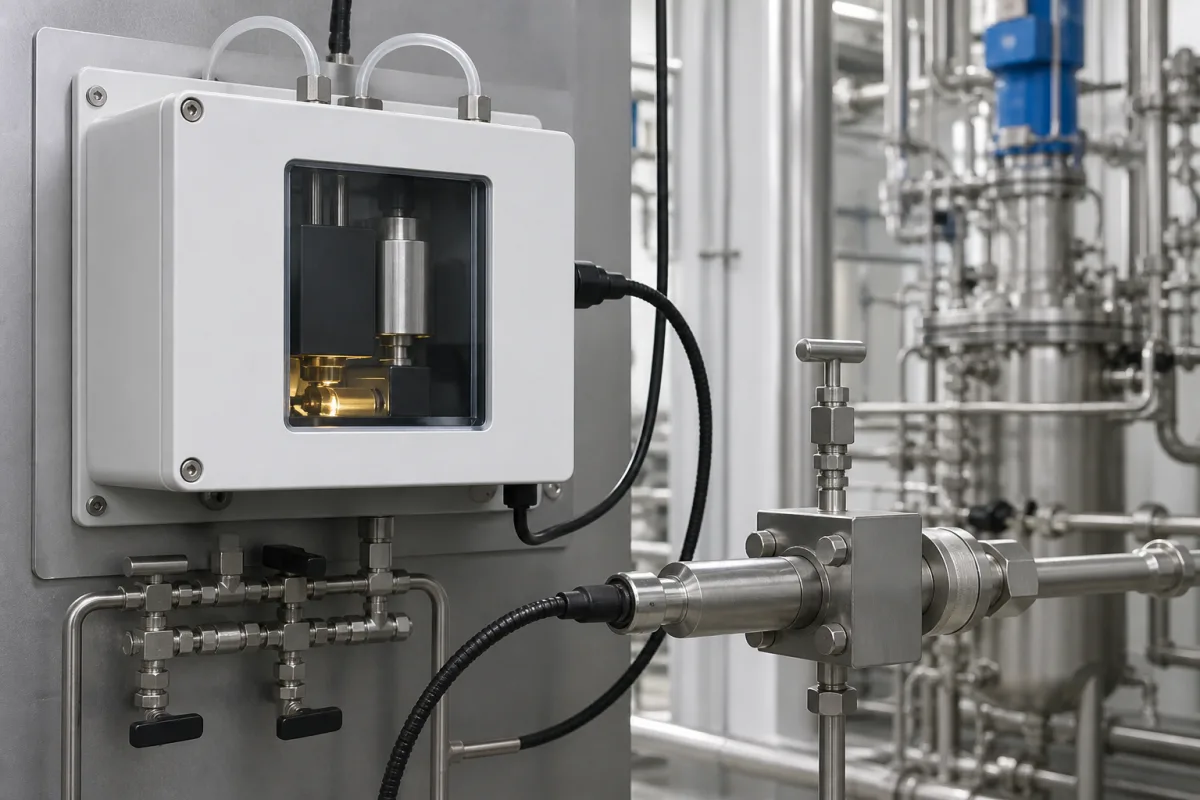
Product Specifications

Technical details and manufacturing context for Spectroscopic Analyzer

Definition
A spectroscopic analyzer is a critical component within Process Analytics systems that uses spectroscopic techniques (such as UV-Vis, NIR, IR, Raman, or atomic spectroscopy) to monitor and analyze chemical compositions, concentrations, and physical properties of materials in real-time during industrial processes. It enables continuous quality control, process optimization, and regulatory compliance by providing non-destructive, rapid measurements without requiring sample extraction.
Working Principle
The analyzer emits electromagnetic radiation (light) toward the sample material. The sample absorbs, reflects, or scatters specific wavelengths based on its molecular structure and composition. Detectors measure the resulting spectrum, and algorithms compare it to reference libraries to identify substances and quantify concentrations. Common techniques include absorption spectroscopy (measuring absorbed wavelengths), emission spectroscopy (measuring emitted wavelengths), and scattering spectroscopy (measuring scattered radiation).
Common Materials
Optical-grade quartz, Stainless steel housing, Photodiode detectors, Diffraction grating
Technical Parameters
  • Wavelength range (e.g., 190-1100nm for UV-Vis, 780-2500nm for NIR) (nm) Standard Spec
Components / BOM
  • Light Source
    Generates electromagnetic radiation across the required wavelength range
    Material: Tungsten-halogen lamp or LED array
  • Sample Interface
    Optical window or probe that interfaces with the process material
    Material: Sapphire or quartz
  • Spectrometer Unit
    Separates incoming light into component wavelengths using diffraction grating or prism
    Material: Aluminum housing with optical components
  • Detector Array
    Converts light intensity at different wavelengths into electrical signals
    Material: CCD or photodiode array
Engineering Reasoning
400-800 nm wavelength, 0.1-100 mW optical power, 15-35°C ambient temperature
Optical power density exceeding 1.5 W/mm² at detector surface, temperature exceeding 50°C at CCD sensor, wavelength calibration drift >0.5 nm
Design Rationale: Photodiode saturation at 1.5 W/mm² causing thermal damage to semiconductor junctions, CCD dark current doubling every 7°C above 35°C, grating thermal expansion coefficient of 0.5 μm/m·°C causing wavelength shift
Risk Mitigation (FMEA)
Trigger Ambient temperature fluctuation exceeding ±5°C/hour
Mode: Grating thermal expansion causing 0.8 nm wavelength calibration drift
Strategy: Active temperature stabilization with PID control maintaining ±0.1°C, low-expansion Invar grating mounts with 1.2×10⁻⁶/°C coefficient
Trigger Optical power density exceeding 1.2 W/mm² for >10 seconds
Mode: CCD detector quantum efficiency degradation from 85% to 40%
Strategy: Automatic optical attenuator with 0.1-10 OD range, real-time power monitoring with 1 ms response time, silicon carbide heat spreaders with 490 W/m·K conductivity

Industry Taxonomies & Aliases

Commonly used trade names and technical identifiers for Spectroscopic Analyzer.

Applied To / Applications

This component is essential for the following industrial systems and equipment:

Industrial Ecosystem & Supply Chain DNA

Complementary Systems
Downstream Applications
Specialized Tooling

Application Fit & Sizing Matrix

Operational Limits
pressure: Atmospheric to 1.5 bar (sample chamber)
flow rate: 0-100 mL/min (liquid samples), 0-5 L/min (gas samples)
temperature: 5°C to 40°C (operating), -20°C to 60°C (storage)
slurry concentration: Up to 40% solids by weight (with appropriate sample prep)
Media Compatibility
✓ Aqueous solutions (pH 2-12) ✓ Organic solvents (non-corrosive) ✓ Polymer films and solids
Unsuitable: High-viscosity slurries (>5000 cP) without specialized sample handling
Sizing Data Required
  • Required spectral resolution (nm/cm⁻¹)
  • Sample type and physical state (solid/liquid/gas)
  • Required detection limits (ppm/ppb)

Reliability & Engineering Risk Analysis

Failure Mode & Root Cause
Optical Drift
Cause: Thermal expansion or contamination of optical components (e.g., lenses, mirrors) due to temperature fluctuations, dust ingress, or chemical exposure, leading to wavelength calibration errors and inaccurate readings.
Detector Degradation
Cause: Gradual loss of sensitivity in photomultiplier tubes or CCD/CMOS sensors from prolonged exposure to intense light sources, aging, or environmental factors like humidity, resulting in reduced signal-to-noise ratio and unreliable data.
Maintenance Indicators
  • Unstable or erratic baseline readings during calibration checks, indicating potential optical or electronic instability.
  • Abnormal audible alarms or error codes related to temperature control, vacuum levels (if applicable), or light source intensity, signaling critical subsystem failures.
Engineering Tips
  • Implement strict environmental controls: Maintain stable temperature and humidity in the analyzer's operating environment, and use purge gases (e.g., dry nitrogen) to prevent optical contamination from dust or corrosive atmospheres.
  • Adhere to a preventive maintenance schedule: Regularly clean optical surfaces with approved methods, calibrate using certified standards, and monitor light source hours to replace components before degradation impacts performance.

Compliance & Manufacturing Standards

Reference Standards
ISO 17025:2017 - General requirements for the competence of testing and calibration laboratories ASTM E1252-98 - Standard Practice for General Techniques for Obtaining Infrared Spectra for Qualitative Analysis CE marking for electromagnetic compatibility (EMC) and low voltage directives
Manufacturing Precision
  • Wavelength accuracy: +/- 0.1 nm
  • Photometric linearity: +/- 0.5%
Quality Inspection
  • Wavelength calibration verification using certified reference materials
  • Signal-to-noise ratio measurement at specified wavelengths

Factories Producing Spectroscopic Analyzer

Verified manufacturers with capability to produce this product in China

✓ 94% Supplier Capability Match Found

P Procurement Specialist from United Arab Emirates Jan 23, 2026
★★★★★
"Impressive build quality. Especially the technical reliability is very stable during long-term operation."
Technical Specifications Verified
T Technical Director from Australia Jan 20, 2026
★★★★★
"As a professional in the Chemical Manufacturing sector, I confirm this Spectroscopic Analyzer meets all ISO standards."
Technical Specifications Verified
P Project Engineer from Singapore Jan 17, 2026
★★★★★
"Standard OEM quality for Chemical Manufacturing applications. The Spectroscopic Analyzer arrived with full certification."
Technical Specifications Verified
Verification Protocol

“Feedback is collected from verified sourcing managers during RFQ (Request for Quote) and factory evaluation processes on CNFX. These reports represent historical performance data and technical audit summaries from our B2B manufacturing network.”

16 sourcing managers are analyzing this specification now. Last inquiry for Spectroscopic Analyzer from Turkey (34m ago).

Supply Chain Compatible Machinery & Devices

Modular Distillation Column System

Pre-engineered modular system for continuous separation of chemical mixtures via distillation.

Explore Specs →
Automated Batch Crystallization System

Automated system for controlled crystallization of chemical compounds in batch processes.

Explore Specs →
Automated pH Monitoring and Dosing System

Automated system for continuous pH monitoring and chemical dosing in process streams.

Explore Specs →
Automated Powder Dispensing and Blending System

Automated system for precise dispensing and homogeneous blending of powdered chemicals.

Explore Specs →

Frequently Asked Questions

How does this spectroscopic analyzer improve chemical manufacturing quality control?

It provides real-time, non-destructive analysis of material composition and properties, enabling precise monitoring of chemical processes and ensuring consistent product quality through accurate spectral measurements.

What maintenance is required for the stainless steel housing and optical components?

The stainless steel housing requires periodic cleaning with chemical-resistant solutions, while optical-grade quartz components need careful dust removal and alignment checks to maintain measurement accuracy in industrial environments.

Can this analyzer integrate with existing chemical manufacturing control systems?

Yes, it features standardized interfaces for seamless integration with PLCs, SCADA systems, and process control software, allowing automated data collection and real-time process adjustments.

Can I contact factories directly on CNFX?

CNFX is an open directory, not a transaction platform. Each factory profile provides direct contact information and production details to help you initiate direct inquiries with Chinese suppliers.

Get Quote for Spectroscopic Analyzer

Request technical pricing, lead times, or customized specifications for Spectroscopic Analyzer directly from verified manufacturing units.

Your business information is encrypted and only shared with verified Spectroscopic Analyzer suppliers.

Thank you! Your message has been sent. We'll respond within 1–3 business days.

Need to Manufacture Spectroscopic Analyzer?

Connect with verified factories specializing in this product category

Add Your Factory Contact Us
Previous Product
Sparging Nozzles
Next Product
Spray System (Nozzles & Manifold)