Pattern Recognition Engine
View system integration details
This page explains how Pattern Matching Core is classified within Computer, Electronic and Optical Product Manufacturing. Technical values and manufacturer relationships are research references; confirm the current specification and supplier evidence for each order.
The computational engine that identifies and matches patterns within data streams in a Pattern Recognition Engine.
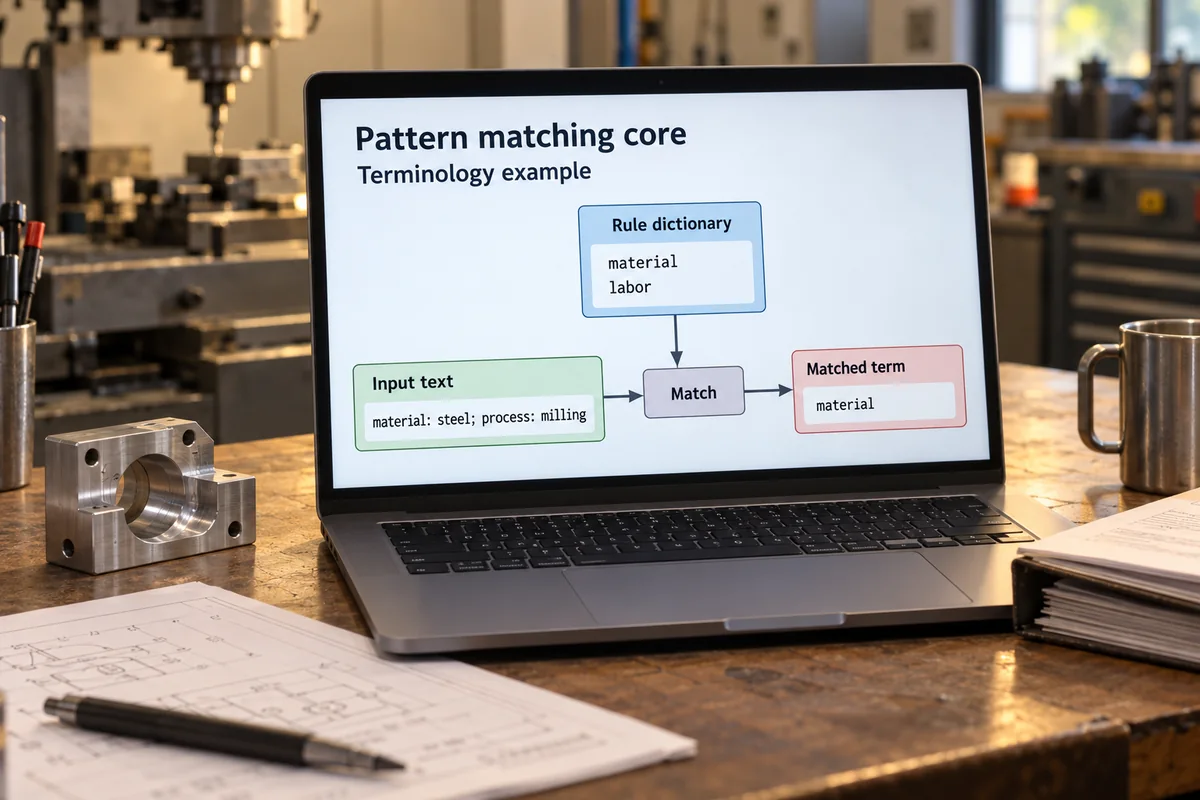
Technical details and manufacturing context for Pattern Matching Core
| Parameter | Typical range | Notes & selection driver |
|---|---|---|
| Processing Capacity | 100–1000 M patterns/s | Higher capacity for real-time applications |
| Pattern Recognition Accuracy | ≥99.5 % | Critical for reliable matching |
| Latency | 1–10 ms | Lower latency for real-time response |
| Operating Temperature | -40–85 °C | Extended range for industrial environmentsIEC 60068-2-1, IEC 60068-2-2 |
| Supply Voltage | 3.3–5 V DC | Typical logic levels |
| Power Consumption | 0.5–5 W | Depends on processing load |
| Interface Protocol | I2C, SPI, UART | Multiple options for integration |
| Memory Size | 256–1024 KB | For pattern storage and buffering |
| Weight | 10–50 g | Depends on package and heatsink |
| Dimensions (L×W×H) | 10×10×2 – 20×20×5 mm | Compact for PCB integration |
| Humidity Range | 5–95 % RH | Non-condensingIEC 60068-2-78 |
| Ingress Protection | IP40–IP65 | Higher rating for harsh environmentsIEC 60529 |
Ranges are indicative industry figures for RFQ preparation, not a supplier commitment. Confirm every value and standard with the legal manufacturer before ordering.
| humidity: | 5% to 95% non-condensing |
| pressure: | N/A (electronic component) |
| data rate: | Up to 10 Gbps input stream |
| temperature: | 0°C to 70°C (operational), -40°C to 85°C (storage) |
| power consumption: | 15-45W depending on pattern complexity |
Indicative industry ranges for design and RFQ preparation. Confirm the exact figures and applicable standard with the manufacturer before specifying.
Quoted from the published standard.
A practical evidence checklist for RFQ preparation and supplier evaluation.
Compare the published product scope and source details, then include your specifications and quantity in an enquiry.
Manufacturer profiles associated with Pattern Matching Core.
Explore company information and manufacturing capabilities, then discuss the scope of your project with a relevant supplier.
Ask for use case, specification boundaries, supplier type, and RFQ preparation information for this product.
It is used within a Pattern Recognition Engine to identify and match patterns in data streams, enabling applications such as quality control, defect detection, and automated classification.
The core offers a processing capacity of 100–1000 M patterns/s, pattern recognition accuracy of ≥99.5%, and latency of 1–10 ms. These are reference ranges; confirm exact values with the manufacturer for your model.
It supports I2C, SPI, and UART interface protocols, allowing flexible integration with various host systems.
It operates in temperatures from -40 to 85 °C (per IEC 60068-2-1/2-2), humidity from 5–95% RH non-condensing (per IEC 60068-2-78), and has ingress protection from IP40 to IP65 (per IEC 60529). Verify with the supplier for your specific application.
This component is essential for the following industrial systems and equipment:
Editorial classification, named public sources where available, and source-reviewed manufacturer records.
Compare manufacturer profiles with relevant product and process capability.