Editorial Technical Reference

X-ray Source Tube

This page explains how X-ray Source Tube is classified within Computer, Electronic and Optical Product Manufacturing. Technical values and manufacturer relationships are research references; confirm the current specification and supplier evidence for each order.

Technical Definition & Core Assembly

An X-ray source tube is the core component within a Fish Bone Detection Sensor Module that produces controlled X-ray radiation.

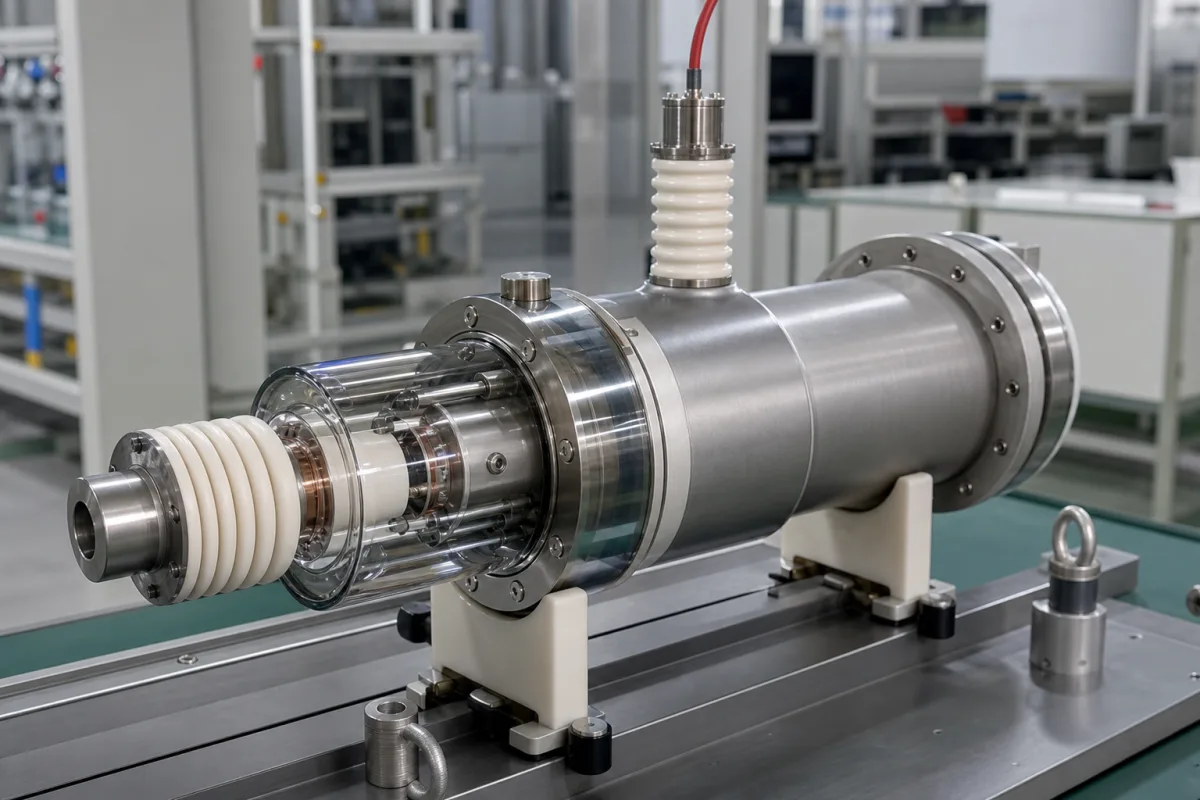
X-ray Source Tube in a manufacturing environment
Representative product image. Confirm appearance and specifications with the manufacturer.

Product Specifications

Technical details and manufacturing context for X-ray Source Tube

Definition
An X-ray source tube is the core component within a Fish Bone Detection Sensor Module that produces controlled X-ray radiation. It generates the penetrating radiation that passes through food products, allowing the sensor system to detect foreign objects like fish bones based on density variations in the resulting X-ray image. The tube operates by accelerating electrons from a cathode to a metal anode target at high voltage. When these high-speed electrons strike the anode, they produce X-rays through bremsstrahlung (braking radiation) and characteristic radiation processes. The resulting X-ray beam passes through the material being inspected, with bones creating detectable absorption patterns due to their higher density compared to surrounding tissue. This component is designed for integration into industrial food inspection systems, where it must meet specific electrical, thermal, and safety requirements. Key parameters include anode voltage (40–150 kV), anode current (0.5–10 mA), focal spot size (0.4–1.2 mm), target angle (12–20°), heat unit capacity (300–500 kHU), anode heat dissipation (100–200 HU/s), filament voltage (6–12 V), filament current (3–8 A), leakage radiation (<0.5 mGy/h at 1 m), operating temperature (10–40 °C), cooling method (oil–air), and weight (15–30 kg). These values are reference ranges that must be confirmed for the specific model and application. The tube is constructed with a tungsten anode, copper housing, glass or ceramic envelope, and cathode filament. It is intended for use in equipment that complies with relevant standards such as IEC 60601-1-3 for radiation safety, IEC 60336 for focal spot measurement, and IEC 60068-2-1/2 for temperature testing. However, listing these standards does not imply certification or compliance of any particular product; verification with the legal manufacturer or supplier is required. Proper selection involves evaluating the required X-ray energy and penetration capability, image resolution, heat dissipation, and cooling method. Installation and maintenance should follow the manufacturer's guidelines, and any deviation from specified operating conditions may affect performance and lifespan. This directory entry provides neutral technical information for procurement and verification purposes.
Working Principle
The tube operates by accelerating electrons from a cathode to a metal anode target at high voltage. When these high-speed electrons strike the anode, they produce X-rays through bremsstrahlung (braking radiation) and characteristic radiation processes. The resulting X-ray beam passes through the material being inspected, with bones creating detectable absorption patterns due to their higher density compared to surrounding tissue.
Common Materials
Tungsten anode, Copper housing, Glass or ceramic envelope, Cathode filament
Technical Parameters
ParameterTypical rangeNotes & selection driver
Anode Voltage40–150 kVDetermines X-ray energy and penetration capabilityIEC 60601-1-3
Anode Current0.5–10 mAAffects X-ray intensity and image contrast
Focal Spot Size0.4–1.2 mmSmaller spot improves image resolutionIEC 60336
Target Angle12–20 °Influences focal spot size and heat dissipation
Heat Unit Capacity300–500 kHUDetermines maximum continuous operation timeIEC 60601-1-3
Anode Heat Dissipation100–200 HU/sAffects cooling time between exposures
Filament Voltage6–12 VControls electron emission and tube current
Filament Current3–8 AAdjusts tube current and X-ray output
Leakage Radiation<0.5 mGy/hSafety limit at 1 m from tube housingIEC 60601-1-3
Operating Temperature10–40 °COutside range may affect performance and lifespanIEC 60068-2-1/2
Cooling MethodOil–airOil circulation with air heat exchanger
Weight15–30 kgAffects mounting and handling

Ranges are indicative industry figures for RFQ preparation, not a supplier commitment. Confirm every value and standard with the legal manufacturer before ordering.

Components / BOM
  • Cathode Part
    Emits electrons when heated by filament current
    Material: Tungsten filament
  • Anode Target Part
    Converts electron kinetic energy into X-rays upon impact
    Material: Tungsten or tungsten alloy
  • Tube Housing Part
    Provides structural support and radiation shielding
    Material: Copper with lead lining
  • Cooling System
    Dissipates heat generated during X-ray production
    Material: Copper or aluminum with cooling fins/oil

Industrial Ecosystem & Supply Chain Structure

Complementary Systems
Downstream Applications
Specialized Tooling

Application Fit & Sizing Matrix

Operational Limits
pressure: Atmospheric to 1.5 bar absolute
other spec: Cooling water flow: 2-4 L/min at 15-25°C inlet, Maximum anode power: 3-9 kW depending on model, Vacuum level: <10^-5 mbar
temperature: 10°C to 40°C (operating), -20°C to 60°C (storage)
Media Compatibility
✓ Medical imaging systems ✓ Non-destructive testing equipment ✓ Security screening devices
Unsuitable: High-vibration industrial environments without proper isolation
Sizing Data Required
  • Required X-ray energy range (kV)
  • Target focal spot size (mm)
  • Maximum continuous power requirement (kW)

Reliability & Engineering Risk Analysis

Failure Mode & Root Cause
Cathode filament burnout
Cause: Excessive current or prolonged operation leading to tungsten filament degradation and eventual breakage
Anode target pitting/melting
Cause: Localized overheating from improper cooling or excessive power density causing focal spot degradation
Maintenance Indicators
  • Decreased X-ray output intensity despite consistent power settings
  • Unusual arcing sounds or visible sparking within the tube housing
Engineering Tips
  • Implement strict thermal management protocols including regular cooling system maintenance and temperature monitoring
  • Establish controlled ramp-up/ramp-down procedures for power cycling to minimize thermal shock stress

Indicative industry ranges for design and RFQ preparation. Confirm the exact figures and applicable standard with the manufacturer before specifying.

Compliance & Manufacturing Standards

Applicable Standards
ANSI N43.2 - Radiation Safety for X-ray Diffraction and Fluorescence Analysis Equipment CE Marking - EU Directive 2014/35/EU (Low Voltage Directive)

Quoted from the published standard.

Manufacturing Precision
  • Focal Spot Size: +/-0.1mm
  • Anode Surface Flatness: 0.05mm
Quality Inspection
  • Leakage Radiation Test
  • High Voltage Insulation Resistance Test

Manufacturers of X-ray Source Tube

Manufacturer profiles associated with X-ray Source Tube.

Sourcing X-ray Source Tube from China?
Tell us your specification and target quantity — we will match it against manufacturer records and come back with the factories that fit.
Request manufacturers We manufacture this

Manufacturer listings support early research and capability understanding. They are not certification, ranking, or transaction guarantees.

Share this page
Technical documentation
Request current drawings, revision history, and a signed specification sheet.
Manufacturing capability
Verify equipment lists, process limits, capacity, and representative production evidence.
Inspection readiness
Confirm test methods, calibrated equipment, sampling plans, and traceable reports.
Supplier transparency
Check the legal entity, factory address, ownership, certifications, and direct contacts.

CNFX does not score or rank suppliers. Buyers must verify all claims and documents with the legal manufacturer before ordering.

Supply Chain Compatible Machinery & Devices

Industrial Smart Camera Module

The Industrial Smart Camera Module is a compact, self-contained vision processing unit designed for integration into industrial machinery and production lines.

Explore Specs →
Surface Mount Resistor

Passive electronic component for current limiting and voltage division in circuits

Explore Specs →
Surface Mount Capacitor

A surface mount capacitor is a fundamental electronic component used for energy storage, filtering, coupling, and decoupling in electronic circuits.

Explore Specs →
Surface Mount Technology (SMT) Pick-and-Place Machine

Automated machine that precisely places electronic components onto printed circuit boards.

Explore Specs →

Frequently Asked Questions

What is the typical anode voltage range for this X-ray source tube?

The anode voltage is typically in the range of 40–150 kV, which determines the X-ray energy and penetration capability. However, the exact value must be confirmed for the specific model and application with the legal manufacturer or supplier.

How does the focal spot size affect image resolution?

A smaller focal spot size improves image resolution, as it produces a sharper X-ray beam. The reference range is 0.4–1.2 mm, but the actual value should be verified for the intended use.

What cooling method is used for this tube?

The cooling method is oil circulation with an air heat exchanger, as indicated in the reference parameters. This affects heat dissipation and continuous operation time. Confirm the specific cooling system with the manufacturer.

What standards are relevant for verifying this component?

Relevant standards include IEC 60601-1-3 for radiation safety, IEC 60336 for focal spot measurement, and IEC 60068-2-1/2 for temperature testing. These are reference standards; compliance must be verified with the legal manufacturer or supplier.

Data Basis

Editorial classification, named public sources where available, and source-reviewed manufacturer records.

Preliminary Technical Classification
This page supports structured research, RFQ preparation, and supplier evaluation. It does not replace buyer-led supplier qualification, standards review, or technical approval.
Buyer enquiry

Request manufacturing insight for X-ray Source Tube

Ask for use case, specification boundaries, supplier type, and RFQ preparation information for this product.

Where it goes
Straight to the CNFX editorial desk, and to the manufacturer if this product is linked to a claimed profile. Nothing is broadcast to a supplier list.
Your details stay here
We do not sell or rent enquiry data, and we do not add you to a mailing list. Used only to answer this request.
No commission, no middleman
CNFX is a directory. We take no cut of any order and never negotiate on a supplier's behalf.
What we don't claim
A listing is not an endorsement. Qualify every supplier and verify every figure yourself before ordering.

Your business information is used only to process this request.

Thank you! Your message has been sent. We'll respond within 1–3 business days.
Sorry, we couldn't send your message. Please try again, or email us at [email protected].

Need to Manufacture X-ray Source Tube?

Compare manufacturer profiles with relevant product and process capability.

Previous Product
XY Positioning Stage
Last Product
Get QuotesChat