Industry-Verified Manufacturing Data (2026)

Lithium Iron Phosphate Cathode Active Material

Based on aggregated insights from multiple verified factory profiles within the CNFX directory, the standard Lithium Iron Phosphate Cathode Active Material used in the Electrical Equipment Manufacturing sector typically supports operational capacities ranging from standard industrial configurations to heavy-duty production requirements.

Technical Definition & Core Assembly

A canonical Lithium Iron Phosphate Cathode Active Material is characterized by the integration of Active LiFePO4 Particles and Carbon Coating Layer. In industrial production environments, manufacturers listed on CNFX commonly emphasize Lithium carbonate construction to support stable, high-cycle operation across diverse manufacturing scenarios.

High-stability cathode powder for lithium-ion batteries.

Product Specifications

Technical details and manufacturing context for Lithium Iron Phosphate Cathode Active Material

Definition
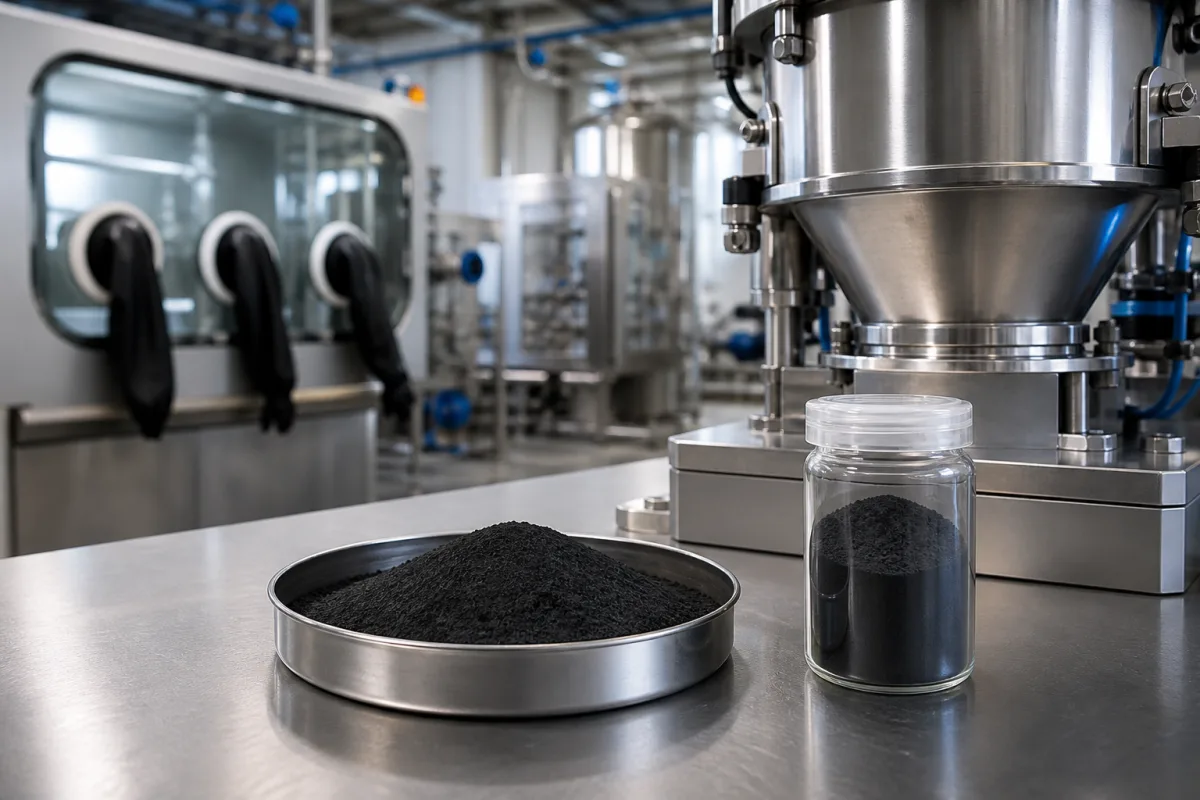
Lithium iron phosphate (LiFePO4) cathode active material is a critical raw material in battery manufacturing, serving as the positive electrode component in lithium-ion cells. This olivine-structured compound provides superior thermal stability and safety compared to other cathode chemistries, making it essential for electric vehicles, energy storage systems, and industrial applications. As a semi-finished industrial substance, it's supplied to battery manufacturers as a fine powder that undergoes electrode slurry preparation, coating, and calendaring processes. Its role in the B2B supply chain involves specialized chemical producers supplying to cell manufacturers who integrate it into complete battery systems.
Working Principle
Operates through reversible lithium-ion intercalation/de-intercalation within the olivine crystal structure during charge/discharge cycles, enabling electron flow while maintaining structural stability.
Common Materials
Lithium carbonate, Iron phosphate, Carbon precursor
Technical Parameters
  • Packed powder density affecting electrode loading (g/cm³) Standard Spec
  • Theoretical electrochemical capacity per mass unit (mAh/g) Standard Spec
Components / BOM
  • Active LiFePO4 Particles
    Primary lithium-ion host material for electrochemical reactions
    Material: Lithium iron phosphate crystals
  • Carbon Coating Layer
    Enhances electronic conductivity and particle connectivity
    Material: Amorphous carbon
  • Binder Compatibility Agent Optional
    Surface modifier for improved slurry processing
    Material: Organic functional groups
Engineering Reasoning
2.5-3.65 V vs. Li/Li⁺ at 25°C, 0.1-2 C-rate discharge
Structural collapse at >3.8 V vs. Li/Li⁺ causing iron dissolution, or <2.0 V vs. Li/Li⁺ causing lithium plating
Design Rationale: Jahn-Teller distortion in Fe³⁺ at high voltage (>3.8 V) destabilizes olivine structure; lithium diffusion coefficient drops below 10⁻¹⁴ cm²/s at <2.0 V
Risk Mitigation (FMEA)
Trigger Localized temperature >180°C from internal short circuit
Mode: Exothermic decomposition releasing 0.8 kJ/g, triggering thermal runaway
Strategy: Embed 5 μm Al₂O₃ coating layer to increase thermal stability to 250°C
Trigger Electrolyte oxidation at >4.2 V vs. Li/Li⁺ forming HF
Mode: HF etching dissolves FePO₄ lattice, reducing capacity by >20% per cycle
Strategy: Dope with 1% Mg²⁺ at Li-site to raise oxidation potential to 4.5 V vs. Li/Li⁺

Industry Taxonomies & Aliases

Commonly used trade names and technical identifiers for Lithium Iron Phosphate Cathode Active Material.

Industrial Ecosystem & Supply Chain DNA

Complementary Systems
Downstream Applications
Specialized Tooling

Application Fit & Sizing Matrix

Operational Limits
pressure: Atmospheric to 1 bar gauge (slurry processing)
temperature: -20°C to 60°C (operational), up to 80°C (short-term)
moisture exposure: <100 ppm H₂O in processing environment
slurry concentration: 40-60% solids by weight
Media Compatibility
✓ NMP-based PVDF binder systems ✓ Aqueous CMC/SBR binder systems ✓ Carbon black/Super P conductive additives
Unsuitable: Strong acidic or alkaline aqueous environments (pH <4 or >10)
Sizing Data Required
  • Required battery capacity (Ah)
  • Target energy density (Wh/kg or Wh/L)
  • Electrode coating thickness specification (μm)

Reliability & Engineering Risk Analysis

Failure Mode & Root Cause
Structural degradation
Cause: Lithium-ion intercalation/deintercalation cycles cause lattice stress and microcracking in the cathode material, leading to capacity fade and increased internal resistance over time.
Electrolyte decomposition
Cause: High operating temperatures or overcharging can accelerate electrolyte breakdown at the cathode surface, forming solid electrolyte interface (SEI) layers that impede lithium-ion transport and reduce efficiency.
Maintenance Indicators
  • Abnormal heat generation or thermal runaway events during charging/discharging cycles
  • Rapid capacity fade or voltage instability beyond manufacturer specifications
Engineering Tips
  • Implement strict temperature control systems (25-45°C optimal range) and avoid exposure to high temperatures to minimize electrolyte decomposition and structural stress.
  • Utilize battery management systems (BMS) with precise voltage regulation (3.2-3.6V/cell) to prevent overcharging/overdischarging and maintain balanced cell operation.

Compliance & Manufacturing Standards

Reference Standards
ISO 9001:2015 - Quality Management Systems ASTM D7148-19 - Standard Test Method for Determining the Ionic Conductivity of Polymeric Battery Separators as a Function of Temperature and Humidity IEC 62660-1:2018 - Secondary lithium-ion cells for the propulsion of electric road vehicles - Part 1: Performance testing
Manufacturing Precision
  • Particle Size Distribution: D50 +/- 0.5 μm
  • Tap Density: +/- 0.05 g/cm³
Quality Inspection
  • X-ray Diffraction (XRD) for Crystal Structure Analysis
  • Inductively Coupled Plasma (ICP) Spectroscopy for Elemental Purity

Factories Producing Lithium Iron Phosphate Cathode Active Material

Verified manufacturers with capability to produce this product in China

✓ 98% Supplier Capability Match Found

P Project Engineer from Singapore Feb 22, 2026
★★★★★
"Impressive build quality. Especially the Specific Capacity (mAh/g) is very stable during long-term operation."
Technical Specifications Verified
S Sourcing Manager from Germany Feb 19, 2026
★★★★★
"As a professional in the Electrical Equipment Manufacturing sector, I confirm this Lithium Iron Phosphate Cathode Active Material meets all ISO standards."
Technical Specifications Verified
P Procurement Specialist from Brazil Feb 16, 2026
★★★★★
"Standard OEM quality for Electrical Equipment Manufacturing applications. The Lithium Iron Phosphate Cathode Active Material arrived with full certification."
Technical Specifications Verified
Verification Protocol

“Feedback is collected from verified sourcing managers during RFQ (Request for Quote) and factory evaluation processes on CNFX. These reports represent historical performance data and technical audit summaries from our B2B manufacturing network.”

16 sourcing managers are analyzing this specification now. Last inquiry for Lithium Iron Phosphate Cathode Active Material from Turkey (42m ago).

Supply Chain Commonly Integrated Components

Rotor Assembly

The rotating component of an actuator motor that converts electrical energy into mechanical motion

Explore Specs →
Stator Assembly

The stationary component of an electric motor that generates a rotating magnetic field when energized.

Explore Specs →
Wire Tensioner

A device that applies and maintains precise tension on electrical wire during the winding process of transformers.

Explore Specs →
Wire Guide System

A precision mechanical system that guides and positions wire during the winding process on a transformer winding machine.

Explore Specs →

Frequently Asked Questions

What are the key advantages of this LiFePO4 cathode material?

This cathode material offers exceptional thermal stability, long cycle life, and enhanced safety compared to other lithium-ion chemistries. The carbon coating improves conductivity while maintaining structural integrity during charge/discharge cycles.

How does particle size distribution affect battery performance?

Controlled particle size (D50) ensures uniform electrode coating, optimal packing density, and consistent electrochemical performance. Smaller particles increase surface area for faster ion transfer, while proper distribution prevents electrode cracking.

What applications is this cathode material best suited for?

Ideal for electric vehicle batteries, energy storage systems, power tools, and medical devices where safety, longevity, and thermal stability are critical. The material meets demanding industrial requirements for high-power applications.

Can I contact factories directly on CNFX?

CNFX is an open directory, not a transaction platform. Each factory profile provides direct contact information and production details to help you initiate direct inquiries with Chinese suppliers.

Get Quote for Lithium Iron Phosphate Cathode Active Material

Request technical pricing, lead times, or customized specifications for Lithium Iron Phosphate Cathode Active Material directly from verified manufacturing units.

Your business information is encrypted and only shared with verified Lithium Iron Phosphate Cathode Active Material suppliers.

Thank you! Your message has been sent. We'll respond within 1–3 business days.

Need to Manufacture Lithium Iron Phosphate Cathode Active Material?

Connect with verified factories specializing in this product category

Add Your Factory Contact Us
Previous Product
Light Head
Next Product
Lithium Nickel Manganese Cobalt Oxide Cathode Active Material