Structured Manufacturing Data (2026)

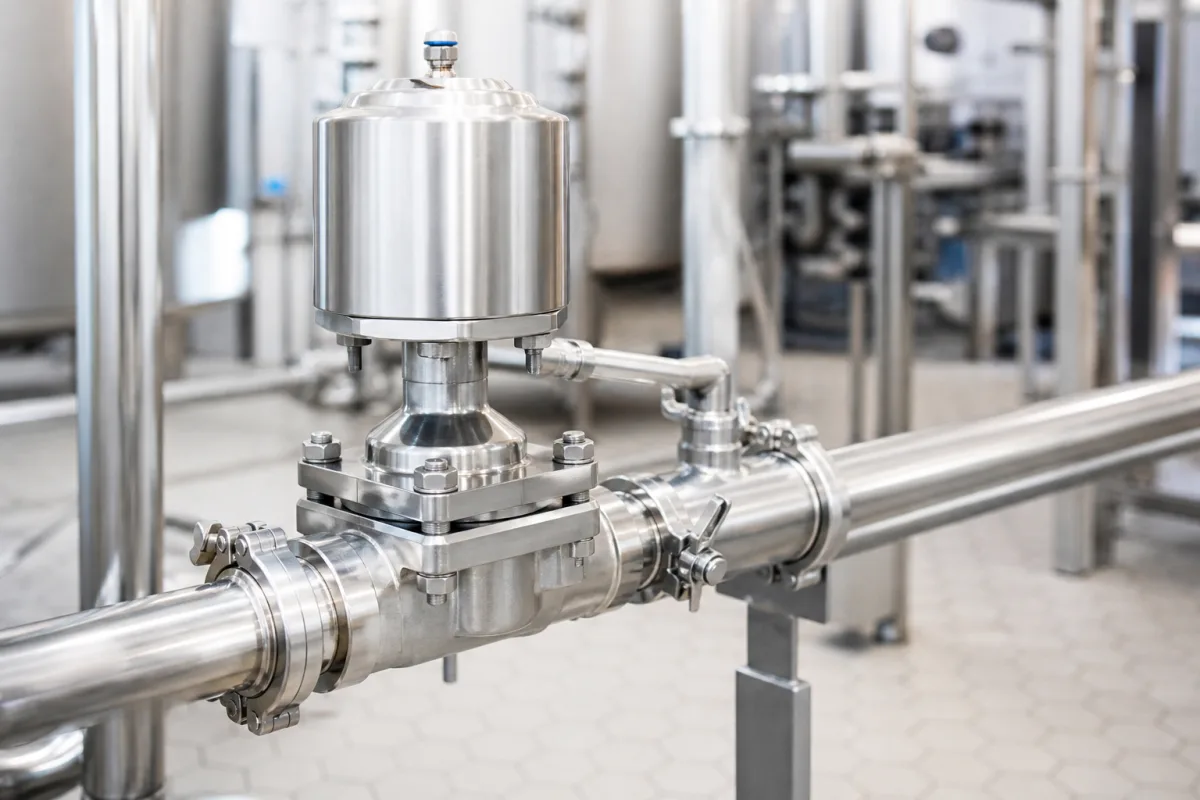
Dairy Flow Control Diaphragm Valve

Based on aggregated insights from structured factory profiles within the CNFX directory, the standard Dairy Flow Control Diaphragm Valve used in the Food Manufacturing sector typically supports operational capacities ranging from standard industrial configurations to heavy-duty production requirements.

Technical Definition & Core Assembly

A canonical Dairy Flow Control Diaphragm Valve is characterized by the integration of Diaphragm and Valve Body. In industrial production environments, manufacturers listed on CNFX commonly emphasize 316L Stainless Steel construction to support stable, high-cycle operation across diverse manufacturing scenarios.

Sanitary diaphragm valve for precise flow control in dairy processing pipelines.
Product Specifications

Technical details and manufacturing context for Dairy Flow Control Diaphragm Valve

Definition
A hygienic diaphragm valve designed specifically for dairy processing applications where precise flow control and contamination prevention are critical. This component integrates into CIP/SIP systems and provides reliable shut-off and throttling capabilities for milk, cream, whey, and other dairy fluids. It serves as an essential B2B supply chain component for dairy equipment manufacturers and plant maintenance operations, ensuring product quality and process efficiency.
Working Principle
A flexible diaphragm is mechanically actuated to press against a weir or seat, creating a leak-tight seal that isolates the fluid from the valve mechanism.
Common Materials
316L Stainless Steel, Food-Grade EPDM, PTFE
Technical Parameters
  • Nominal pipe size for connection (inches) Per Request
  • Maximum working pressure rating (bar) Per Request
Components / BOM
  • Diaphragm Part
    Creates flexible seal between fluid and valve mechanism
    Material: Food-Grade EPDM or PTFE
  • Valve Body
    Main structural housing with sanitary connections
    Material: 316L Stainless Steel
  • Actuator Stem Part
    Transmits mechanical force to diaphragm
    Material: 316 Stainless Steel
  • Seat Ring Part
    Provides sealing surface for diaphragm contact
    Material: 316L Stainless Steel
  • Sanitary Clamp Part
    Quick-connect fitting for pipeline integration
    Material: 304 Stainless Steel

Industry Taxonomies & Aliases

Commonly used trade names and technical identifiers for Dairy Flow Control Diaphragm Valve.

Industrial Ecosystem & Supply Chain Structure

Complementary Systems
Downstream Applications
Specialized Tooling

Application Fit & Sizing Matrix

Operational Limits
pressure: 0 to 10 bar (g)
flow rate: Up to 50 m³/h (varies with size)
temperature: -10°C to 150°C
slurry concentration: Up to 40% solids by weight
Media Compatibility
✓ Milk and dairy products ✓ CIP (Clean-in-Place) fluids ✓ Food-grade gases
Unsuitable: Abrasive slurries with hard particles >500 microns
Sizing Data Required
  • Required flow rate (m³/h)
  • Line pressure (bar)
  • Fluid viscosity (cP)

Reliability & Engineering Risk Analysis

Failure Mode & Root Cause
Diaphragm fatigue cracking
Cause: Repeated flexing cycles from frequent valve actuation in dairy processing lines, combined with chemical exposure to cleaning agents (CIP chemicals) that degrade elastomer materials over time.
Seat contamination and leakage
Cause: Buildup of dairy residues (proteins, fats, minerals) on valve seat surfaces, creating imperfect sealing and allowing product cross-contamination or flow control inaccuracies.
Maintenance Indicators
  • Visible product leakage around valve body or through weep holes indicating diaphragm failure
  • Audible hissing or irregular flow sounds during operation suggesting seat contamination or partial blockage
Engineering Tips
  • Implement regular diaphragm inspection and replacement schedules based on actual cycle counts rather than time intervals, using dairy-compatible elastomers (EPDM or FDA-approved materials) resistant to both product and cleaning chemicals.
  • Optimize Clean-in-Place (CIP) procedures with verified temperature, chemical concentration, and flow velocity parameters to ensure complete removal of dairy residues without accelerating material degradation.

Compliance & Manufacturing Standards

Reference Standards
ISO 9001:2015 (Quality Management Systems) ANSI/ASME BPE-2019 (Bioprocessing Equipment) DIN 11866-2 (Fittings for the Food Industry)
Manufacturing Precision
  • Bore Diameter: +/-0.05mm
  • Surface Roughness: Ra ≤ 0.8µm
Quality Inspection
  • Hydrostatic Pressure Test (1.5x working pressure)
  • Material Composition Verification (PMI - Positive Material Identification)

Factories Producing Dairy Flow Control Diaphragm Valve

Manufacturer profiles with relevant production capability in China

Manufacturer listings support early research and capability understanding. They are not certification, ranking, or transaction guarantees.

Technical documentation
4/5
Manufacturing capability
4/5
Inspection readiness
5/5
Supplier transparency
3/5

These scores are example evaluation dimensions, not real customer ratings, country-specific buyer feedback, or live inquiry activity.

Supply Chain Commonly Integrated Components

Pressure Regulation Unit

A specialized component within fermentation systems that maintains precise pressure levels during microbial growth processes.

Explore Specs →
Sensor Array Network

A network of multiple sensors distributed throughout a fermentation system to monitor and collect real-time data on critical parameters.

Explore Specs →
Agitation System

A mechanical subsystem within an automated fermentation control system designed to mix and homogenize fermentation media through controlled agitation.

Explore Specs →
Aseptic Surge Tank

A sterile holding vessel that temporarily stores processed fruit/vegetable products under aseptic conditions to balance flow rates between processing stages.

Explore Specs →

Frequently Asked Questions

What materials are used in this dairy flow control diaphragm valve?

This valve is constructed with 316L Stainless Steel for the body, Food-Grade EPDM for the diaphragm, and PTFE components, ensuring full compliance with dairy industry hygiene standards.

What are the key specifications for this diaphragm valve?

Key specifications include actuation type, connection size in inches, flow coefficient in US gal/min/psi, surface finish (Ra), temperature range in °C, and working pressure in bar, all designed for precise dairy processing control.

Why is a diaphragm valve preferred for dairy processing applications?

Diaphragm valves provide excellent sanitary design with no dead spaces, preventing bacterial growth. The diaphragm isolates the fluid from mechanical parts, ensuring purity and easy cleaning in dairy processing pipelines.

Can I contact factories directly on CNFX?

CNFX is an open directory, not a transaction platform. Each factory profile provides direct contact information and production details to help you initiate direct inquiries with Chinese suppliers.

Data Basis

CNFX manufacturer profiles, technical classification, publicly available product information, and ongoing plausibility checks.

Preliminary Technical Classification
This page supports structured research, RFQ preparation, and supplier evaluation. It does not replace buyer-led supplier qualification, standards review, or technical approval.

Request Manufacturing Insight for Dairy Flow Control Diaphragm Valve

Ask for use case, specification boundaries, supplier type, and RFQ preparation information for Dairy Flow Control Diaphragm Valve.

Your business information is used only to process this request.

Thank you! Your message has been sent. We'll respond within 1–3 business days.

Need to Manufacture Dairy Flow Control Diaphragm Valve?

Compare manufacturer profiles with relevant product and process capability.

Create Manufacturer Profile Contact Us
Previous Product
Cutting Mechanism
Next Product
Detector Array