Aluminum Seal Crimper
View system integration details
This page explains how Actuation Cylinder / Motor is classified within Machinery and Equipment Manufacturing. Technical values and manufacturer relationships are research references; confirm the current specification and supplier evidence for each order.
Power conversion component that generates mechanical force for crimping operations
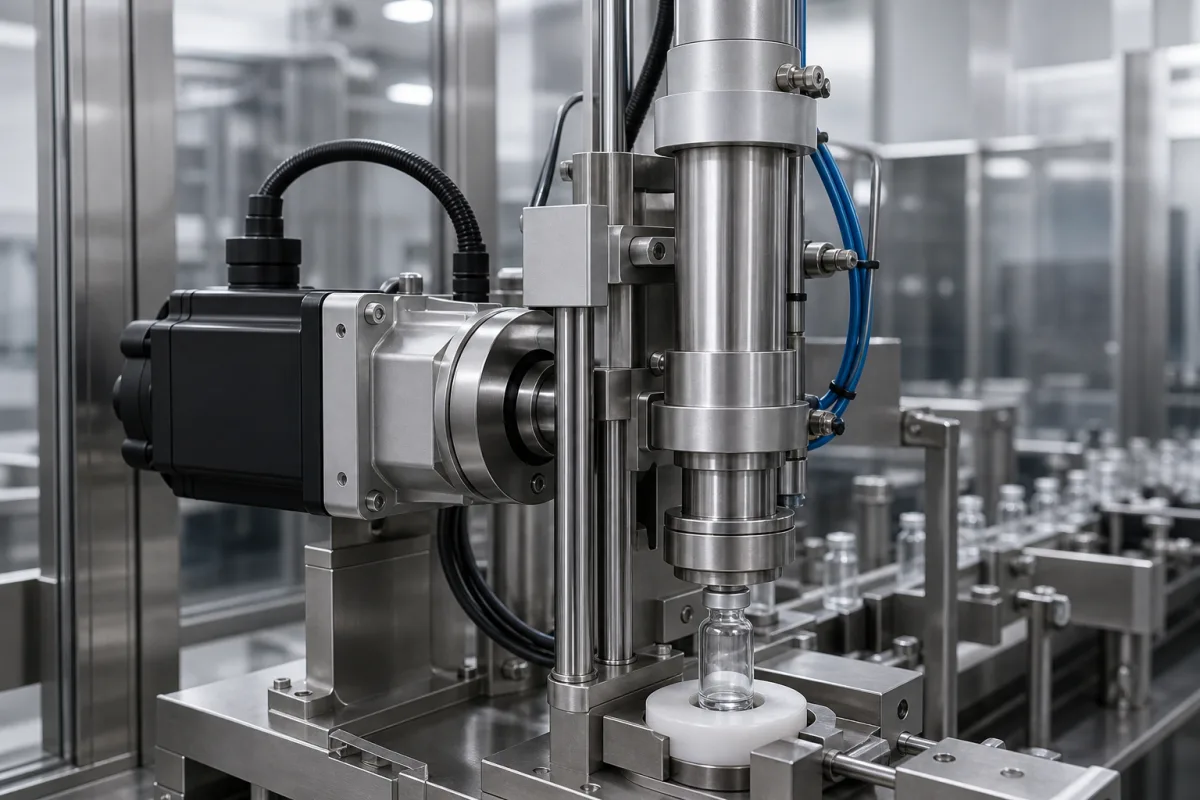
Technical details and manufacturing context for Actuation Cylinder / Motor
| Parameter | Typical range | Notes & selection driver |
|---|---|---|
| Bore Diameter | 32–200 mm | Determines force outputISO 6432 |
| Stroke Length | 25–500 mm | Affects crimping depthISO 6431 |
| Force Output | 0.5–50 kN | At rated pressure |
| Position Repeatability | ±0.05 mm | For consistent crimp quality |
| Operating Temperature | -10–60 °C | Seals degrade outside range |
| Ingress Protection | IP54–IP65 | Dust and water resistanceIEC 60529 |
| Supply Voltage | 24 ±10% V DC | For motor-driven units |
| Power Consumption | 50–500 W | For motor-driven units |
| Cylinder Material | 6061-T6 | Aluminum alloy for weight reductionASTM B221 |
| Weight | 2–15 kg | Depends on size and configuration |
Ranges are indicative industry figures for RFQ preparation, not a supplier commitment. Confirm every value and standard with the legal manufacturer before ordering.
This component is essential for the following industrial systems and equipment:
| pressure: | Up to 300 bar (4350 psi) |
| flow rate: | Up to 100 L/min (26.4 GPM) |
| temperature: | -20°C to 120°C |
| slurry concentration: | Not applicable - designed for clean hydraulic fluids |
Indicative industry ranges for design and RFQ preparation. Confirm the exact figures and applicable standard with the manufacturer before specifying.
Quoted from the published standard.
Manufacturer profiles associated with Actuation Cylinder / Motor.
Manufacturer listings support early research and capability understanding. They are not certification, ranking, or transaction guarantees.
A practical evidence checklist for RFQ preparation and supplier evaluation.
CNFX does not score or rank suppliers. Buyers must verify all claims and documents with the legal manufacturer before ordering.
It converts hydraulic, pneumatic, or electrical energy into mechanical force (linear or rotational) to compress and deform aluminum seals around container openings, ensuring a proper seal.
The operating pressure is typically 1.0–1.6 MPa, and the operating temperature range is -10 to 60 °C. Seals degrade outside the temperature range.
Bore diameter (32–200 mm, per ISO 6432) determines the force output of the cylinder. A larger bore generally provides higher force at a given pressure.
Verify model-specific values for operating pressure, bore diameter, stroke length, force output, position repeatability, ingress protection, supply voltage (for motor-driven units), and material grade. Confirm these with the legal manufacturer or supplier.
Editorial classification, named public sources where available, and source-reviewed manufacturer records.
Ask for use case, specification boundaries, supplier type, and RFQ preparation information for this product.
Compare manufacturer profiles with relevant product and process capability.