Industry-Verified Manufacturing Data (2026)

Annular Die

Based on aggregated insights from multiple verified factory profiles within the CNFX directory, the standard Annular Die used in the Machinery and Equipment Manufacturing sector typically supports operational capacities ranging from standard industrial configurations to heavy-duty production requirements.

Technical Definition & Core Assembly

A canonical Annular Die is characterized by the integration of Die Body and Mandrel. In industrial production environments, manufacturers listed on CNFX commonly emphasize Tool steel construction to support stable, high-cycle operation across diverse manufacturing scenarios.

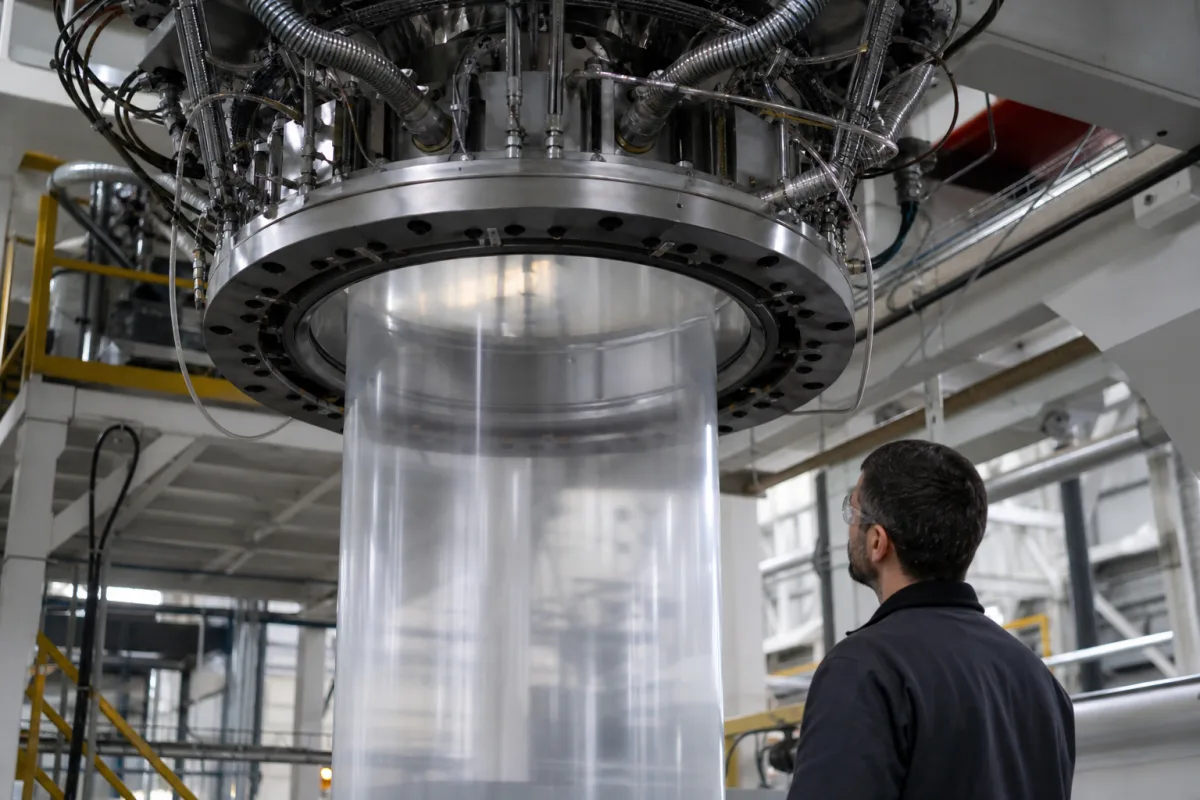
A critical component in plastic film blowing machines that shapes molten plastic into a continuous tubular film.
Product Specifications

Technical details and manufacturing context for Annular Die

Definition
The annular die is the extrusion head in a plastic film blowing machine where molten plastic is forced through a circular opening to form a continuous tube. It controls the initial shape, thickness distribution, and dimensions of the plastic film before it enters the bubble formation and cooling stages. Proper die design and maintenance are essential for producing uniform, high-quality plastic films with consistent properties.
Working Principle
Molten plastic from the extruder enters the annular die body and flows through internal channels (often a spiral mandrel design) to distribute material evenly around the circumference. The plastic then passes through the annular gap between the die body and mandrel, forming a seamless tube. The gap width and die geometry determine the film's initial thickness and dimensions, which are further controlled by air pressure and stretching during bubble formation.
Common Materials
Tool steel, Stainless steel, Hardened steel alloys
Technical Parameters
  • Die diameter and gap width specifications (mm) Standard Spec
Components / BOM
  • Die Body
    Outer housing containing flow channels and forming surface
    Material: Hardened tool steel
  • Mandrel
    Central core that creates the annular gap with die body
    Material: Hardened tool steel
  • Spiral Grooves
    Internal channels for even polymer distribution
    Material: Machined steel
  • Die Lip
    Precision edge where film exits the die
    Material: Hardened steel
Engineering Reasoning
15-35 MPa internal pressure, 180-240°C temperature, 0.5-2.5 m/min extrusion speed
Material yield strength exceeded at 45 MPa internal pressure, thermal degradation above 280°C, or flow instability below 0.3 m/min
Design Rationale: Von Mises stress exceeding H13 tool steel yield strength (1650 MPa) causes plastic deformation; Arrhenius kinetics accelerate polymer degradation above 280°C; Reynolds number < 2000 induces laminar flow instability
Risk Mitigation (FMEA)
Trigger Non-uniform thermal gradient exceeding 15°C/mm across die face
Mode: Differential thermal expansion creates >0.1 mm radial misalignment
Strategy: Integrate 12-zone PID-controlled cartridge heaters with 0.5°C resolution feedback
Trigger Polymer melt fracture at wall shear stress > 0.14 MPa·s
Mode: Surface defects propagate as sharkskin roughness > 5 μm Ra
Strategy: Implement conical flow channel with 8:1 L/D ratio and 2° taper angle

Industry Taxonomies & Aliases

Commonly used trade names and technical identifiers for Annular Die.

Industrial Ecosystem & Supply Chain DNA

Complementary Systems
Downstream Applications
Specialized Tooling

Application Fit & Sizing Matrix

Operational Limits
pressure: 10-50 MPa (depends on polymer viscosity and die design)
flow rate: 5-500 kg/h (varies with die diameter and polymer type)
temperature: 150-300°C (typical polymer processing range)
slurry concentration: Not applicable (designed for molten polymers, not slurries)
Media Compatibility
✓ Polyethylene (LDPE/HDPE) ✓ Polypropylene (PP) ✓ Polyvinyl Chloride (PVC)
Unsuitable: Abrasive-filled polymers (e.g., glass fiber reinforced plastics)
Sizing Data Required
  • Required film diameter (mm)
  • Target output rate (kg/h)
  • Polymer melt flow index (MFI)

Reliability & Engineering Risk Analysis

Failure Mode & Root Cause
Abrasive wear and scoring
Cause: Contaminant particles (e.g., polymer additives, recycled material impurities) circulating in the polymer melt, causing micro-cutting and material removal on the die surface, especially in the flow channels and land areas.
Thermal fatigue cracking
Cause: Cyclic thermal stresses from repeated heating/cooling cycles during startup/shutdown or process temperature variations, leading to crack initiation and propagation in the die body, particularly at stress concentrators like bolt holes or sharp corners.
Maintenance Indicators
  • Visible scoring or scratches on the die face or flow surfaces, often accompanied by irregular extrudate surface (e.g., streaks, lines) indicating material degradation.
  • Audible hissing or irregular extrusion sounds, suggesting potential die swell inconsistency or internal flow restriction due to partial blockage or wear.
Engineering Tips
  • Implement strict material filtration (e.g., screen packs, melt filters) upstream of the die to minimize abrasive contaminants and reduce wear rates.
  • Optimize thermal management: use controlled heating/cooling cycles to minimize thermal shocks, and consider die materials with higher thermal fatigue resistance (e.g., specialized tool steels) for demanding applications.

Compliance & Manufacturing Standards

Reference Standards
ISO 9001:2015 - Quality management systems ASTM A276/A276M-17 - Standard Specification for Stainless Steel Bars and Shapes CE Marking - EU conformity for machinery safety (2006/42/EC)
Manufacturing Precision
  • Bore diameter: +/-0.01mm
  • Parallelism of faces: 0.05mm
Quality Inspection
  • Dimensional verification with CMM (Coordinate Measuring Machine)
  • Hardness testing (Rockwell C scale)

Factories Producing Annular Die

Verified manufacturers with capability to produce this product in China

✓ 96% Supplier Capability Match Found

T Technical Director from Australia Jan 02, 2026
★★★★★
"Impressive build quality. Especially the technical reliability is very stable during long-term operation."
Technical Specifications Verified
P Project Engineer from Singapore Dec 30, 2025
★★★★☆
"As a professional in the Machinery and Equipment Manufacturing sector, I confirm this Annular Die meets all ISO standards. (Delivery took slightly longer than expected, but technical support was excellent.)"
Technical Specifications Verified
S Sourcing Manager from Germany Dec 27, 2025
★★★★★
"Standard OEM quality for Machinery and Equipment Manufacturing applications. The Annular Die arrived with full certification."
Technical Specifications Verified
Verification Protocol

“Feedback is collected from verified sourcing managers during RFQ (Request for Quote) and factory evaluation processes on CNFX. These reports represent historical performance data and technical audit summaries from our B2B manufacturing network.”

8 sourcing managers are analyzing this specification now. Last inquiry for Annular Die from Mexico (1h ago).

Supply Chain Compatible Machinery & Devices

Heavy-Duty CNC Plasma Cutting Machine

Industrial machine for precision metal cutting using plasma arc technology

Explore Specs →
Automated Assembly Line System

Integrated production system for sequential component assembly operations

Explore Specs →
Automated Powder Coating System

Integrated industrial system for applying dry powder coatings to metal substrates.

Explore Specs →
Centrifugal Pump Impeller

Rotating component that transfers energy to fluid in centrifugal pumps.

Explore Specs →

Frequently Asked Questions

What materials are best for annular dies in high-volume plastic film production?

For high-volume production, hardened steel alloys and tool steel are recommended due to their exceptional wear resistance and ability to maintain precise tolerances under continuous thermal cycling and mechanical stress.

How do spiral grooves in an annular die affect film quality?

Spiral grooves evenly distribute molten plastic around the die circumference, eliminating weld lines and ensuring uniform wall thickness in the tubular film, which is critical for consistent strength and optical clarity in the final product.

What maintenance is required for annular dies in machinery manufacturing?

Regular cleaning to prevent plastic buildup, inspection of die lips and mandrel for wear or damage, and proper storage in a controlled environment to prevent corrosion are essential maintenance practices to extend die life and maintain film quality.

Can I contact factories directly on CNFX?

CNFX is an open directory, not a transaction platform. Each factory profile provides direct contact information and production details to help you initiate direct inquiries with Chinese suppliers.

Get Quote for Annular Die

Request technical pricing, lead times, or customized specifications for Annular Die directly from verified manufacturing units.

Your business information is encrypted and only shared with verified Annular Die suppliers.

Thank you! Your message has been sent. We'll respond within 1–3 business days.

Need to Manufacture Annular Die?

Connect with verified factories specializing in this product category

Add Your Factory Contact Us
Previous Product
Angle/Radius Sensor
Next Product
Annular Preventer