Linear Guideways
View system integration details
This page explains how Carriage/Slider is classified within Machinery and Equipment Manufacturing. Technical values and manufacturer relationships are research references; confirm the current specification and supplier evidence for each order.
A carriage or slider is the component of a linear guideway system that houses the rolling elements (balls or rollers) and moves along the precision rail.
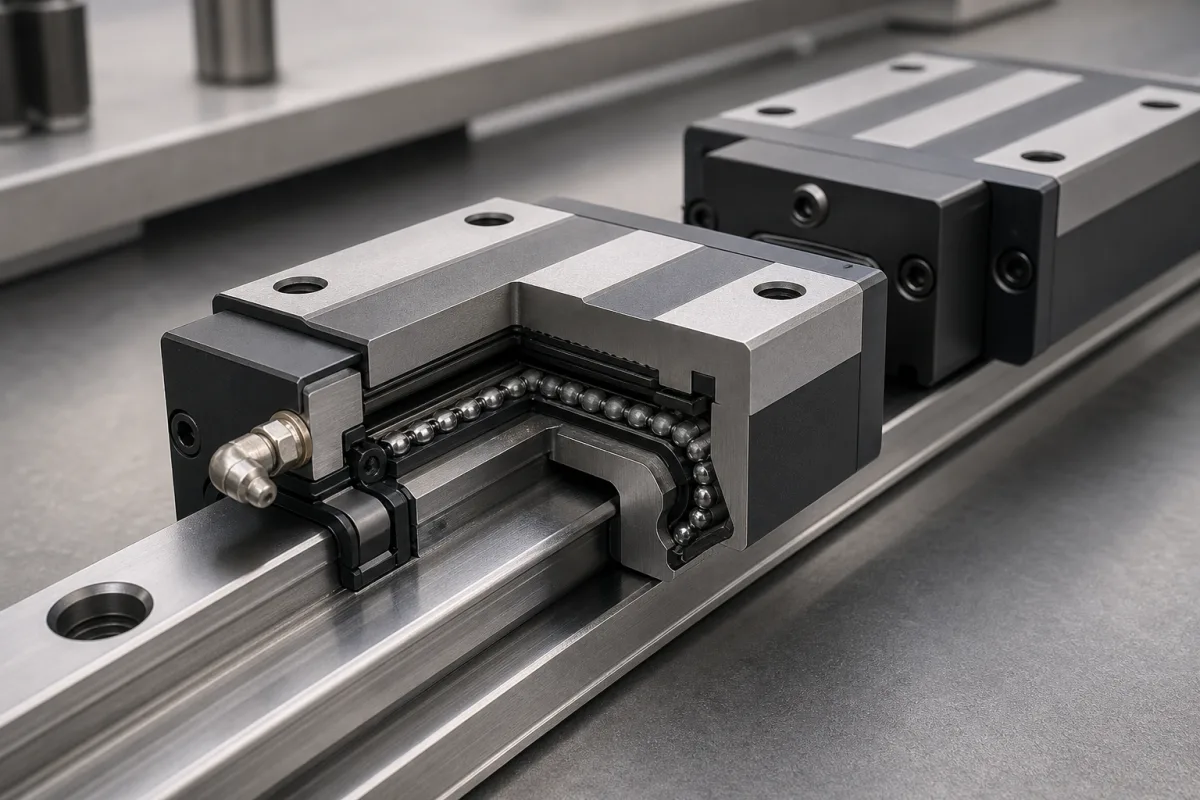
Technical details and manufacturing context for Carriage/Slider
| Parameter | Typical range | Notes & selection driver |
|---|---|---|
| Rail Width | 15–65 mm | Matches rail size; determines load capacity. |
| Slider Length | 50–200 mm | Affects moment load ratings. |
| Slider Width | 30–120 mm | Overall width for mounting envelope. |
| Slider Height | 20–80 mm | Overall height from rail top. |
| Dynamic Load Rating | 5–120 kN | For life calculation.ISO 14728-1 |
| Static Load Rating | 10–200 kN | Maximum allowable static load.ISO 14728-1 |
| Accuracy Grade | C1–C5 | C1 highest precision; C5 standard.ISO 14728-2 |
| Repeatability | ±0.001–±0.01 mm | For positioning applications. |
| Maximum Speed | 2–5 m/s | Limited by lubrication and seals. |
| Operating Temperature | -40–85 °C | Outside range, lubricant fails. |
| Lubrication | Grease or oil | Grease for most; oil for high speed. |
| Sealing | IP54–IP65 | Protects against dust and water jets.IEC 60529 |
| Material | GCr15 or 440C | Bearing steel; corrosion-resistant option.GB/T 18254 |
| Weight | 0.5–10 kg | Depends on size and material. |
Ranges are indicative industry figures for RFQ preparation, not a supplier commitment. Confirm every value and standard with the legal manufacturer before ordering.
| pressure: | Dynamic load capacity: 5-50 kN depending on size, static load capacity: 7.5-75 kN |
| other spec: | Max speed: 5 m/s, acceleration: 50 m/s², preload classes: C0 (normal clearance) to C5 (high preload) |
| temperature: | -40°C to +85°C |
Indicative industry ranges for design and RFQ preparation. Confirm the exact figures and applicable standard with the manufacturer before specifying.
Quoted from the published standard.
A practical evidence checklist for RFQ preparation and supplier evaluation.
Compare the published product scope and source details, then include your specifications and quantity in an enquiry.
Manufacturer profiles associated with Carriage/Slider.
Explore company information and manufacturing capabilities, then discuss the scope of your project with a relevant supplier.
Ask for use case, specification boundaries, supplier type, and RFQ preparation information for this product.
The carriage houses rolling elements and moves along the rail, providing a mounting interface for loads and enabling smooth, low-friction linear motion with high accuracy and rigidity.
Common materials include carbon steel, stainless steel, and alloy steel. The rolling elements may be made of bearing steel such as GCr15 or 440C, depending on corrosion resistance requirements.
Selection is based on required load capacity, accuracy grade, speed, and environmental conditions. Reference parameters such as rail width, slider length, and dynamic load rating provide a starting point; always verify with the manufacturer for your specific application.
Regular lubrication is essential, using grease for most applications or oil for high-speed operations. Inspect seals for damage and clean the rail to prevent contamination. Monitor for increased noise or vibration, which may indicate wear or insufficient lubrication.
This component is essential for the following industrial systems and equipment:
Editorial classification, named public sources where available, and source-reviewed manufacturer records.
Compare manufacturer profiles with relevant product and process capability.