Packaging Material Dispenser
View system integration details
This page explains how Drive Roller Assembly is classified within Machinery and Equipment Manufacturing. Technical values and manufacturer relationships are research references; confirm the current specification and supplier evidence for each order.
A mechanical assembly that provides the driving force to advance packaging material through a dispenser system.
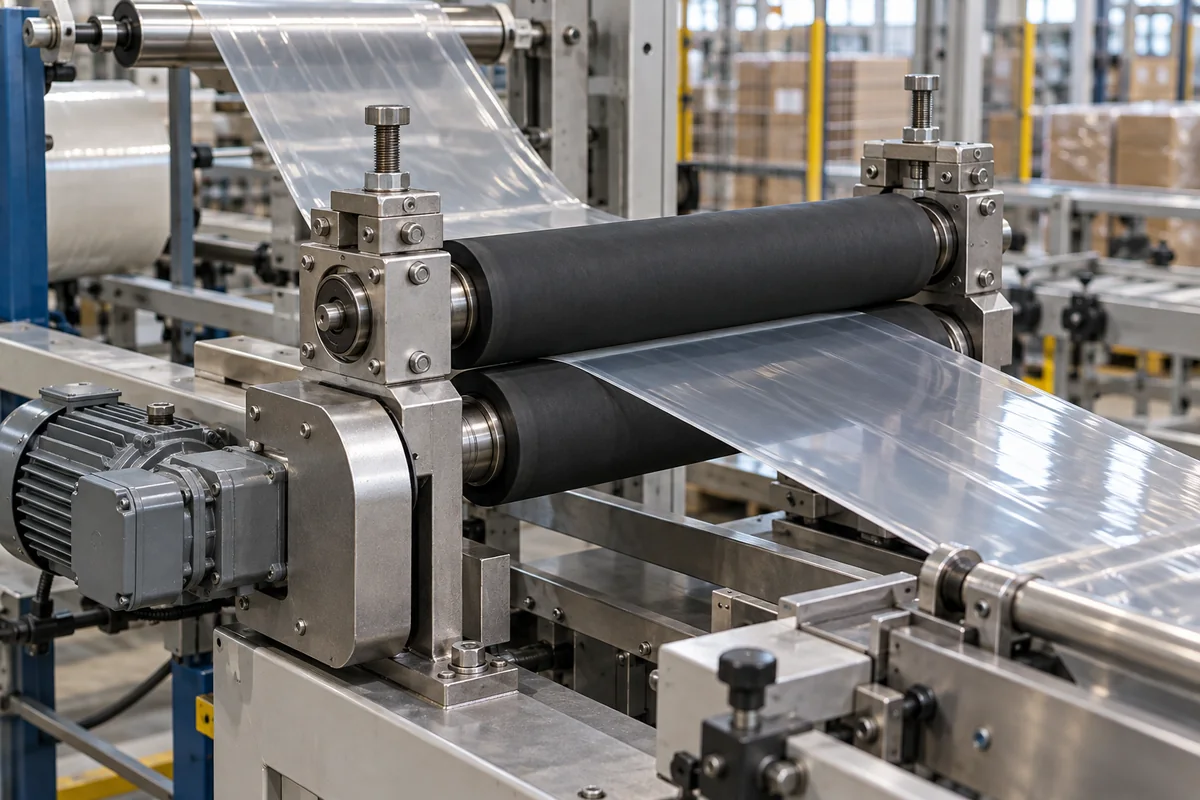
Technical details and manufacturing context for Drive Roller Assembly
| Parameter | Typical range | Notes & selection driver |
|---|---|---|
| Roller Diameter | 50–200 mm | Determines contact area and material feed rate |
| Roller Width | 100–600 mm | Must match packaging material width |
| Shaft Diameter | 20–50 mm | Affects torque transmission and bearing selection |
| Operating Speed | 10–120 m/min | Higher speeds may require dynamic balancing |
| Drive Torque | 5–50 N·m | Must overcome material tension and friction |
| Radial Runout | ≤0.05 mm | Excessive runout causes uneven feedingISO 1101 |
| Surface Roughness | Ra 0.8–1.6 μm | Affects grip on materialISO 4287 |
| Operating Temperature | -10–60 °C | Outside range may degrade rubber coating |
| IP Rating | IP54–IP65 | Higher rating for dusty or wet environmentsIEC 60529 |
| Roller Material | 45# steel / SUS304 / aluminum | Steel for strength, stainless for corrosion resistanceGB/T 699, GB/T 1220 |
| Surface Coating | NBR / PU / Teflon | NBR for general use, PU for wear resistance, Teflon for non-stick |
| Weight | 5–50 kg | Affects handling and mounting requirements |
Ranges are indicative industry figures for RFQ preparation, not a supplier commitment. Confirm every value and standard with the legal manufacturer before ordering.
| pressure: | Max 10 bar |
| other spec: | Max linear speed: 2 m/s, Material thickness range: 0.05-5 mm |
| temperature: | -20°C to 80°C |
Indicative industry ranges for design and RFQ preparation. Confirm the exact figures and applicable standard with the manufacturer before specifying.
Quoted from the published standard.
A practical evidence checklist for RFQ preparation and supplier evaluation.
Compare the published product scope and source details, then include your specifications and quantity in an enquiry.
Manufacturer profiles associated with Drive Roller Assembly.
Explore company information and manufacturing capabilities, then discuss the scope of your project with a relevant supplier.
Ask for use case, specification boundaries, supplier type, and RFQ preparation information for this product.
It grips and propels packaging material from the supply roll through the dispensing mechanism, ensuring controlled and consistent feed for accurate cutting, sealing, or application.
Key parameters include roller diameter, width, shaft diameter, operating speed, drive torque, radial runout, surface roughness, operating temperature, IP rating, roller material, surface coating, and weight. These must match the application requirements.
A powered roller rotates, often paired with an idler or pressure roller, creating friction against the material. The rotation pulls the material forward, with tension and speed controlled to match the dispensing cycle.
Standards include ISO 1101 for geometric tolerances, ISO 4287 for surface texture, IEC 60529 for ingress protection, and GB/T 699 and GB/T 1220 for material specifications. Always verify compliance with the manufacturer.
This component is essential for the following industrial systems and equipment:
Editorial classification, named public sources where available, and source-reviewed manufacturer records.
Compare manufacturer profiles with relevant product and process capability.