Integrated Dust Collection System
View system integration details
This page explains how Filter Cartridge is classified within Machinery and Equipment Manufacturing. Technical values and manufacturer relationships are research references; confirm the current specification and supplier evidence for each order.
A replaceable filtration element that captures dust particles from air streams in industrial dust collection systems.
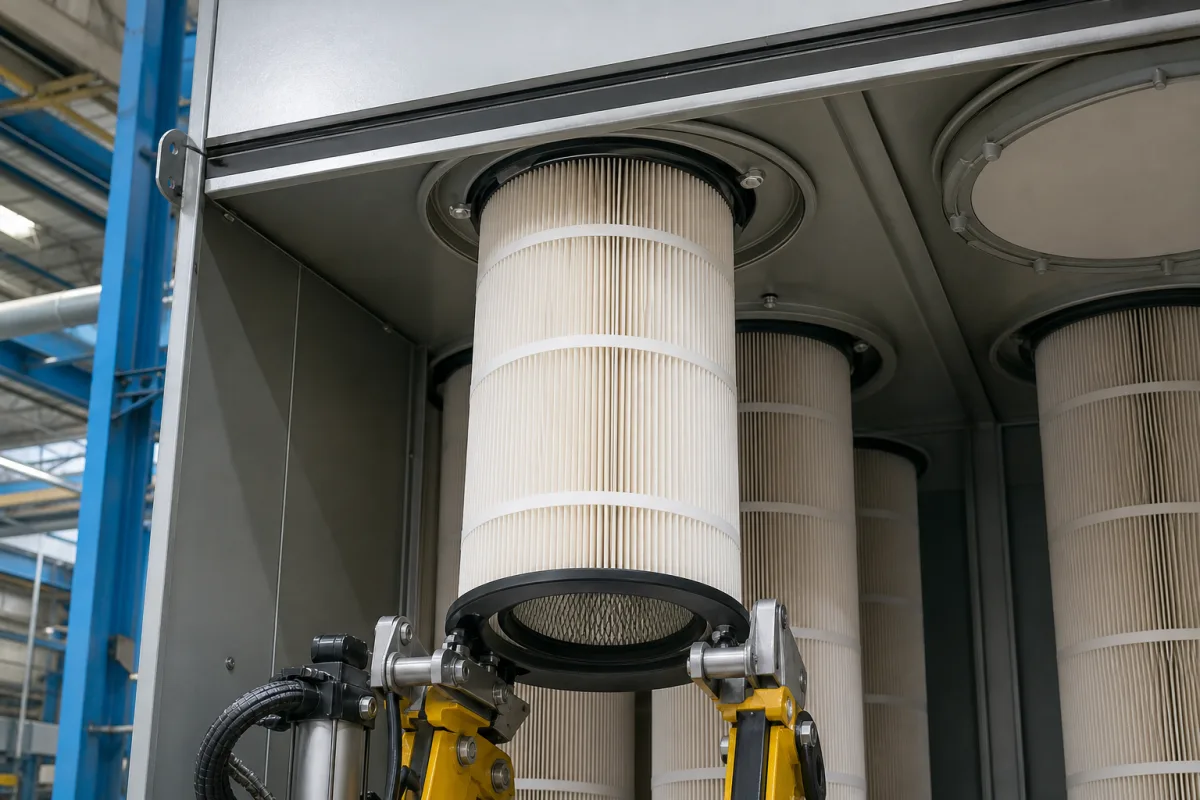
Technical details and manufacturing context for Filter Cartridge
What to specify in your RFQ
These are the quantities to specify to the manufacturer when sizing or requesting a quote. The manufacturer's own documentation governs the exact figures and applicable standard.
This component is essential for the following industrial systems and equipment:
| pressure: | Up to 1.5 bar differential pressure |
| flow rate: | 0.5 to 10 m³/min per cartridge |
| temperature: | -20°C to 120°C |
| dust concentration: | Up to 200 mg/m³ inlet loading |
Indicative industry ranges for design and RFQ preparation. Confirm the exact figures and applicable standard with the manufacturer before specifying.
Quoted from the published standard.
Manufacturer profiles associated with Filter Cartridge.
Manufacturer listings support early research and capability understanding. They are not certification, ranking, or transaction guarantees.
A practical evidence checklist for RFQ preparation and supplier evaluation.
CNFX does not score or rank suppliers. Buyers must verify all claims and documents with the legal manufacturer before ordering.
Common materials include polyester filter media, polyurethane end caps, and a galvanized steel support cage. These materials provide durability and structural integrity, but specific material grades should be confirmed with the manufacturer.
Replacement frequency depends on operating conditions, dust load, and cleaning efficiency. Monitor pressure drop and filtration performance; when they fall outside acceptable ranges, replacement is needed. Consult the manufacturer for guidance.
Yes, many cartridges are designed for pulse-jet cleaning, which removes accumulated dust. However, repeated cleaning eventually degrades the media, and the cartridge must be replaced when it no longer meets performance requirements.
Standard dimensions include length, diameter, and pleat count. These must match the dust collection system's specifications. Always verify exact dimensions with the manufacturer or supplier for your specific application.
Editorial classification, named public sources where available, and source-reviewed manufacturer records.
Ask for use case, specification boundaries, supplier type, and RFQ preparation information for this product.
Compare manufacturer profiles with relevant product and process capability.