Editorial Technical Reference

Gantry Frame / Structure

This page explains how Gantry Frame / Structure is classified within Machinery and Equipment Manufacturing. Technical values and manufacturer relationships are research references; confirm the current specification and supplier evidence for each order.

Technical Definition & Core Assembly

The rigid structural framework that forms the rotating support for the Linear Accelerator (LINAC) gantry system.
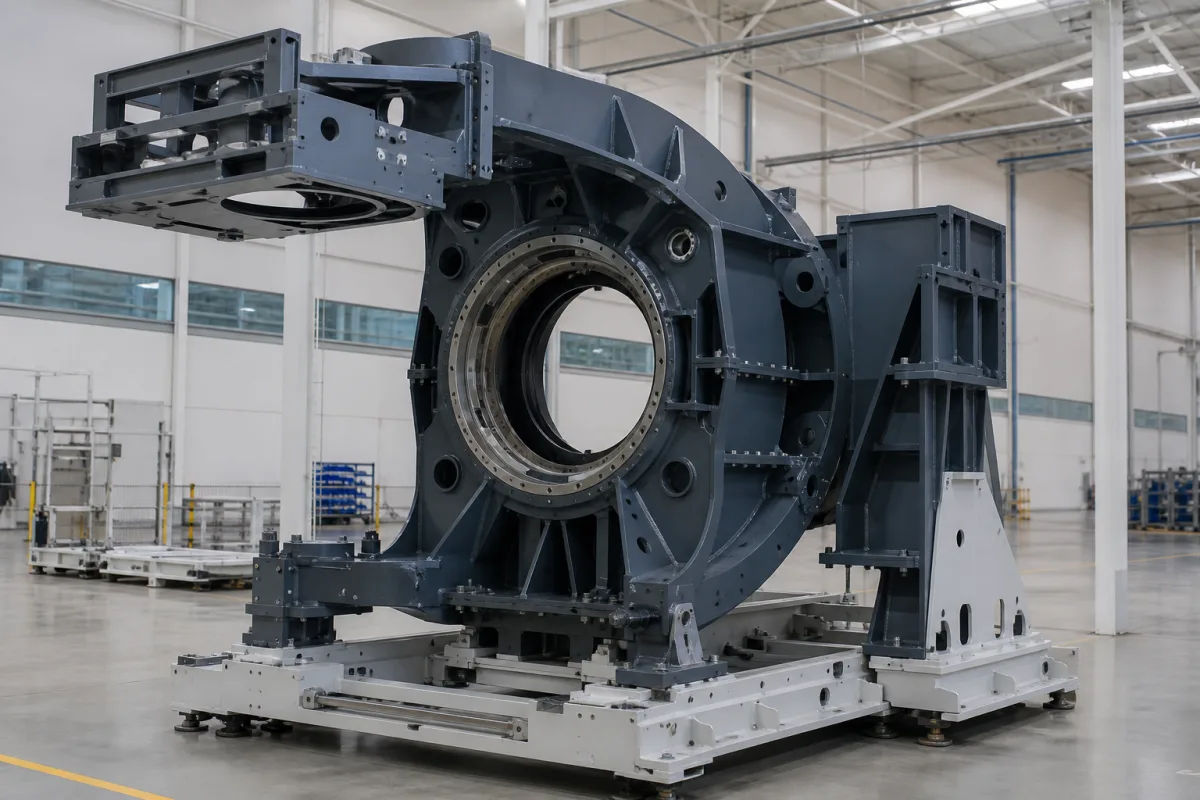
Representative product image. Confirm appearance and specifications with the manufacturer.

Product Specifications

Technical details and manufacturing context for Gantry Frame / Structure

Definition
The Gantry Frame/Structure is the foundational mechanical component of a Linear Accelerator (LINAC) gantry, providing the robust, precision-engineered framework that enables the gantry's 360-degree rotation around the patient. It serves as the primary load-bearing structure, supporting the weight of critical subsystems including the radiation source (accelerating waveguide or bending magnet assembly), beam collimation systems (MLC), imaging devices (kV/MV imagers), and patient positioning lasers. Its design ensures mechanical stability, vibration damping, and precise alignment under dynamic rotational forces, which is critical for accurate radiation beam delivery in radiotherapy.

Constructed from high-strength steel alloy and precision-cast iron components, the frame is engineered to meet stringent mechanical tolerances. The load capacity ranges from 5000 to 15000 kg, accommodating the weight of the LINAC and patient table. The gantry aperture diameter of 70–90 cm allows for patient and imaging system clearance. Positioning accuracy is maintained within ±0.5 mm (ISO 230-2), ensuring precise beam targeting. Rotational speeds of 0.5–6 rpm support dynamic treatments like VMAT. Material grades Q235B–Q345B (GB/T 1591) provide structural strength and weldability. Surface treatment to Sa2.5 (ISO 8501-1) ensures corrosion resistance. Operating temperature ranges from 10–40 °C, humidity 20–80% RH (IEC 60721-3-3), and ingress protection IP54–IP65 (IEC 60529). The frame weighs 8000–20000 kg, with a footprint of 3.5–5.5 m², and power consumption of 5–15 kW for motors and control systems.

As a directory listing, these values are reference ranges; actual specifications must be confirmed with the legal manufacturer for specific models. The frame's design and materials are critical to the safe and accurate operation of the LINAC system.
Working Principle
The frame acts as a stable, rotating platform. Driven by a high-precision motor and bearing system, it rotates the entire mounted LINAC assembly around a fixed isocenter. Its structural rigidity maintains the precise spatial relationships between all mounted components (e.g., radiation source to collimator) during rotation, ensuring the radiation beam always converges at the treatment isocenter regardless of gantry angle. This allows for multi-angle radiation delivery while the patient remains stationary.
Common Materials
High-strength steel alloy, Precision-cast iron components
Technical Parameters
ParameterTypical rangeNotes & selection driver
Load Capacity5000–15000 kgIncludes weight of LINAC and patient table.
Gantry Aperture Diameter70–90 cmMust accommodate patient and imaging systems.
Positioning Accuracy±0.5 mmEnsures precise beam targeting.ISO 230-2
Rotational Speed0.5–6 rpmFor dynamic treatments like VMAT.
Material GradeQ235B–Q345BStructural steel with high strength and weldability.GB/T 1591
Surface TreatmentSa2.5Blast cleaning before painting for corrosion resistance.ISO 8501-1
Operating Temperature10–40 °COutside range affects electronics and mechanical tolerances.
Humidity Range20–80 % RHNon-condensing to prevent corrosion and electrical faults.IEC 60721-3-3
Ingress ProtectionIP54–IP65Protects against dust and water jets.IEC 60529
Weight8000–20000 kgAffects floor loading and installation requirements.
Footprint3.5–5.5 Includes clearance for rotation and patient access.
Power Consumption5–15 kWFor motors and control systems.

Ranges are indicative industry figures for RFQ preparation, not a supplier commitment. Confirm every value and standard with the legal manufacturer before ordering.

Components / BOM
  • Main Structural Rings Part
    Form the primary circular load-bearing elements of the rotating frame.
    Material: High-strength steel alloy
  • Radial Support Beams/Spokes Part
    Connect the central hub to the outer rings, providing torsional stiffness and distributing loads.
    Material: Steel alloy
  • Mounting Interfaces/Plates Part
    Precision-machined surfaces for attaching the LINAC head, imaging systems, and other subsystems.
    Material: Steel, often with ground surfaces
  • Bearing Race Integration Part
    Integrated or attached surface that interfaces with the large-diameter rotational bearing system.
    Material: Hardened steel
  • Main Structural Beams Part
    Primary load-bearing members that form the ring or arc of the gantry, transferring loads to the rotation bearing.
    Material: High-strength steel alloy
  • Reinforcement Ribs/Gussets Part
    Structural elements added to critical junctions to increase rigidity and prevent torsional flexing.
    Material: Steel

Applied To / Applications

This component is essential for the following industrial systems and equipment:

Industrial Ecosystem & Supply Chain Structure

Complementary Systems
Downstream Applications
Specialized Tooling

Application Fit & Sizing Matrix

Operational Limits
pressure: N/A (structural component, not pressure vessel)
other spec: Max dynamic load: 5000 kg, Max static load: 8000 kg, Vibration tolerance: ≤ 0.5 mm displacement at 5-100 Hz, Humidity: 30-70% RH non-condensing
temperature: 10°C to 40°C (operational), -20°C to 60°C (storage)
Media Compatibility
✓ Medical radiation therapy environments ✓ Clean room assembly facilities ✓ Controlled industrial manufacturing areas
Unsuitable: Corrosive chemical exposure or salt spray environments
Sizing Data Required
  • LINAC weight and dimensions
  • Required rotational accuracy and stability specifications
  • Installation space constraints and foundation requirements

Reliability & Engineering Risk Analysis

Failure Mode & Root Cause
Fatigue cracking
Cause: Cyclic loading from operational movements, vibration, or thermal expansion/contraction leading to stress concentration at weld joints, bolt holes, or sharp corners.
Corrosion-induced weakening
Cause: Exposure to moisture, chemicals, or atmospheric contaminants causing rust, pitting, or galvanic corrosion, particularly in joints, crevices, or areas with compromised protective coatings.
Maintenance Indicators
  • Visible cracks, especially at welded joints or stress points
  • Excessive vibration, unusual noises (creaking, popping), or noticeable deflection during operation
Engineering Tips
  • Implement regular non-destructive testing (e.g., ultrasonic, magnetic particle) at high-stress areas to detect early-stage cracks before catastrophic failure.
  • Maintain protective coatings and ensure proper drainage to prevent water/chemical accumulation; use corrosion-resistant materials or cathodic protection in aggressive environments.

Indicative industry ranges for design and RFQ preparation. Confirm the exact figures and applicable standard with the manufacturer before specifying.

Compliance & Manufacturing Standards

Applicable Standards
ANSI B30.2 Overhead and Gantry Cranes CE Marking per Machinery Directive 2006/42/EC

Quoted from the published standard.

Manufacturing Precision
  • Vertical Alignment: +/- 0.5mm per meter
  • Weld Seam Flatness: 0.2mm over 300mm length
Quality Inspection
  • Ultrasonic Testing (UT) for weld integrity
  • Dimensional Verification with Laser Tracker

Manufacturers of Gantry Frame / Structure

Manufacturer profiles associated with Gantry Frame / Structure.

Sourcing Gantry Frame / Structure from China?
Tell us your specification and target quantity — we will match it against manufacturer records and come back with the factories that fit.
Request manufacturers We manufacture this

Manufacturer listings support early research and capability understanding. They are not certification, ranking, or transaction guarantees.

Technical documentation
Request current drawings, revision history, and a signed specification sheet.
Manufacturing capability
Verify equipment lists, process limits, capacity, and representative production evidence.
Inspection readiness
Confirm test methods, calibrated equipment, sampling plans, and traceable reports.
Supplier transparency
Check the legal entity, factory address, ownership, certifications, and direct contacts.

CNFX does not score or rank suppliers. Buyers must verify all claims and documents with the legal manufacturer before ordering.

Supply Chain Compatible Machinery & Devices

Heavy-Duty CNC Plasma Cutting Machine

The Heavy-Duty CNC Plasma Cutting Machine is a standalone industrial device designed for cutting conductive metals such as steel, stainless steel, aluminum, and copper alloys.

Explore Specs →
Automated Powder Coating System

Integrated industrial system for applying dry powder coatings to metal substrates.

Explore Specs →
Centrifugal Pump Impeller

The centrifugal pump impeller is a critical rotating component that converts mechanical energy from the motor into kinetic energy in fluid systems.

Explore Specs →
High-Precision CNC Laser Cutting Machine

Computer-controlled industrial machine using focused laser beams to cut sheet metal with micron-level accuracy.

Explore Specs →

Frequently Asked Questions

What is the primary function of the gantry frame?

The gantry frame provides the rigid structural support for the LINAC gantry, enabling precise 360-degree rotation around the patient while maintaining alignment of all mounted components.

What materials are used in the gantry frame?

The frame is typically made from high-strength steel alloy and precision-cast iron components, with material grades such as Q235B–Q345B per GB/T 1591.

What are the key specifications to verify before procurement?

Key specifications include load capacity (5000–15000 kg), gantry aperture diameter (70–90 cm), positioning accuracy (±0.5 mm), rotational speed (0.5–6 rpm), and environmental ratings. Always confirm with the manufacturer for the specific model.

How does the frame ensure beam accuracy during rotation?

The frame's structural rigidity and precision bearings maintain the spatial relationships between the radiation source and collimator, ensuring the beam converges at the isocenter at all gantry angles.

Data Basis

Editorial classification, named public sources where available, and source-reviewed manufacturer records.

Preliminary Technical Classification
This page supports structured research, RFQ preparation, and supplier evaluation. It does not replace buyer-led supplier qualification, standards review, or technical approval.
Buyer enquiry

Request manufacturing insight for Gantry Frame / Structure

Ask for use case, specification boundaries, supplier type, and RFQ preparation information for this product.

Where it goes
Straight to the CNFX editorial desk, and to the manufacturer if this product is linked to a claimed profile. Nothing is broadcast to a supplier list.
Your details stay here
We do not sell or rent enquiry data, and we do not add you to a mailing list. Used only to answer this request.
No commission, no middleman
CNFX is a directory. We take no cut of any order and never negotiate on a supplier's behalf.
What we don't claim
A listing is not an endorsement. Qualify every supplier and verify every figure yourself before ordering.

Your business information is used only to process this request.

Thank you! Your message has been sent. We'll respond within 1–3 business days.
Sorry, we couldn't send your message. Please try again, or email us at contact@cnfx.com.

Need to Manufacture Gantry Frame / Structure?

Compare manufacturer profiles with relevant product and process capability.

Previous Product
Z-axis Ram/Spindle
Last Product
Get QuotesChat