Editorial Technical Reference

Industrial Communication Gateway

This page explains how Industrial Communication Gateway is classified within Machinery and Equipment Manufacturing. Technical values and manufacturer relationships are research references; confirm the current specification and supplier evidence for each order.

Technical Definition & Core Assembly

A hardware device that enables communication between different industrial networks and protocols.
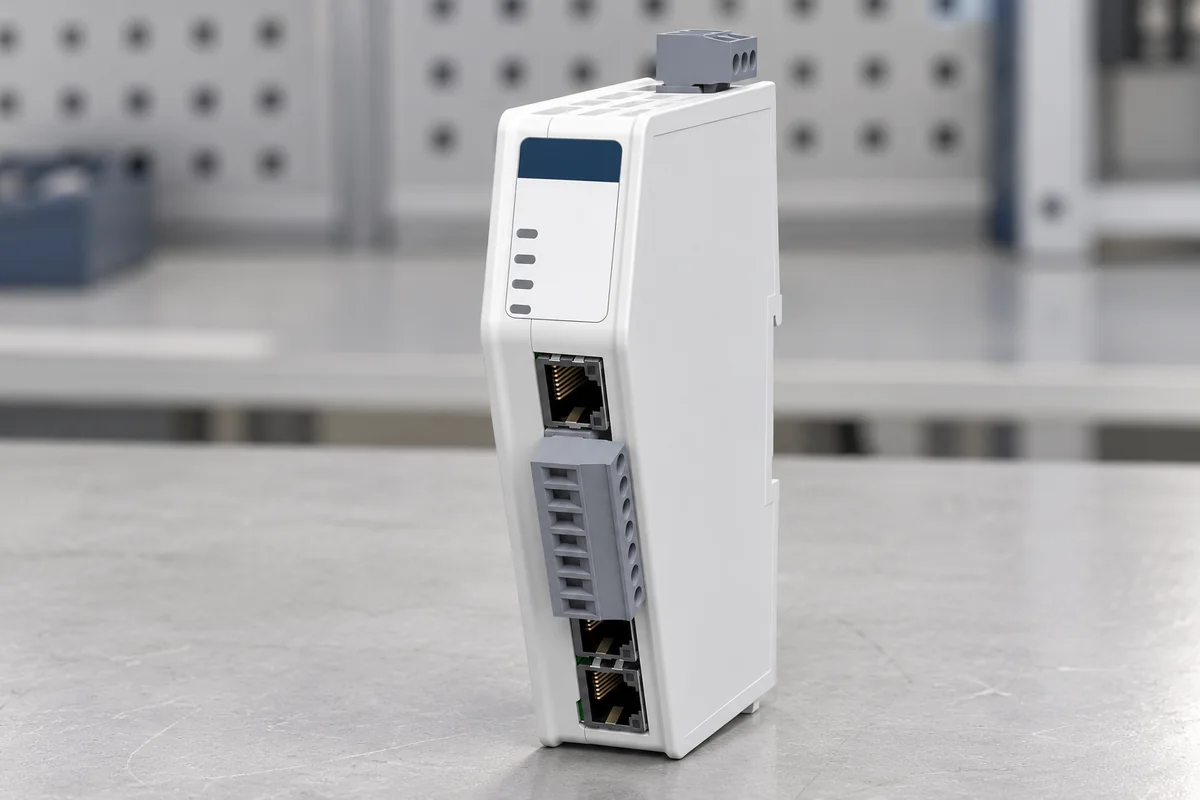
Industrial Communication Gateway in a manufacturing environment
Representative product image. Confirm appearance and specifications with the manufacturer.

Product Specifications

Technical details and manufacturing context for Industrial Communication Gateway

Definition
An industrial communication gateway is a specialized hardware device that facilitates data exchange between disparate industrial networks, protocols, and systems. It acts as a translator and bridge, converting data formats and communication standards to ensure interoperability in complex industrial automation environments, connecting field devices, controllers, and enterprise systems. The gateway typically features multiple Ethernet and serial ports, supporting protocols such as Modbus TCP/RTU, PROFINET, EtherNet/IP, and OPC UA. It operates over a wide temperature range (-40 to 85°C) and accepts a 9-36 VDC power supply. Data throughput ranges from 100 to 1000 Mbps, with protocol conversion latency of ≤10 ms. The device is housed in a compact enclosure (45-120 x 100-150 x 30-80 mm) weighing 0.3-1.5 kg, with ingress protection ratings from IP30 to IP65. Mounting options include DIN rail or panel. Certifications such as CE, FCC, and UL are listed as references for market access, but actual compliance must be verified with the manufacturer. The gateway is constructed with an aluminum alloy housing, a printed circuit board, and electronic components. It is designed for use in machinery and equipment manufacturing, where it bridges legacy serial devices and modern Ethernet-based systems. Selection of a specific model requires confirming the number of ports, supported protocols, and environmental ratings against the application's requirements. For verification, consult the legal manufacturer or supplier for model-specific data and standards compliance.
Working Principle
The gateway operates by receiving data packets from a source network using its native protocol (e.g., Modbus RTU, PROFIBUS). It then processes this data, which may involve protocol conversion, data mapping, and encapsulation. The processed data is subsequently transmitted to the destination network using the target protocol (e.g., Ethernet/IP, OPC UA). This process is managed by embedded firmware running on a processor, often with support for multiple protocol stacks and configurable routing rules.
Common Materials
Aluminum Alloy, Printed Circuit Board (PCB), Electronic Components (ICs, resistors, capacitors)
Technical Parameters
ParameterTypical rangeNotes & selection driver
Number of Ethernet PortsRequired2–4 portsQuantity of RJ45 Ethernet interfaces for network connectivity
Number of Serial PortsRequired2–8 portsQuantity of RS-232/RS-485 serial interfaces for legacy device connections
Supported ProtocolsRequiredModbus TCP/RTU, PROFINET, EtherNet/IP, OPC UA listArray of industrial communication protocols the gateway can translate between (e.g., Modbus TCP, PROFINET, EtherCAT)
Operating Temperature RangeRequired-40–85 °CMinimum and maximum ambient temperature for reliable operationIEC 60068-2-1/2
Power Supply VoltageRequired9–36 VDCInput voltage required to power the gateway device
Data Throughput100–1000 MbpsDepends on modelIEEE 802.3
Protocol Conversion Latency≤10 msReal-time performance
Ingress Protection RatingIP30–IP65Higher for harsh environmentsIEC 60529
Mounting TypeDIN rail, panelDIN rail standard
Dimensions (W x H x D)45–120 x 100–150 x 30–80 mmCompact design
Weight0.3–1.5 kgLightweight
CertificationCE, FCC, ULRequired for market access

Ranges are indicative industry figures for RFQ preparation, not a supplier commitment. Confirm every value and standard with the legal manufacturer before ordering.

Components / BOM
  • Central Processing Unit (CPU)
    Executes the gateway firmware, manages protocol stacks, and handles data processing and routing logic
    Material: Semiconductor (Silicon)
  • Memory Module (RAM/Flash)
    Stores the operating system, firmware, configuration data, and temporary data buffers during protocol conversion
    Material: Semiconductor (Silicon)
  • Network Interface Controller (NIC)
    Hardware controller for managing data transmission and reception over Ethernet networks
    Material: Semiconductor (Silicon), PCB
  • Serial Communication Interface
    Circuitry and connectors for RS-232/RS-485 communication with serial-based industrial devices
    Material: Copper, PCB, Plastic (connector housing)
  • Power Supply Unit
    Converts the input DC voltage to stable voltage levels required by internal components (CPU, memory, NICs)
    Material: PCB, Electronic Components (capacitors, inductors, regulators)
  • Enclosure
    Protects internal electronic components from dust, moisture, and physical damage, often designed for DIN-rail mounting
    Material: Aluminum Alloy or Industrial Plastic
  • Protocol Stacks
    Implement the source and target fieldbus protocols for the conversion.

Application & selection

Application Fit & Sizing Matrix

Operational Limits
humidity: 5% to 95% non-condensing
power input: 24VDC ±10% or 100-240VAC
temperature: -40°C to +85°C
enclosure rating: IP20 (indoor use)
shock resistance: 15g @ 11ms
vibration resistance: 2g @ 10-500Hz
Media Compatibility
✓ Factory automation networks (Ethernet/IP, PROFINET) ✓ Legacy fieldbus systems (Modbus RTU, DeviceNet) ✓ Industrial wireless networks (Wi-Fi, cellular)
Unsuitable: Outdoor environments with direct water exposure or extreme temperature fluctuations
Sizing Data Required
  • Number of supported protocols and simultaneous connections
  • Required data throughput and latency specifications
  • Available mounting space and power supply constraints

Risk, maintenance & compliance

Reliability & Engineering Risk Analysis

Failure Mode & Root Cause
Communication Interruption
Cause: Network protocol mismatches, firmware corruption, or electromagnetic interference disrupting data transmission between industrial devices and control systems.
Hardware Degradation
Cause: Thermal stress from continuous operation, power surges, or environmental contaminants (dust, moisture) leading to component failure or reduced signal integrity.
Maintenance Indicators
  • Intermittent or complete loss of data transmission from connected devices, indicated by error logs or alarm notifications.
  • Unusual audible buzzing or visible overheating of the gateway enclosure, suggesting electrical or cooling system issues.
Engineering Tips
  • Implement regular firmware updates and network diagnostics to ensure protocol compatibility and detect early communication faults.
  • Maintain a controlled operating environment with adequate ventilation, surge protection, and periodic cleaning to prevent thermal and contamination-related failures.

Indicative industry ranges for design and RFQ preparation. Confirm the exact figures and applicable standard with the manufacturer before specifying.

Compliance & Manufacturing Standards

Applicable Standards
ISO/IEC 62443: Industrial automation and control systems security ANSI/ISA-95: Enterprise-control system integration CE Marking: EMC Directive 2014/30/EU and Low Voltage Directive 2014/35/EU

Quoted from the published standard.

Manufacturing Precision
  • Connector alignment: +/-0.15mm
  • PCB component placement: +/-0.1mm
Quality Inspection
  • EMC/EMI compliance testing
  • Protocol conformance and interoperability testing
Technical documentation
Request current drawings, revision history, and a signed specification sheet.
Manufacturing capability
Verify equipment lists, process limits, capacity, and representative production evidence.
Inspection readiness
Confirm test methods, calibrated equipment, sampling plans, and traceable reports.
Supplier transparency
Check the legal entity, factory address, ownership, certifications, and direct contacts.

Compare the published product scope and source details, then include your specifications and quantity in an enquiry.

Manufacturers of Industrial Communication Gateway

Manufacturer profiles associated with Industrial Communication Gateway.

Sourcing Industrial Communication Gateway from China?
Tell us your specification and target quantity — we will match it against manufacturer records and come back with the factories that fit.
Request manufacturers We manufacture this

Explore company information and manufacturing capabilities, then discuss the scope of your project with a relevant supplier.

Buyer enquiry

Request manufacturing insight for Industrial Communication Gateway

Ask for use case, specification boundaries, supplier type, and RFQ preparation information for this product.

Where it goes
Straight to the CNFX editorial desk, and to the manufacturer if this product is linked to a claimed profile. Nothing is broadcast to a supplier list.
Your details stay here
We do not sell or rent enquiry data, and we do not add you to a mailing list. Used only to answer this request.
No commission, no middleman
CNFX is a directory. We take no cut of any order and never negotiate on a supplier's behalf.
What to include
Share your product specifications, quantity, destination and target delivery date.

Your business information is used only to process this request.

Thank you! Your message has been sent. We'll respond within 1–3 business days.
Sorry, we couldn't send your message. Please try again, or email us at [email protected].

Frequently Asked Questions

What protocols does the gateway support?

The gateway supports Modbus TCP/RTU, PROFINET, EtherNet/IP, and OPC UA as listed in the directory. However, the exact set of protocols may vary by model. Always confirm the supported protocols with the manufacturer or supplier for your specific application.

What are the power supply requirements?

The gateway accepts a DC power supply voltage of 9-36 VDC. Ensure that your power source provides a voltage within this range and sufficient current for the model you select. Check the product datasheet for exact power consumption.

Can the gateway operate in harsh environments?

The operating temperature range is -40 to 85°C, and the ingress protection rating is IP30 to IP65, depending on the model. For outdoor or dusty environments, choose a model with a higher IP rating. Verify the specific rating with the manufacturer.

How do I mount the gateway?

The gateway can be mounted on a DIN rail or on a panel, as specified in the directory. Ensure that the mounting type matches your installation requirements. Refer to the installation manual for proper mounting procedures.

Related equipment

Industry Taxonomies & Aliases

Commonly used trade names and technical identifiers for Industrial Communication Gateway.

Data Basis

Editorial classification, named public sources where available, and source-reviewed manufacturer records.

Preliminary Technical Classification
This page supports structured research, RFQ preparation, and supplier evaluation. It does not replace buyer-led supplier qualification, standards review, or technical approval.

Need to Manufacture Industrial Communication Gateway?

Compare manufacturer profiles with relevant product and process capability.

Previous Product
Z-axis Ram/Spindle
Last Product
Get QuotesChat