Industry-Verified Manufacturing Data (2026)

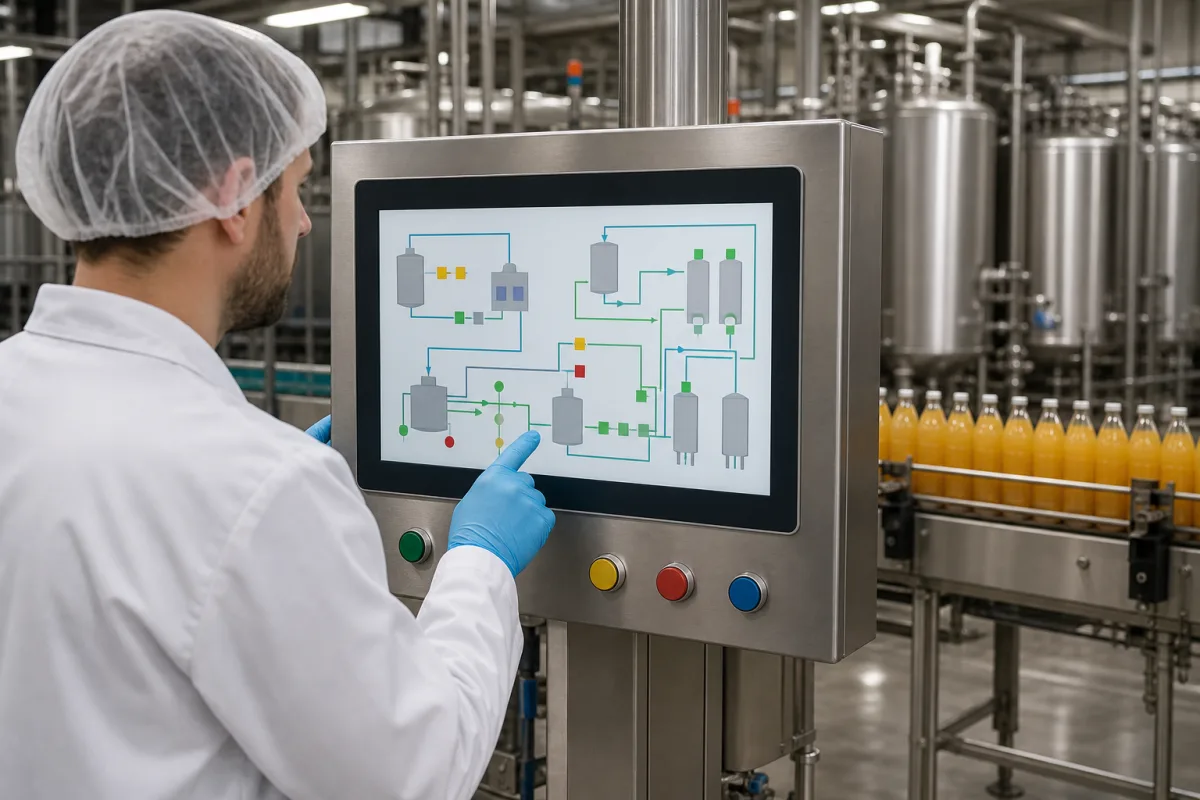
Human-Machine Interface (HMI)

Based on aggregated insights from multiple verified factory profiles within the CNFX directory, the standard Human-Machine Interface (HMI) used in the Beverage Manufacturing sector typically supports operational capacities ranging from standard industrial configurations to heavy-duty production requirements.

Technical Definition & Core Assembly

A canonical Human-Machine Interface (HMI) is characterized by the integration of Display Panel and Touch Sensor Layer. In industrial production environments, manufacturers listed on CNFX commonly emphasize Polycarbonate or Glass (Touchscreen) construction to support stable, high-cycle operation across diverse manufacturing scenarios.

A hardware and software interface that allows human operators to monitor, control, and interact with the automated beverage blending system.

Product Specifications

Technical details and manufacturing context for Human-Machine Interface (HMI)

Definition
The Human-Machine Interface (HMI) is a critical control component within the Automated Beverage Batch Blending System. It serves as the primary point of interaction between plant operators and the automated machinery. Through graphical displays, touchscreens, or physical controls, operators can monitor real-time process parameters (such as ingredient flow rates, tank levels, temperature, and batch progress), input recipe specifications, initiate or pause blending cycles, acknowledge alarms, and access system diagnostics. It translates high-level human commands into low-level control signals for PLCs and other automation hardware, and presents machine data in an intelligible format for decision-making.
Working Principle
The HMI operates by running specialized software on an industrial computer or embedded system. It communicates bidirectionally with the system's Programmable Logic Controllers (PLCs), sensors, and actuators via industrial communication protocols (e.g., Ethernet/IP, Profinet, Modbus). User inputs (touches, button presses) are captured, processed, and translated into command data packets sent to the controllers. Simultaneously, it continuously polls the controllers and I/O modules for real-time data, which is then processed and rendered into graphical screens, trends, and alphanumeric displays for the operator.
Common Materials
Polycarbonate or Glass (Touchscreen), Aluminum or Steel (Enclosure), Electronic Components (PCB, processors)
Technical Parameters
  • Display screen diagonal size (inches) Per Request
Components / BOM
  • Display Panel
    Visual output of system graphics, data, and alarms
    Material: LCD or LED panel with protective glass/polycarbonate overlay
  • Touch Sensor Layer
    Detects and locates operator touch input
    Material: Glass or film with conductive coating
  • Processing Unit
    Runs the HMI application software, handles data processing, and manages communications
    Material: Printed Circuit Board (PCB) with CPU, memory, and communication chips
  • Industrial Enclosure
    Protects internal electronics from environmental factors (dust, moisture, physical impact)
    Material: Powder-coated steel or aluminum
  • Communication Interface
    Physical ports for connecting to the plant network and control system (PLC)
    Material: Ethernet RJ45 ports, serial ports, or fieldbus connectors
  • Display Panel
    Visual output of process data, graphics, and user interface elements
    Material: Glass or polycarbonate with LCD/TFT/OLED layer
  • Touch Sensor Layer
    Detects and registers operator touch inputs for interaction
    Material: Polyester film with conductive coatings (resistive) or glass with ITO (capacitive)
  • Processing Unit
    Runs the HMI software, processes data, and manages communication
    Material: PCB with microprocessor, memory chips, and supporting electronics
  • Communication Interface
    Hardware and firmware for connecting to control systems via industrial networks
    Material: Ethernet port, serial ports, or fieldbus modules on PCB
  • Enclosure
    Protects internal components from environmental factors (dust, moisture, impacts)
    Material: Plastic (ABS, polycarbonate) or metal (aluminum, stainless steel) housing
Engineering Reasoning
0-60°C ambient temperature, 85-264 VAC input voltage, 0-95% relative humidity non-condensing
Touchscreen capacitive layer breakdown at 10⁶ touch cycles, backlight LED degradation below 150 cd/m² luminance, processor thermal shutdown at 85°C junction temperature
Design Rationale: Dielectric breakdown in ITO coating from electrostatic discharge exceeding 15 kV, phosphor degradation in LEDs following Arrhenius equation with activation energy of 0.43 eV, silicon junction leakage current doubling every 10°C rise above 70°C
Risk Mitigation (FMEA)
Trigger Liquid ingress exceeding IP65 rating through compromised gasket at 0.1 bar differential pressure
Mode: PCB trace corrosion causing open circuits in I/O signal paths
Strategy: Hermetic sealing with fluorosilicone gaskets and conformal coating meeting IPC-CC-830B Class 3
Trigger EMI-induced latch-up from 100 V/m field strength at 27 MHz resonant frequency
Mode: CMOS logic state corruption requiring hard reset
Strategy: Multi-stage filtering with ferrite beads and TVS diodes achieving 40 dB attenuation above 10 MHz

Industry Taxonomies & Aliases

Commonly used trade names and technical identifiers for Human-Machine Interface (HMI).

Applied To / Applications

This component is essential for the following industrial systems and equipment:

Industrial Ecosystem & Supply Chain DNA

Complementary Systems
Downstream Applications
Specialized Tooling

Application Fit & Sizing Matrix

Operational Limits
pressure: Atmospheric (indoor environment)
other spec: IP65 rating for washdown environments, 24V DC power input, 10-90% non-condensing humidity
temperature: 0°C to 50°C (operating), -20°C to 70°C (storage)
Media Compatibility
✓ Food-grade stainless steel enclosures ✓ Polycarbonate touchscreens with chemical-resistant coatings ✓ Potable water and beverage slurries (non-corrosive)
Unsuitable: High-pressure steam cleaning environments (>1 bar direct spray)
Sizing Data Required
  • Number of process control points (I/O count)
  • Required display size and resolution for operator visibility
  • Communication protocol compatibility (e.g., Ethernet/IP, Profinet, Modbus TCP)

Reliability & Engineering Risk Analysis

Failure Mode & Root Cause
Screen Burn-in or Degradation
Cause: Continuous display of static elements (e.g., fixed graphics, logos) leading to phosphor decay in CRT-based HMIs or pixel aging in LCD/LED screens, often due to poor screen management practices or lack of screen savers.
Touchscreen Unresponsiveness or Calibration Drift
Cause: Accumulation of contaminants (dust, grease, moisture) on the touch surface, physical damage from impacts or abrasion, or electrical interference disrupting capacitive/resistive sensing, exacerbated by harsh industrial environments and lack of regular cleaning.
Maintenance Indicators
  • Flickering, distorted, or discolored display (e.g., lines, fading, color shifts) indicating impending screen or graphics card failure.
  • Inconsistent or erratic touch response (e.g., phantom touches, dead zones, incorrect inputs) signaling touchscreen sensor degradation or calibration issues.
Engineering Tips
  • Implement screen management protocols: Use screen savers or periodic screen blanking to prevent static image retention, and schedule regular display tests to detect early degradation in industrial settings.
  • Enforce environmental controls and cleaning routines: Shield HMIs from direct contaminants, maintain stable temperature/humidity, and clean touchscreens with approved non-abrasive solutions to preserve sensor accuracy and prevent physical damage.

Compliance & Manufacturing Standards

Reference Standards
ISO 9241-210:2019 (Ergonomics of human-system interaction) ANSI/ISA-101.01-2015 (Human Machine Interfaces for Process Automation Systems) EN 60073:2002 (Basic and safety principles for man-machine interface, marking and identification)
Manufacturing Precision
  • Touchscreen alignment: +/-0.5mm
  • Button actuation force: +/-15% of specified value
Quality Inspection
  • Environmental stress screening (temperature/humidity cycling)
  • Electromagnetic compatibility (EMC) testing per IEC 61000-4 series

Factories Producing Human-Machine Interface (HMI)

Verified manufacturers with capability to produce this product in China

✓ 94% Supplier Capability Match Found

P Project Engineer from United Arab Emirates Jan 13, 2026
★★★★★
"Found 57+ suppliers for Human-Machine Interface (HMI) on CNFX, but this spec remains the most cost-effective."
Technical Specifications Verified
S Sourcing Manager from Australia Jan 10, 2026
★★★★★
"The technical documentation for this Human-Machine Interface (HMI) is very thorough, especially regarding Screen Size (inches)."
Technical Specifications Verified
P Procurement Specialist from Singapore Jan 07, 2026
★★★★★
"Reliable performance in harsh Beverage Manufacturing environments. No issues with the Human-Machine Interface (HMI) so far."
Technical Specifications Verified
Verification Protocol

“Feedback is collected from verified sourcing managers during RFQ (Request for Quote) and factory evaluation processes on CNFX. These reports represent historical performance data and technical audit summaries from our B2B manufacturing network.”

10 sourcing managers are analyzing this specification now. Last inquiry for Human-Machine Interface (HMI) from Turkey (1h ago).

Supply Chain Compatible Machinery & Devices

Automated Beverage Container Sterilization System

Automated system for sterilizing beverage containers before filling.

Explore Specs →
Automated Beverage Labeling and Coding System

Integrated system for applying labels and printing codes on beverage containers.

Explore Specs →
Automated Beverage Ingredient Dispensing System

Automated system for precise dispensing of beverage ingredients into production lines.

Explore Specs →
Automated Beverage Container Deoxygenation System

Automated system for removing oxygen from beverage containers before filling.

Explore Specs →

Frequently Asked Questions

What makes this HMI suitable for beverage manufacturing environments?

This HMI features durable materials like polycarbonate/glass touchscreens and aluminum/steel enclosures that resist moisture, chemicals, and frequent cleaning common in beverage production, ensuring reliability and hygiene compliance.

How does the HMI improve beverage blending system operations?

The HMI provides real-time monitoring and control of blending parameters (e.g., ratios, temperatures, flow rates), enabling operators to adjust processes instantly, reduce errors, maintain consistency, and optimize production efficiency.

Can this HMI integrate with existing beverage manufacturing equipment?

Yes, it includes communication interfaces and protocols compatible with common industrial automation systems (e.g., PLCs, sensors), allowing seamless integration into beverage blending lines for centralized control and data exchange.

Can I contact factories directly on CNFX?

CNFX is an open directory, not a transaction platform. Each factory profile provides direct contact information and production details to help you initiate direct inquiries with Chinese suppliers.

Get Quote for Human-Machine Interface (HMI)

Request technical pricing, lead times, or customized specifications for Human-Machine Interface (HMI) directly from verified manufacturing units.

Your business information is encrypted and only shared with verified Human-Machine Interface (HMI) suppliers.

Thank you! Your message has been sent. We'll respond within 1–3 business days.

Need to Manufacture Human-Machine Interface (HMI)?

Connect with verified factories specializing in this product category

Add Your Factory Contact Us
Previous Product
Holding Section
Next Product
In-Line Blender