Control Cabin
View system integration details
This page explains how Observation Windows is classified within Machinery and Equipment Manufacturing. Technical values and manufacturer relationships are research references; confirm the current specification and supplier evidence for each order.
Transparent panels installed in control cabins to allow visual monitoring of industrial processes.
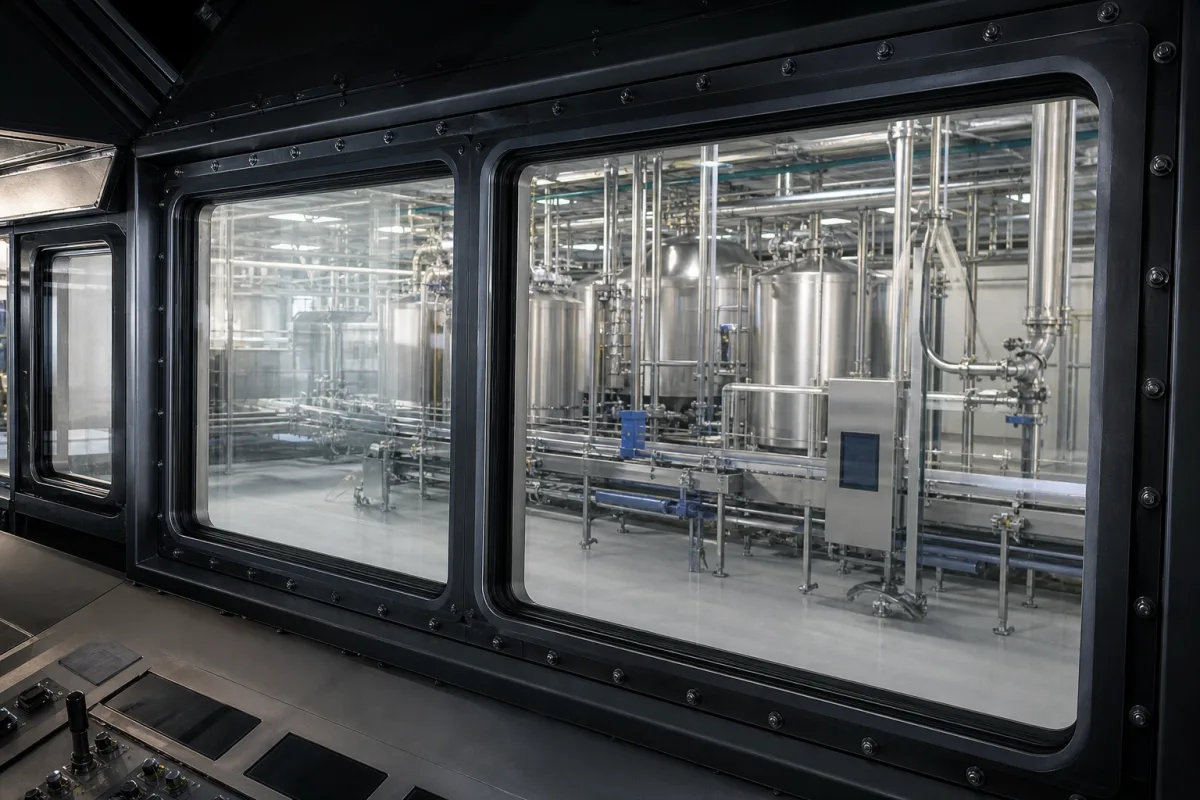
Technical details and manufacturing context for Observation Windows
What to specify in your RFQ
These are the quantities to specify to the manufacturer when sizing or requesting a quote. The manufacturer's own documentation governs the exact figures and applicable standard.
This component is essential for the following industrial systems and equipment:
| pressure: | Up to 10 bar (standard), higher ratings available with reinforced frames |
| other spec: | Impact resistance: IK08-10 rating, optical clarity: >90% light transmission, chemical resistance: pH 2-12 range |
| temperature: | -40°C to +120°C (standard), up to +200°C with specialized glass/glazing |
Indicative industry ranges for design and RFQ preparation. Confirm the exact figures and applicable standard with the manufacturer before specifying.
Quoted from the published standard.
Manufacturer profiles associated with Observation Windows.
Manufacturer listings support early research and capability understanding. They are not certification, ranking, or transaction guarantees.
A practical evidence checklist for RFQ preparation and supplier evaluation.
CNFX does not score or rank suppliers. Buyers must verify all claims and documents with the legal manufacturer before ordering.
Common materials include tempered safety glass, polycarbonate, and acrylic (PMMA). Each offers different properties in terms of impact resistance, chemical resistance, and optical clarity. The choice depends on the application's requirements.
Consider the operating environment, potential impact forces, pressure differentials, and required optical clarity. Panel thickness and dimensions are critical parameters that must be specified based on the intended use. Always verify model-specific values with the manufacturer.
The directory does not list specific standards for this product. It is essential to check with the legal manufacturer or supplier for applicable industry standards and regulations that may apply to your specific application and region.
Regularly inspect for cracks, crazing, discoloration, or other damage. Clean with appropriate non-abrasive cleaners to maintain optical clarity. If any damage is detected, replace the window promptly to ensure safety and performance.
Editorial classification, named public sources where available, and source-reviewed manufacturer records.
Ask for use case, specification boundaries, supplier type, and RFQ preparation information for this product.
Compare manufacturer profiles with relevant product and process capability.