Industry-Verified Manufacturing Data (2026)

Screed

Based on aggregated insights from multiple verified factory profiles within the CNFX directory, the standard Screed used in the Machinery and Equipment Manufacturing sector typically supports operational capacities ranging from standard industrial configurations to heavy-duty production requirements.

Technical Definition & Core Assembly

A canonical Screed is characterized by the integration of Screed Plate and Vibration System. In industrial production environments, manufacturers listed on CNFX commonly emphasize High-strength steel construction to support stable, high-cycle operation across diverse manufacturing scenarios.

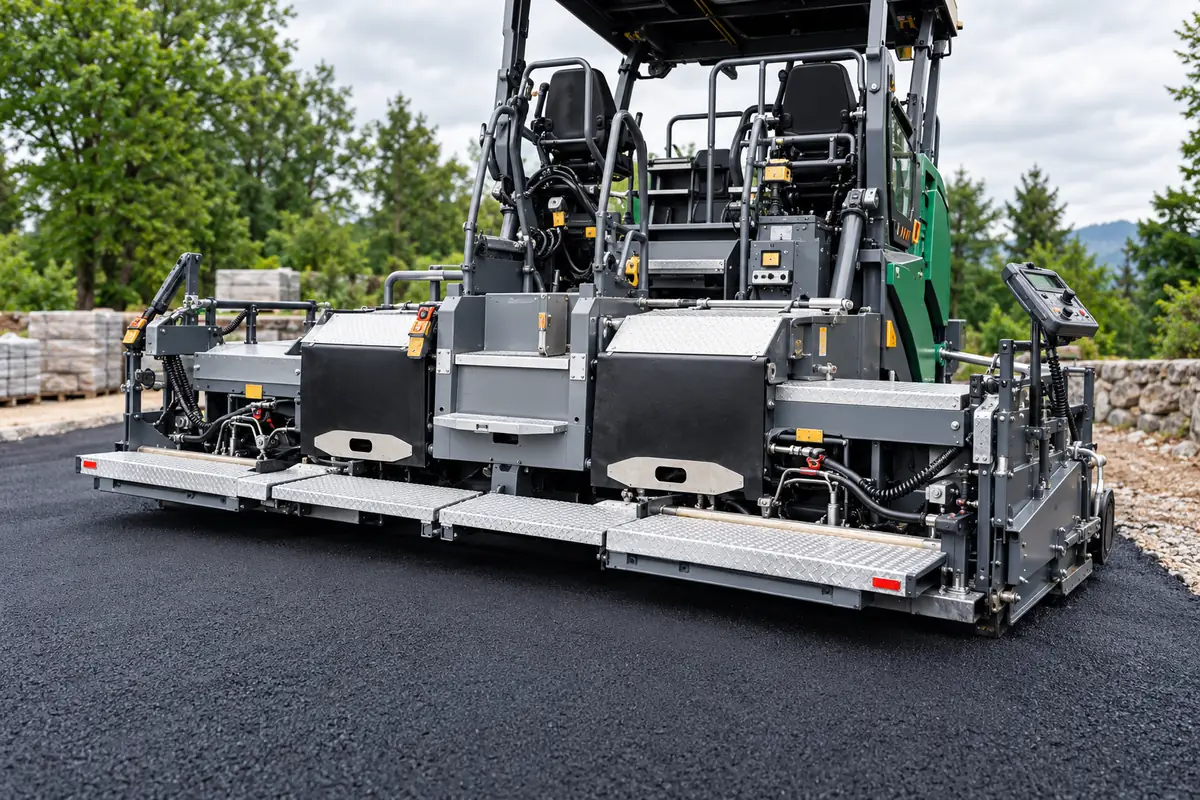
A critical component of an asphalt paver that levels, compacts, and finishes the asphalt mat to specified thickness and smoothness.
Product Specifications

Technical details and manufacturing context for Screed

Definition
The screed is the rear assembly of an asphalt paver responsible for receiving the asphalt mix from the augers, spreading it evenly across the width of the paving lane, and providing initial compaction and surface finishing. It determines the final thickness, density, and smoothness of the asphalt pavement layer.
Working Principle
The screed floats on the freshly laid asphalt mix, using the principle of 'automatic grade and slope control.' Its weight and vibration/hydraulic tamping mechanisms provide initial compaction. The thickness is controlled by adjusting the screed's attack angle relative to the tow point, while extensions allow for variable paving widths.
Common Materials
High-strength steel, Abrasion-resistant alloy steel
Technical Parameters
  • Standard paving width (basic screed width) (mm) Customizable
Components / BOM
  • Screed Plate
    Forms the bottom surface that contacts and finishes the asphalt mat.
    Material: Abrasion-resistant steel
  • Vibration System
    Provides high-frequency vibrations to densify the asphalt mix.
    Material: Steel, alloy components
  • Heating System
    Prevents asphalt from sticking to the screed plate and ensures smooth finish.
    Material: Steel tubes, burners or electric elements
  • Extensions/Hydraulic Extensions
    Attachable sections to increase the paving width.
    Material: Steel
  • Crown Control Mechanism
    Allows adjustment of the screed's cross-profile (crown) for proper drainage.
    Material: Steel, hydraulic components
Engineering Reasoning
2.5-4.5 MPa hydraulic pressure, 120-180°C asphalt temperature, 0.5-2.0 m/min travel speed
Hydraulic pressure exceeding 5.2 MPa causes seal extrusion, asphalt temperature below 110°C creates material adhesion failure, vibration amplitude exceeding 0.8 mm RMS causes structural resonance
Design Rationale: Hydraulic seal extrusion failure occurs at 5.2 MPa due to elastomer yield strength limit (Shore A 90 durometer, 21 MPa tensile strength). Thermal fatigue cracking initiates at 180°C differential between screed plate (160°C) and cooling water (40°C) with ΔT > 140°C. Material adhesion failure occurs when asphalt viscosity exceeds 3000 cP at 110°C.
Risk Mitigation (FMEA)
Trigger Hydraulic fluid contamination exceeding ISO 4406 18/16/13 cleanliness level
Mode: Servo valve spool sticking causing uneven screed extension
Strategy: Install 3 μm absolute beta₃≥200 filtration with continuous particle counting
Trigger Asphalt temperature gradient exceeding 15°C across screed width
Mode: Differential thermal expansion causing screed plate warping >2 mm/m
Strategy: Implement segmented heating zones with PID control maintaining ±3°C uniformity

Industry Taxonomies & Aliases

Commonly used trade names and technical identifiers for Screed.

Applied To / Applications

This component is essential for the following industrial systems and equipment:

Industrial Ecosystem & Supply Chain DNA

Complementary Systems
Downstream Applications
Specialized Tooling

Application Fit & Sizing Matrix

Operational Limits
pressure: Up to 15 MPa (compaction force)
flow rate: 50-500 tons/hour (asphalt throughput)
temperature: 120-180°C (asphalt application range)
slurry concentration: N/A (solid asphalt material)
Media Compatibility
✓ Hot mix asphalt (HMA) ✓ Warm mix asphalt (WMA) ✓ Stone mastic asphalt (SMA)
Unsuitable: Concrete paving applications
Sizing Data Required
  • Paver width capacity (meters)
  • Required asphalt layer thickness (mm)
  • Production rate requirement (tons/hour)

Reliability & Engineering Risk Analysis

Failure Mode & Root Cause
Wear and tear on screed plates and tamper bars
Cause: Abrasive contact with hot mix asphalt aggregates and repeated mechanical stress during compaction, leading to material degradation and loss of dimensional accuracy.
Hydraulic system failure (e.g., cylinder leaks, pump issues)
Cause: Contamination of hydraulic fluid, seal degradation due to high temperatures and pressure cycles, or improper maintenance leading to loss of pressure and control.
Maintenance Indicators
  • Visible unevenness or waves in the asphalt mat surface, indicating screed plate wear or tamper bar malfunction.
  • Unusual hydraulic noises (whining, knocking) or visible fluid leaks around cylinders and connections, signaling imminent system failure.
Engineering Tips
  • Implement regular inspection and replacement of wear parts (screed plates, tamper bars) based on operational hours, and apply anti-stick coatings to reduce material buildup and abrasion.
  • Maintain strict hydraulic fluid cleanliness protocols, including scheduled filter changes and system flushing, and monitor fluid temperature to prevent overheating and seal degradation.

Compliance & Manufacturing Standards

Reference Standards
ISO 9001:2015 Quality Management Systems ASTM C109/C109M Standard Test Method for Compressive Strength of Hydraulic Cement Mortars EN 13813 Screed material and floor screeds - Screed material - Properties and requirements
Manufacturing Precision
  • Flatness: ±2mm over 2m straightedge
  • Thickness: ±5mm of specified design thickness
Quality Inspection
  • Compressive Strength Test (ASTM C109)
  • Surface Flatness Test using straightedge or laser scanner

Factories Producing Screed

Verified manufacturers with capability to produce this product in China

✓ 94% Supplier Capability Match Found

P Procurement Specialist from United Arab Emirates Feb 08, 2026
★★★★★
"The Screed we sourced perfectly fits our Machinery and Equipment Manufacturing production line requirements."
Technical Specifications Verified
T Technical Director from Australia Feb 05, 2026
★★★★★
"Found 31+ suppliers for Screed on CNFX, but this spec remains the most cost-effective."
Technical Specifications Verified
P Project Engineer from Singapore Feb 02, 2026
★★★★★
"The technical documentation for this Screed is very thorough, especially regarding technical reliability."
Technical Specifications Verified
Verification Protocol

“Feedback is collected from verified sourcing managers during RFQ (Request for Quote) and factory evaluation processes on CNFX. These reports represent historical performance data and technical audit summaries from our B2B manufacturing network.”

15 sourcing managers are analyzing this specification now. Last inquiry for Screed from USA (1h ago).

Supply Chain Compatible Machinery & Devices

Hydraulic Press

Industrial machine using hydraulic pressure to compress, form, or assemble materials

Explore Specs →
Heavy-Duty CNC Plasma Cutting Machine

Industrial machine for precision metal cutting using plasma arc technology

Explore Specs →
Automated Assembly Line System

Integrated production system for sequential component assembly operations

Explore Specs →
Automated Powder Coating System

Integrated industrial system for applying dry powder coatings to metal substrates.

Explore Specs →

Frequently Asked Questions

What materials are used in manufacturing industrial screeds?

Industrial screeds are constructed from high-strength steel and abrasion-resistant alloy steel to withstand heavy use and harsh conditions in asphalt paving operations.

How does the crown control mechanism work on a screed?

The crown control mechanism allows operators to adjust the screed's curvature, enabling precise control over the asphalt mat's cross-slope and crown for proper drainage and surface profile.

Why is a heating system important for asphalt paver screeds?

The heating system prevents asphalt from sticking to the screed plate, ensures consistent material flow, and maintains proper compaction temperature for optimal mat finish and density.

Can I contact factories directly on CNFX?

CNFX is an open directory, not a transaction platform. Each factory profile provides direct contact information and production details to help you initiate direct inquiries with Chinese suppliers.

Get Quote for Screed

Request technical pricing, lead times, or customized specifications for Screed directly from verified manufacturing units.

Your business information is encrypted and only shared with verified Screed suppliers.

Thank you! Your message has been sent. We'll respond within 1–3 business days.

Need to Manufacture Screed?

Connect with verified factories specializing in this product category

Add Your Factory Contact Us
Previous Product
Scraper/Plow Assembly
Next Product
Screed assembly