Editorial Technical Reference

Seal Gaskets

This page explains how Seal Gaskets is classified within Machinery and Equipment Manufacturing. Technical values and manufacturer relationships are research references; confirm the current specification and supplier evidence for each order.

Technical Definition & Core Assembly

Sealing components that prevent powder leakage and contamination in pharmaceutical tablet press feed frames.
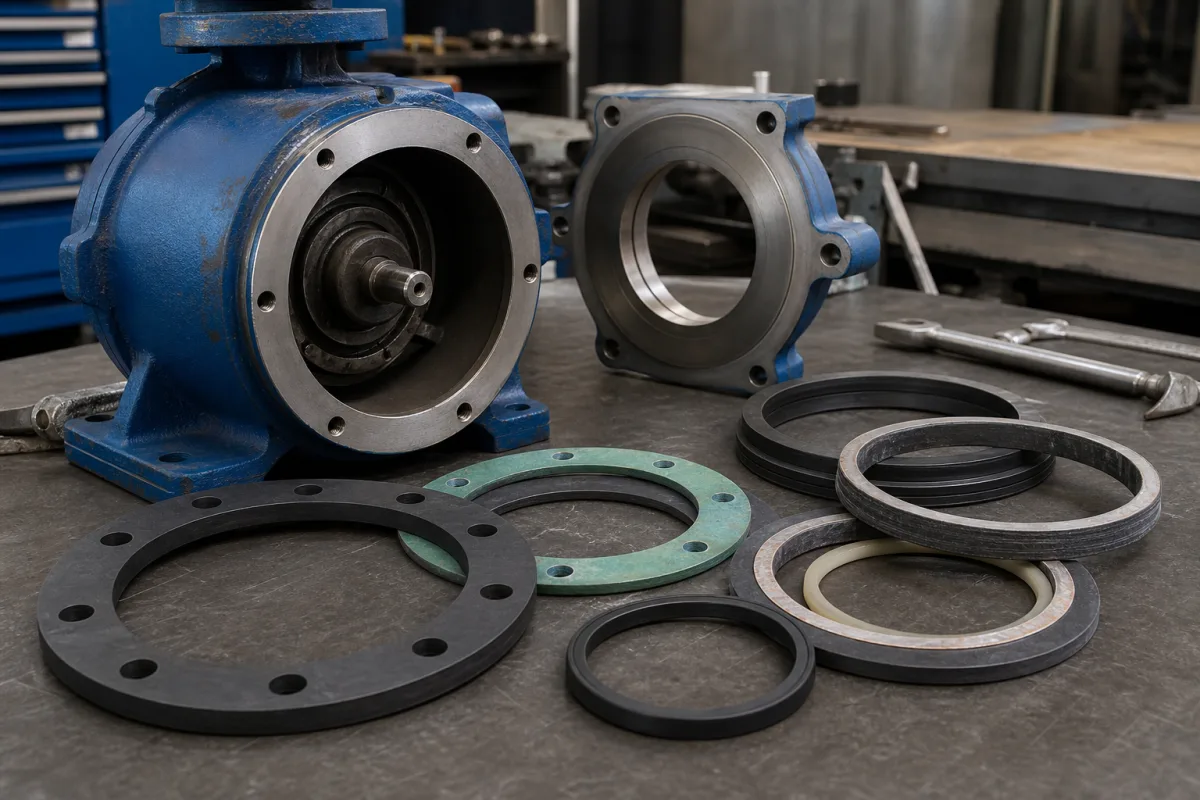
Representative product image. Confirm appearance and specifications with the manufacturer.

Product Specifications

Technical details and manufacturing context for Seal Gaskets

Definition
Seal gaskets are critical sealing components installed in pharmaceutical tablet press feed frames to create hermetic seals between mating surfaces. They prevent powder leakage during tablet compression operations, maintain pressure differentials, and ensure product purity by preventing cross-contamination between batches. These gaskets are specifically designed to withstand the abrasive nature of pharmaceutical powders while maintaining flexibility for effective sealing. Available in food-grade silicone, pharmaceutical-grade EPDM, PTFE (Teflon), and fluoroelastomer (Viton), they offer a range of properties suitable for different operating conditions. Key parameters include inner diameter (50–200 mm), outer diameter (70–230 mm), thickness (2–5 mm), hardness (60–80 Shore A per ASTM D2240), tensile strength (8–15 MPa per ASTM D412), elongation at break (200–400% per ASTM D412), compression set (15–25% per ASTM D395), operating temperature (-40 to 120°C), operating pressure (1.0–1.6 MPa), and weight (0.05–0.5 kg per piece). Food grade certification per FDA 21 CFR 177.2600 is required for pharmaceutical contact. Custom sizes are available. Always verify model-specific values and standards with the legal manufacturer or supplier before procurement.
Working Principle
Seal gaskets work by creating a compression seal between two mating surfaces in the feed frame assembly. When the feed frame components are tightened together, the gasket material deforms to fill microscopic imperfections in the mating surfaces, creating a barrier that prevents powder particles from escaping. The elastic recovery of the gasket material maintains constant sealing pressure even during vibration and thermal cycling of the tablet press operation.
Common Materials
Food-grade silicone, Pharmaceutical-grade EPDM, PTFE (Teflon), Fluoroelastomer (Viton)
Technical Parameters
ParameterTypical rangeNotes & selection driver
Inner Diameter50–200 mmCustom sizes available
Outer Diameter70–230 mmMatches feed frame groove
Thickness2–5 mmCompression set affects sealing
Hardness60–80 Shore ASofter for better conformabilityASTM D2240
Tensile Strength8–15 MPaHigher resists tearingASTM D412
Elongation at Break200–400 %Flexibility for installationASTM D412
Compression Set15–25 %Lower is better for sealingASTM D395
Operating Temperature-40–120 °CAbove 120°C degrades elastomer
Food Grade CertificationFDA 21 CFR 177.2600Required for pharmaceutical contactFDA
Weight0.05–0.5 kgPer piece, depends on size

Ranges are indicative industry figures for RFQ preparation, not a supplier commitment. Confirm every value and standard with the legal manufacturer before ordering.

Components / BOM

Industrial Ecosystem & Supply Chain Structure

Complementary Systems
Downstream Applications
Specialized Tooling

Application Fit & Sizing Matrix

Operational Limits
pressure: Up to 10 bar (145 psi)
other spec: Slurry concentration: Up to 70% solids by weight, Particle size: 1-500 microns
temperature: -20°C to 150°C
Media Compatibility
✓ Pharmaceutical powders (e.g., APIs, excipients) ✓ Food-grade lubricants (e.g., silicone-based) ✓ Cleaning agents (e.g., CIP solutions, isopropyl alcohol)
Unsuitable: Abrasive slurries with hard particles >500 microns or corrosive chemicals (e.g., strong acids, chlorinated solvents)
Sizing Data Required
  • Feed frame bore diameter (mm/in)
  • Operating pressure (bar/psi)
  • Required compression set (%) for sealing efficiency

Reliability & Engineering Risk Analysis

Failure Mode & Root Cause
Compression Set
Cause: Excessive temperature or pressure causing permanent deformation, loss of elasticity, and sealing ability
Chemical Degradation
Cause: Incompatible fluid/media exposure leading to swelling, hardening, or dissolution of gasket material
Maintenance Indicators
  • Visible fluid leakage at flange interface
  • Audible hissing or whistling indicating pressure loss
Engineering Tips
  • Implement proper bolt torque sequence and tensioning to ensure uniform gasket compression
  • Select gasket material based on comprehensive compatibility analysis with process fluids, temperatures, and pressures

Indicative industry ranges for design and RFQ preparation. Confirm the exact figures and applicable standard with the manufacturer before specifying.

Compliance & Manufacturing Standards

Applicable Standards
ISO 3601-1:2015 (Fluid power systems — O-rings — Part 1: Inside diameters, cross-sections, tolerances and designation codes) ASTM F104:2011 (Standard Classification System for Nonmetallic Gasket Materials) DIN 3770-1:2011 (O-rings — Part 1: Inside diameters, cross-sections, tolerances and designation codes)

Quoted from the published standard.

Manufacturing Precision
  • Cross-section diameter: +/-0.08 mm (for typical sizes)
  • Flatness: 0.1 mm per 100 mm of gasket length
Quality Inspection
  • Compression Set Test (ASTM D395)
  • Leakage/Pressure Test (ISO 6149)

Manufacturers of Seal Gaskets

Manufacturer profiles associated with Seal Gaskets.

Sourcing Seal Gaskets from China?
Tell us your specification and target quantity — we will match it against manufacturer records and come back with the factories that fit.
Request manufacturers We manufacture this

Manufacturer listings support early research and capability understanding. They are not certification, ranking, or transaction guarantees.

Technical documentation
Request current drawings, revision history, and a signed specification sheet.
Manufacturing capability
Verify equipment lists, process limits, capacity, and representative production evidence.
Inspection readiness
Confirm test methods, calibrated equipment, sampling plans, and traceable reports.
Supplier transparency
Check the legal entity, factory address, ownership, certifications, and direct contacts.

CNFX does not score or rank suppliers. Buyers must verify all claims and documents with the legal manufacturer before ordering.

Supply Chain Compatible Machinery & Devices

Heavy-Duty CNC Plasma Cutting Machine

The Heavy-Duty CNC Plasma Cutting Machine is a standalone industrial device designed for cutting conductive metals such as steel, stainless steel, aluminum, and copper alloys.

Explore Specs →
Automated Powder Coating System

Integrated industrial system for applying dry powder coatings to metal substrates.

Explore Specs →
Centrifugal Pump Impeller

The centrifugal pump impeller is a critical rotating component that converts mechanical energy from the motor into kinetic energy in fluid systems.

Explore Specs →
High-Precision CNC Laser Cutting Machine

Computer-controlled industrial machine using focused laser beams to cut sheet metal with micron-level accuracy.

Explore Specs →

Frequently Asked Questions

What materials are available for these seal gaskets?

The gaskets are available in food-grade silicone, pharmaceutical-grade EPDM, PTFE (Teflon), and fluoroelastomer (Viton). Each material offers different properties; for example, PTFE provides chemical resistance, while silicone offers flexibility. The choice depends on the specific application and compatibility with the pharmaceutical powders.

What are the typical dimensions and tolerances?

The inner diameter ranges from 50 to 200 mm, outer diameter from 70 to 230 mm, and thickness from 2 to 5 mm. Custom sizes are available. It is essential to verify the exact dimensions and tolerances with the manufacturer to ensure a proper fit in the feed frame groove.

How do I know if the gasket is suitable for pharmaceutical use?

For pharmaceutical contact, the gasket must meet FDA 21 CFR 177.2600 food grade certification. Always confirm that the specific product you are considering has this certification, as it ensures the material is safe for contact with pharmaceutical products.

What is the operating temperature and pressure range?

The operating temperature range is -40°C to 120°C, and the operating pressure range is 1.0 to 1.6 MPa. Note that above 120°C, the elastomer may degrade. Verify these values for your specific application.

Data Basis

Editorial classification, named public sources where available, and source-reviewed manufacturer records.

Preliminary Technical Classification
This page supports structured research, RFQ preparation, and supplier evaluation. It does not replace buyer-led supplier qualification, standards review, or technical approval.
Buyer enquiry

Request manufacturing insight for Seal Gaskets

Ask for use case, specification boundaries, supplier type, and RFQ preparation information for this product.

Where it goes
Straight to the CNFX editorial desk, and to the manufacturer if this product is linked to a claimed profile. Nothing is broadcast to a supplier list.
Your details stay here
We do not sell or rent enquiry data, and we do not add you to a mailing list. Used only to answer this request.
No commission, no middleman
CNFX is a directory. We take no cut of any order and never negotiate on a supplier's behalf.
What we don't claim
A listing is not an endorsement. Qualify every supplier and verify every figure yourself before ordering.

Your business information is used only to process this request.

Thank you! Your message has been sent. We'll respond within 1–3 business days.
Sorry, we couldn't send your message. Please try again, or email us at contact@cnfx.com.

Need to Manufacture Seal Gaskets?

Compare manufacturer profiles with relevant product and process capability.

Previous Product
Z-axis Ram/Spindle
Last Product
Get QuotesChat