Vacuum Gripper End-Effector
View system integration details
This page explains how Suction Cup Array is classified within Machinery and Equipment Manufacturing. Technical values and manufacturer relationships are research references; confirm the current specification and supplier evidence for each order.
A structured arrangement of multiple suction cups designed to handle larger, irregular, or multiple objects simultaneously in vacuum gripping applications.
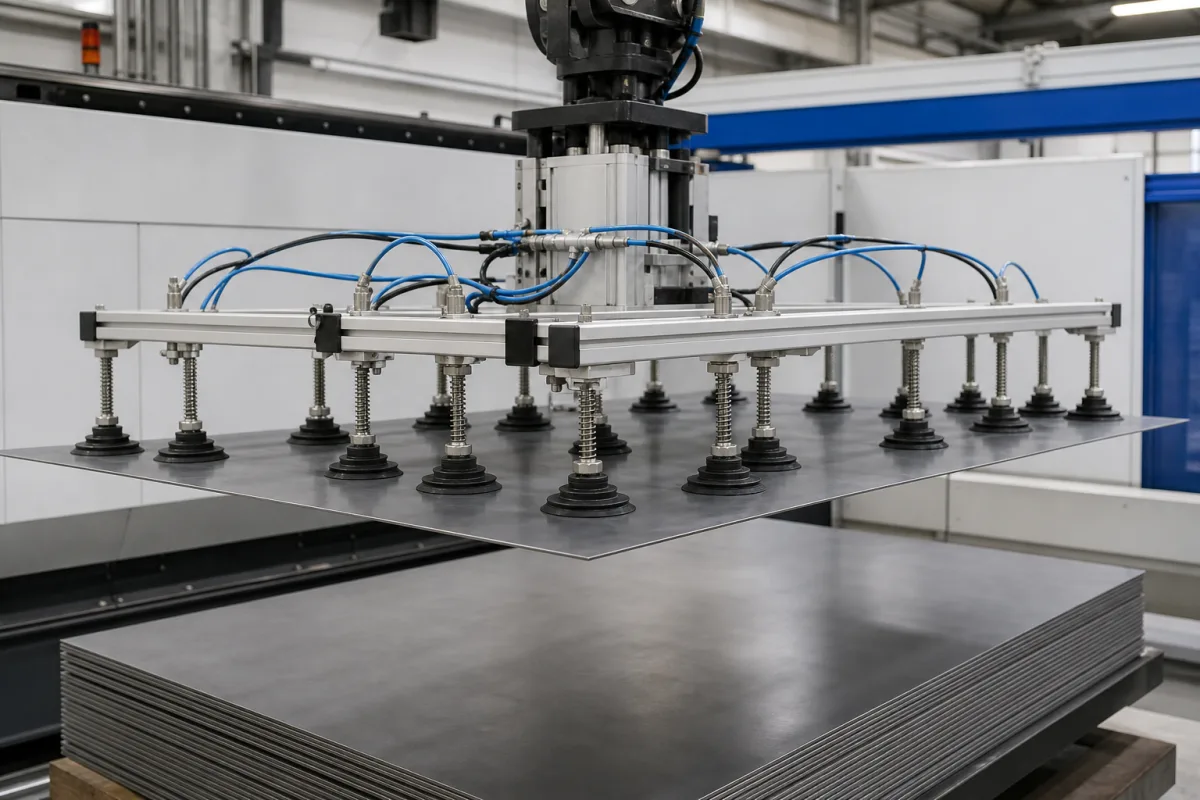
Technical details and manufacturing context for Suction Cup Array
| Parameter | Typical range | Notes & selection driver |
|---|---|---|
| Number of Suction Cups | 4–48 pcs | Determines gripping capacity and footprint |
| Suction Cup Diameter | 10–150 mm | Affects contact area and holding force |
| Total Holding Force | 50–5000 N | Sum of individual cup forces at rated vacuum |
| Operating Vacuum | -60–-90 kPa | Higher vacuum increases holding force |
| Operating Pressure | 0.4–0.8 MPa | For pneumatic actuation if applicable |
| Operating Temperature | -20–80 °C | Material dependent; outside range may reduce sealing |
| Cup Material | NBR, Silikon, PU | NBR for oil resistance, Silicone for high temp, PU for abrasion |
| Body Material | Aluminium, Edelstahl | Aluminum for lightweight, stainless for corrosion |
| Weight | 0.5–20 kg | Affects robot payload and mounting |
| Footprint (L×W) | 100×100–500×500 mm | Overall dimensions of the array |
| IP Rating | IP54–IP65 | Dust and water protection for harsh environmentsIEC 60529 |
| Vacuum Connection | G1/8–G1/2 inch | Port size for vacuum lineISO 228-1 |
Ranges are indicative industry figures for RFQ preparation, not a supplier commitment. Confirm every value and standard with the legal manufacturer before ordering.
This component is essential for the following industrial systems and equipment:
| pressure: | Up to -0.9 bar vacuum, 0-6 bar positive pressure |
| flow rate: | Dependent on cup count and size: 0.5-20 L/min per cup at 6 bar |
| temperature: | -20°C to +80°C |
| slurry concentration: | Not recommended for slurry applications; max 5% particulate in clean air |
Indicative industry ranges for design and RFQ preparation. Confirm the exact figures and applicable standard with the manufacturer before specifying.
Quoted from the published standard.
Manufacturer profiles associated with Suction Cup Array.
Manufacturer listings support early research and capability understanding. They are not certification, ranking, or transaction guarantees.
A practical evidence checklist for RFQ preparation and supplier evaluation.
CNFX does not score or rank suppliers. Buyers must verify all claims and documents with the legal manufacturer before ordering.
A suction cup array is used in vacuum gripping systems to handle large, irregular, or multiple objects simultaneously. It distributes vacuum force across a wider area, improving stability and load capacity compared to a single cup.
Suction cups are available in silicone rubber, polyurethane, and nitrile rubber. Silicone offers high-temperature resistance, polyurethane provides abrasion resistance, and nitrile rubber is suitable for oil resistance. The choice depends on the application environment.
Selection involves considering the number and diameter of cups, total holding force, operating vacuum, and environmental factors like temperature and IP rating. The array's footprint and weight must match the robot payload. Always verify specifications with the manufacturer for your specific application.
Typical operating vacuum ranges from -60 to -90 kPa, with operating pressure for pneumatic actuation at 0.4-0.8 MPa. The operating temperature is -20 to 80°C. IP ratings range from IP54 to IP65 for dust and water protection. Confirm these values for your model.
Editorial classification, named public sources where available, and source-reviewed manufacturer records.
Ask for use case, specification boundaries, supplier type, and RFQ preparation information for this product.
Compare manufacturer profiles with relevant product and process capability.