Wire Feeder Mechanism
View system integration details
This page explains how Wire Guide / Straightener is classified within Machinery and Equipment Manufacturing. Technical values and manufacturer relationships are research references; confirm the current specification and supplier evidence for each order.
A mechanical component that guides and straightens wire as it feeds into a processing system.
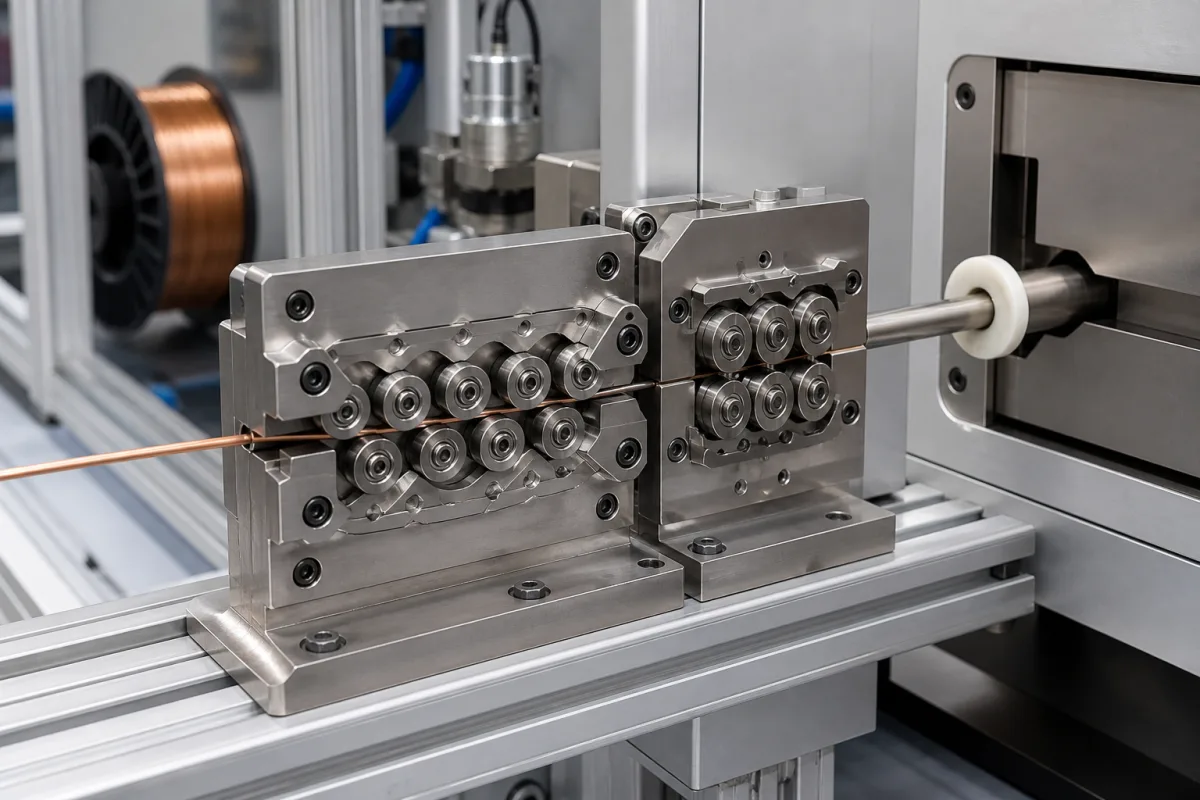
Technical details and manufacturing context for Wire Guide / Straightener
| Parameter | Typical range | Notes & selection driver |
|---|---|---|
| Wire Diameter Range | 0.5–6.0 mm | For standard wire straightening applications |
| Straightness Accuracy | 0.5–1.0 mm/m | Residual curvature per meter after straightening |
| Feed Speed | 5–30 m/min | Maximum speed for consistent straightening |
| Number of Rolls | 5–9 pcs | More rolls improve straightness for small diameters |
| Roll Material | GCr15 | Bearing steel for wear resistanceGB/T 18254 |
| Body Material | 45# steel | Carbon steel for strength and rigidityGB/T 699 |
| Operating Temperature | -10–60 °C | Outside this range, lubrication and material properties degrade |
| Weight | 15–80 kg | Depends on size and number of rolls |
| Dimensions (L×W×H) | 300×150×200–800×300×400 mm | Varies with capacity |
Ranges are indicative industry figures for RFQ preparation, not a supplier commitment. Confirm every value and standard with the legal manufacturer before ordering.
| pressure: | Up to 10 bar (static), 2 bar (dynamic) |
| wire speed: | Up to 30 m/s |
| temperature: | -20°C to 150°C |
| wire tension: | Up to 500 N |
Indicative industry ranges for design and RFQ preparation. Confirm the exact figures and applicable standard with the manufacturer before specifying.
Quoted from the published standard.
A practical evidence checklist for RFQ preparation and supplier evaluation.
Compare the published product scope and source details, then include your specifications and quantity in an enquiry.
Manufacturer profiles associated with Wire Guide / Straightener.
Explore company information and manufacturing capabilities, then discuss the scope of your project with a relevant supplier.
Ask for use case, specification boundaries, supplier type, and RFQ preparation information for this product.
The reference range is 0.5–6.0 mm, but the actual range depends on the specific model and configuration. Always confirm with the manufacturer for your application.
Straightness accuracy is given as residual curvature per meter after straightening, typically 0.5–1.0 mm/m. This value should be verified for the specific model and material.
Rolls may be made of GCr15 bearing steel (per GB/T 18254) for wear resistance, and the body may be 45# carbon steel (per GB/T 699) for strength. These are reference materials; confirm with the supplier.
Regularly inspect rollers for wear and alignment. Check for increased residual curvature, noise, or vibration. Ensure operating temperature stays within -10 to 60 °C. Follow manufacturer guidelines for adjustment and lubrication.
This component is essential for the following industrial systems and equipment:
Editorial classification, named public sources where available, and source-reviewed manufacturer records.
Compare manufacturer profiles with relevant product and process capability.