Industry-Verified Manufacturing Data (2026)

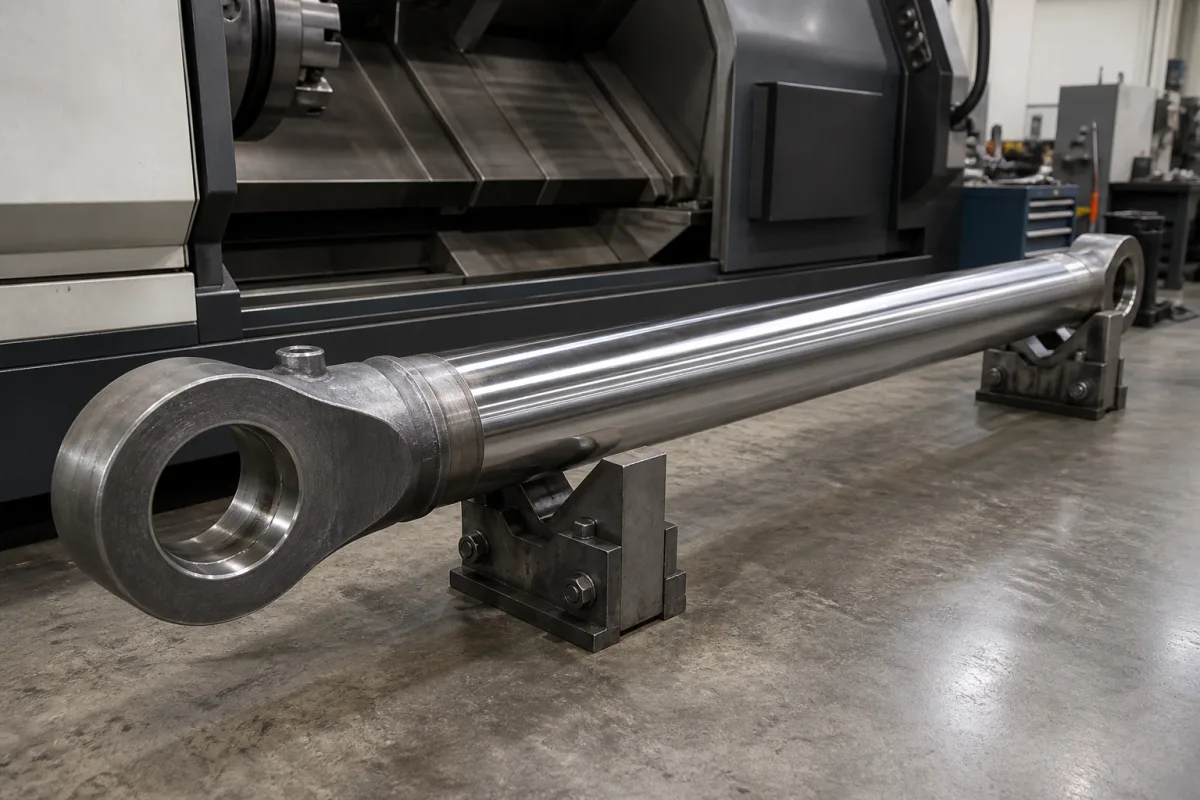
Forged Steel Piston Rod

Based on aggregated insights from multiple verified factory profiles within the CNFX directory, the standard Forged Steel Piston Rod used in the Metal Forging, Pressing, Stamping sector typically supports operational capacities ranging from standard industrial configurations to heavy-duty production requirements.

Technical Definition & Core Assembly

A canonical Forged Steel Piston Rod is characterized by the integration of Rod Body and Threaded End. In industrial production environments, manufacturers listed on CNFX commonly emphasize AISI 4140 Steel construction to support stable, high-cycle operation across diverse manufacturing scenarios.

Precision-forged steel rod for hydraulic/pneumatic cylinder applications.

Product Specifications

Technical details and manufacturing context for Forged Steel Piston Rod

Definition
A critical forged steel component that transmits linear force in hydraulic and pneumatic systems. Manufactured through precision forging processes to achieve superior grain flow and mechanical properties compared to machined alternatives. Essential for industrial machinery, construction equipment, and automotive applications where high strength-to-weight ratio and fatigue resistance are required. Serves as a key interface between piston assemblies and external loads in B2B manufacturing supply chains.
Working Principle
Transmits linear force from piston to external mechanism while maintaining alignment and resisting bending moments under load.
Common Materials
AISI 4140 Steel, AISI 4340 Steel
Technical Parameters
  • Rod diameter tolerance (mm) Standard Spec
  • Surface hardness rating (HRC) Standard Spec
Components / BOM
  • Rod Body
    Main structural element transmitting linear force
    Material: Forged Steel
  • Threaded End
    Connection interface for piston or external attachment
    Material: Forged Steel
  • Hard Chrome Plating Optional
    Wear-resistant surface coating
    Material: Chromium
  • Seal Grooves
    Recesses for mounting sealing elements
    Material: Forged Steel
Engineering Reasoning
0-350 bar hydraulic pressure, -40°C to 200°C temperature
Yield strength exceeded at 620 MPa stress, surface hardness drops below 45 HRC, fatigue crack initiation at 10⁶ cycles with 300 MPa alternating stress
Design Rationale: High-cycle fatigue from cyclic loading exceeding endurance limit, hydrogen embrittlement in hardened steel, galling from insufficient surface finish (Ra > 0.4 μm)
Risk Mitigation (FMEA)
Trigger Misalignment exceeding 0.1 mm/m in cylinder assembly
Mode: Eccentric loading causing bending stress concentration at rod-gland interface
Strategy: Integrate alignment dowels with 0.02 mm tolerance, implement laser alignment verification during assembly
Trigger Contaminant particles larger than 5 μm in hydraulic fluid
Mode: Abrasive wear on chrome-plated surface exceeding 0.01 mm/year wear rate
Strategy: Install 3 μm absolute filtration with pressure differential monitoring, specify NAS Class 6 fluid cleanliness

Industry Taxonomies & Aliases

Commonly used trade names and technical identifiers for Forged Steel Piston Rod.

Industrial Ecosystem & Supply Chain DNA

Complementary Systems
Downstream Applications
Specialized Tooling

Application Fit & Sizing Matrix

Operational Limits
pressure: Up to 5000 psi (345 bar)
other spec: Surface hardness: 55-62 HRC, Straightness tolerance: 0.1 mm/m
temperature: -40°C to +200°C
Media Compatibility
✓ Hydraulic oil (mineral-based) ✓ Water-glycol hydraulic fluids ✓ Compressed air (dry, filtered)
Unsuitable: Seawater or high-chloride environments without special coatings
Sizing Data Required
  • Cylinder bore diameter
  • Maximum operating pressure
  • Stroke length

Reliability & Engineering Risk Analysis

Failure Mode & Root Cause
Fatigue cracking
Cause: Cyclic loading exceeding material endurance limit, often due to misalignment, improper surface finish, or stress concentrations at geometric transitions
Surface pitting and scoring
Cause: Inadequate lubrication, contamination ingress (hard particles), or corrosion from moisture/chemical exposure in the operating environment
Maintenance Indicators
  • Visible scoring or longitudinal scratches on the rod surface
  • Abnormal knocking or tapping sounds during piston stroke cycles
Engineering Tips
  • Implement proper rod wiper seals and filtration to prevent contaminant ingress into the cylinder
  • Ensure precise alignment during installation and use protective rod boots/covers in harsh environments

Compliance & Manufacturing Standards

Reference Standards
ISO 683-1: Heat-treated steels, alloy steels and free-cutting steels ASTM A29/A29M: Standard Specification for Steel Bars, Carbon and Alloy, Hot-Wrought and Cold-Finished DIN EN 10083-2: Steels for quenching and tempering - Part 2: Technical delivery conditions for non-alloy steels
Manufacturing Precision
  • Diameter tolerance: +/-0.01mm
  • Surface roughness: Ra 0.4μm max
Quality Inspection
  • Ultrasonic Testing (UT) for internal defects
  • Hardness Testing (Rockwell C scale)

Factories Producing Forged Steel Piston Rod

Verified manufacturers with capability to produce this product in China

✓ 98% Supplier Capability Match Found

P Procurement Specialist from Singapore Feb 04, 2026
★★★★★
"The technical documentation for this Forged Steel Piston Rod is very thorough, especially regarding Rod Diameter (mm)."
Technical Specifications Verified
T Technical Director from Germany Feb 01, 2026
★★★★★
"Reliable performance in harsh Metal Forging, Pressing, Stamping environments. No issues with the Forged Steel Piston Rod so far."
Technical Specifications Verified
P Project Engineer from Brazil Jan 29, 2026
★★★★★
"Testing the Forged Steel Piston Rod now; the Rod Diameter (mm) results are within 1% of the laboratory datasheet."
Technical Specifications Verified
Verification Protocol

“Feedback is collected from verified sourcing managers during RFQ (Request for Quote) and factory evaluation processes on CNFX. These reports represent historical performance data and technical audit summaries from our B2B manufacturing network.”

8 sourcing managers are analyzing this specification now. Last inquiry for Forged Steel Piston Rod from Brazil (1h ago).

Frequently Asked Questions

What are the advantages of forged steel piston rods over cast alternatives?

Forged steel piston rods offer superior strength, better grain structure, and higher fatigue resistance compared to cast rods, making them ideal for high-pressure hydraulic and pneumatic applications where reliability is critical.

How does hard chrome plating benefit piston rod performance?

Hard chrome plating provides excellent corrosion resistance, reduces friction, extends service life, and protects against wear in demanding industrial environments, ensuring consistent performance in hydraulic and pneumatic systems.

What specifications should I provide when ordering custom forged piston rods?

Provide rod diameter, length, material grade (AISI 4140 or 4340), surface hardness (HRC), straightness tolerance, surface finish (Ra), yield strength requirements, and any special features like seal grooves or threaded ends for accurate manufacturing.

Can I contact factories directly on CNFX?

CNFX is an open directory, not a transaction platform. Each factory profile provides direct contact information and production details to help you initiate direct inquiries with Chinese suppliers.

Get Quote for Forged Steel Piston Rod

Request technical pricing, lead times, or customized specifications for Forged Steel Piston Rod directly from verified manufacturing units.

Your business information is encrypted and only shared with verified Forged Steel Piston Rod suppliers.

Thank you! Your message has been sent. We'll respond within 1–3 business days.

Need to Manufacture Forged Steel Piston Rod?

Connect with verified factories specializing in this product category

Add Your Factory Contact Us
Previous Product
Forged Steel Flange
Next Product
Forged Steel Valve Body