Editorial Technical Reference

Silicone Molding Machine

This page explains how Silicone Molding Machine is classified within Adult Wellness Products Manufacturing. Technical values and manufacturer relationships are research references; confirm the current specification and supplier evidence for each order.

Technical Definition & Core Assembly

This standalone industrial machine is designed specifically for molding silicone components used in adult wellness products.
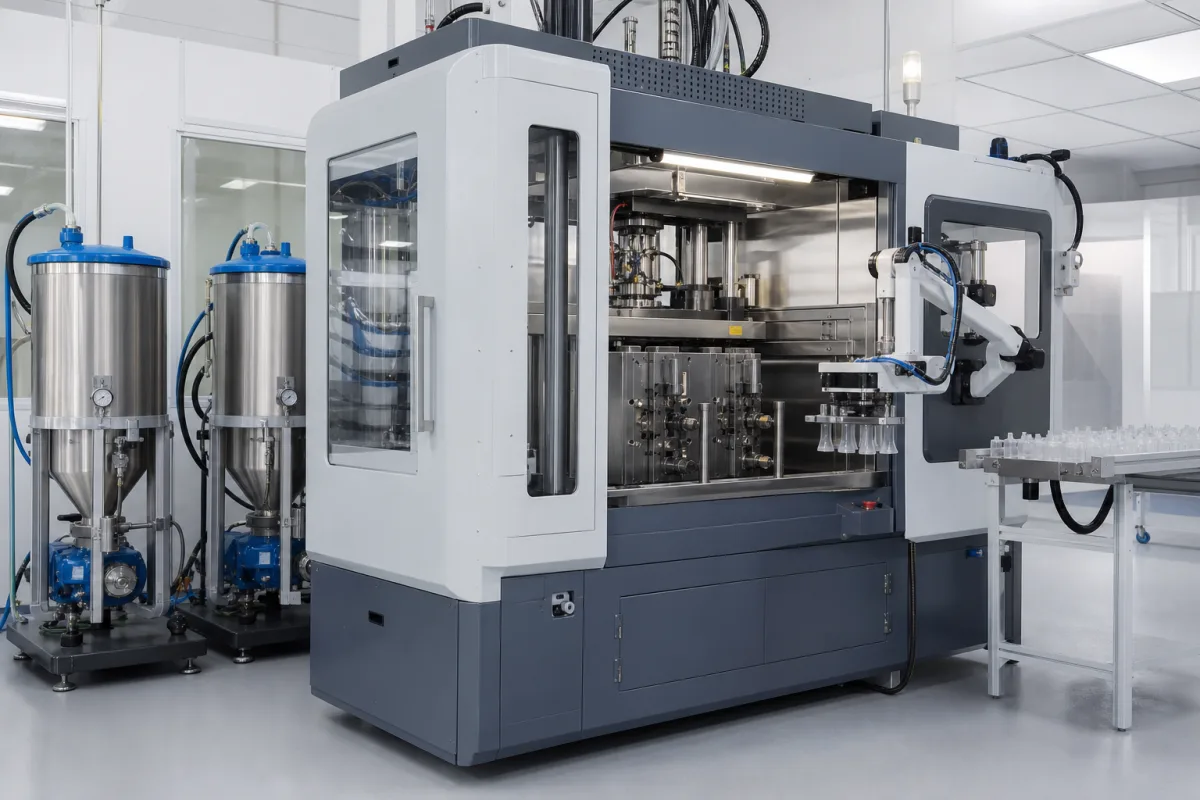
Silicone Molding Machine in a manufacturing environment
Representative product image. Confirm appearance and specifications with the manufacturer.

Product Specifications

Technical details and manufacturing context for Silicone Molding Machine

Definition
This standalone industrial machine is designed specifically for molding silicone components used in adult wellness products. It integrates precision temperature control and pressure systems to produce consistent, high-quality silicone items. The machine is engineered for manufacturing environments that require hygienic production standards and repeatable output quality. Common applications include production of silicone sleeves, anatomical forms, and other intimate product components. The machine operates by heating silicone material to a liquid state, injecting it into precision molds under controlled pressure, and then cooling it to solidify into the final product shape. It features a PLC controller for automated process management, with a clamping force range of 150–600 kN, injection volume of 50–500 cm³, and heating power of 12–36 kW. Temperature range is 20–220°C, with control precision of ±0.5°C. Platen size ranges from 400×400 to 800×800 mm, accommodating mold thicknesses of 150–400 mm. The machine requires a 380 V three-phase supply (50/60 Hz, per IEC 60038) and has a total power consumption of 15–40 kW. Machine weight ranges from 2500 to 8000 kg, and dimensions vary from 2500×1500×2500 to 4500×2500×3500 mm (L×W×H). Key materials include stainless steel, aluminum alloy, silicone rubber, and PLC controller components. All listed parameters are reference ranges; actual values must be confirmed with the legal manufacturer or supplier for specific models and applications. Standards cited are procurement references and do not imply certification or compliance of any particular unit.
Working Principle
The machine heats silicone material to a liquid state, then injects it into precision molds under controlled pressure. After injection, the mold is cooled to solidify the silicone into the final product shape. Temperature and pressure are precisely regulated to ensure consistent quality and repeatability. The PLC controller manages the process cycle, including heating, injection, cooling, and ejection. The clamping system holds the mold closed during injection and curing, with force adjustable within the specified range. The injection unit delivers a measured volume of silicone per shot. Cooling systems accelerate solidification, and the mold opens to release the finished part. The entire process is designed for hygienic manufacturing, with stainless steel and aluminum alloy surfaces that are easy to clean.
Common Materials
stainless steel, aluminum alloy, silicone rubber, PLC controller
Technical Parameters
ParameterTypical rangeNotes & selection driver
Clamping ForceRequired150–600 kNMold clamping pressure
Injection VolumeRequired50–500 cm³Max silicone per shot
Heating PowerRequired12–36 kWBarrel heating capacity
Cycle Time30–120 sTypical molding cycle duration
Temperature Range20–220 °CSilicone curing typically 120–180°C
Platen Size400×400–800×800 mmDetermines maximum mold dimensions
Mold Thickness150–400 mmRange for mold installation
Voltage380 VThree-phase, 50/60 HzIEC 60038
Power Consumption15–40 kWTotal installed power
Control Precision±0.5 °CTemperature control accuracy
Machine Weight2500–8000 kgAffects installation and floor loading
Dimensions (L×W×H)2500×1500×2500–4500×2500×3500 mmCheck workshop space

Ranges are indicative industry figures for RFQ preparation, not a supplier commitment. Confirm every value and standard with the legal manufacturer before ordering.

Components / BOM

Industry Taxonomies & Aliases

Commonly used trade names and technical identifiers for Silicone Molding Machine.

Industrial Ecosystem & Supply Chain Structure

Complementary Systems
Downstream Applications
Specialized Tooling

Application Fit & Sizing Matrix

Operational Limits
pressure: Up to 150 bar injection pressure, 50 bar clamping pressure
flow rate: 50-500 cm³/s injection rate
cycle time: 30-180 seconds per cycle
temperature: 20-200°C (typical molding range 80-180°C)
mold cavities: 1-8 cavities typical
slurry concentration: Viscosity range: 5,000-50,000 cP (silicone-specific)
Media Compatibility
✓ Platinum-cure silicone rubber ✓ Addition-cure silicone compounds ✓ Medical-grade silicone elastomers
Unsuitable: High-abrasion filled materials (e.g., carbon-filled rubbers)
Sizing Data Required
  • Required production volume (units/hour)
  • Part dimensions and weight (g)
  • Silicone compound viscosity and cure time

Reliability & Engineering Risk Analysis

Failure Mode & Root Cause
Heater Element Degradation
Cause: Cyclic thermal stress from repeated heating/cooling cycles causing fatigue cracking and oxidation of heating elements, compounded by contamination from silicone residue
Hydraulic System Contamination
Cause: Particulate ingress from worn seals or improper maintenance practices leading to valve sticking, pump wear, and pressure fluctuations that affect molding consistency
Maintenance Indicators
  • Inconsistent part dimensions or flashing indicating temperature or pressure control issues
  • Unusual hydraulic whining or pump cavitation noises suggesting fluid contamination or air entrainment
Engineering Tips
  • Implement predictive maintenance using infrared thermography to monitor heater band temperature profiles and detect hot spots before failure
  • Establish strict fluid cleanliness standards with regular particle counting and filtration maintenance to maintain ISO 4406 class 18/16/13 or better for hydraulic systems

Indicative industry ranges for design and RFQ preparation. Confirm the exact figures and applicable standard with the manufacturer before specifying.

Compliance & Manufacturing Standards

Applicable Standards
ISO 12100:2010 - Safety of machinery CE Marking - Machinery Directive 2006/42/EC ASTM D624 - Tear Strength of Rubber and Elastomers

Quoted from the published standard.

Manufacturing Precision
  • Mold Cavity Dimensions: +/-0.01mm
  • Platen Parallelism: 0.05mm/m
Quality Inspection
  • Pressure Decay Test for Hydraulic Systems
  • Temperature Uniformity Test across Heating Platens

Manufacturers of Silicone Molding Machine

1 company lists this product among what they make. Company figures are quoted from each company's own website; every card states where the relationship came from.

Guangzhou Juchuan Machinery Co., Ltd.
Guangzhou, Guangdong, CN
Listed on the company's own website · profile compiled by CNFX from public sources
Listed there as: “Silicone Molding Machines”
View source page ↗ china-juchuan.com · checked 2026-09-03

Manufacturer listings support early research and capability understanding. They are not certification, ranking, or transaction guarantees.

Share this page
Technical documentation
Request current drawings, revision history, and a signed specification sheet.
Manufacturing capability
Verify equipment lists, process limits, capacity, and representative production evidence.
Inspection readiness
Confirm test methods, calibrated equipment, sampling plans, and traceable reports.
Supplier transparency
Check the legal entity, factory address, ownership, certifications, and direct contacts.

CNFX does not score or rank suppliers. Buyers must verify all claims and documents with the legal manufacturer before ordering.

Frequently Asked Questions

What is the typical cycle time for this silicone molding machine?

The cycle time typically ranges from 30 to 120 seconds, depending on the product size, mold design, and silicone curing characteristics. Actual cycle time should be confirmed with the manufacturer for specific applications.

What are the electrical requirements for installation?

The machine requires a 380 V three-phase power supply, 50/60 Hz, per IEC 60038. Total installed power consumption ranges from 15 to 40 kW. Ensure the facility's electrical system meets these requirements and consult a qualified electrician for installation.

Can the machine handle different mold sizes?

Yes, the platen size ranges from 400×400 mm to 800×800 mm, and mold thickness can be between 150 mm and 400 mm. This allows flexibility for various product dimensions. Verify compatibility with your specific molds.

Data Basis

Editorial classification, named public sources where available, and source-reviewed manufacturer records.

Preliminary Technical Classification
This page supports structured research, RFQ preparation, and supplier evaluation. It does not replace buyer-led supplier qualification, standards review, or technical approval.
Buyer enquiry

Request manufacturing insight for Silicone Molding Machine

Ask for use case, specification boundaries, supplier type, and RFQ preparation information for this product.

Where it goes
Straight to the CNFX editorial desk, and to the manufacturer if this product is linked to a claimed profile. Nothing is broadcast to a supplier list.
Your details stay here
We do not sell or rent enquiry data, and we do not add you to a mailing list. Used only to answer this request.
No commission, no middleman
CNFX is a directory. We take no cut of any order and never negotiate on a supplier's behalf.
What we don't claim
A listing is not an endorsement. Qualify every supplier and verify every figure yourself before ordering.

Your business information is used only to process this request.

Thank you! Your message has been sent. We'll respond within 1–3 business days.
Sorry, we couldn't send your message. Please try again, or email us at [email protected].

Need to Manufacture Silicone Molding Machine?

Compare manufacturer profiles with relevant product and process capability.

Get QuotesChat