Industry-Verified Manufacturing Data (2026)

Nozzle Plate

Based on aggregated insights from multiple verified factory profiles within the CNFX directory, the standard Nozzle Plate used in the Printing and Reproduction of Recorded Media sector typically supports operational capacities ranging from standard industrial configurations to heavy-duty production requirements.

Technical Definition & Core Assembly

A canonical Nozzle Plate is characterized by the integration of Nozzle Orifice and Surface Coating. In industrial production environments, manufacturers listed on CNFX commonly emphasize Stainless Steel construction to support stable, high-cycle operation across diverse manufacturing scenarios.

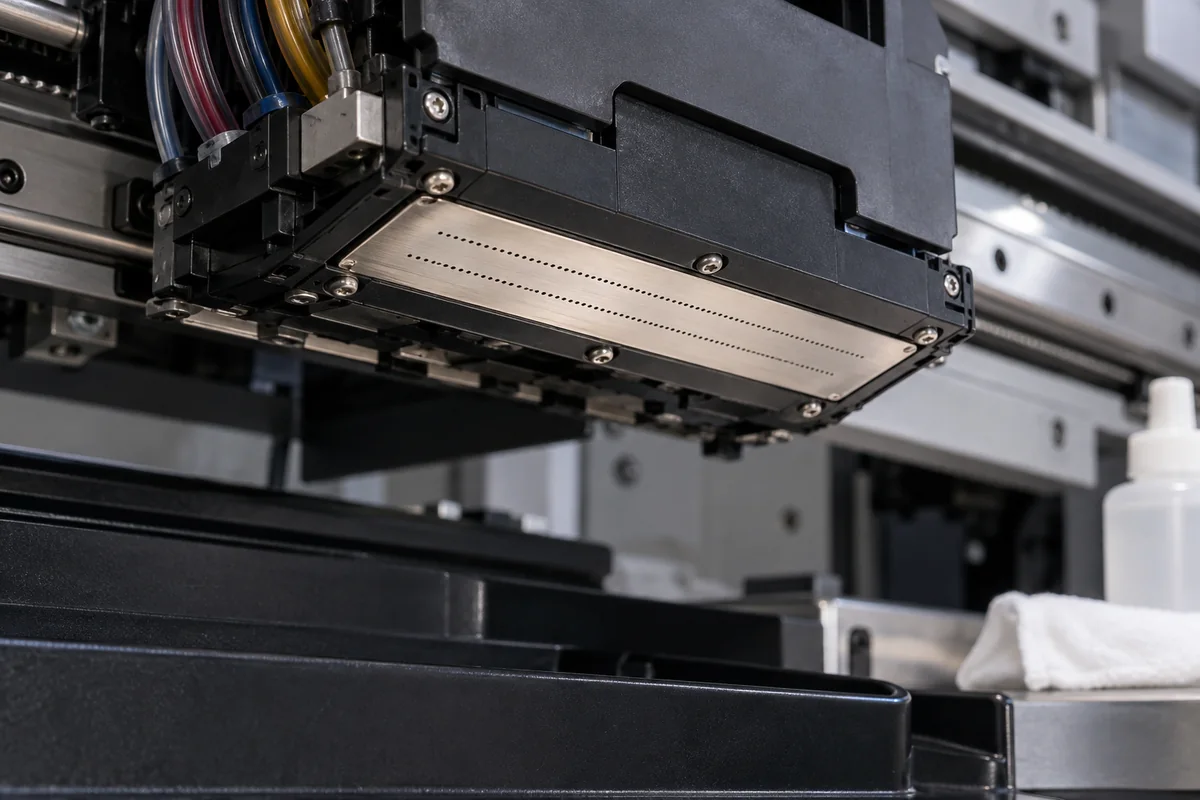
A precision component in a print head that contains and positions the inkjet nozzles.
Product Specifications

Technical details and manufacturing context for Nozzle Plate

Definition
The nozzle plate is a critical component of an inkjet print head, typically a thin, flat plate made of durable material with precisely machined or formed microscopic holes (nozzles) through which ink droplets are ejected onto the substrate during the printing process. It serves as the interface between the print head's internal ink channels and the external printing surface.
Working Principle
The nozzle plate holds the array of nozzles. During operation, pressure pulses (thermal or piezoelectric) are generated within the print head's ink chambers. These pulses force ink through the channels and out of the precisely sized orifices in the nozzle plate, forming droplets that are deposited onto the printing medium.
Common Materials
Stainless Steel, Polyimide, Silicon
Technical Parameters
  • Nozzle diameter, typically ranging from 10 to 100 micrometers, determining droplet size and print resolution. (µm) Per Request
Components / BOM
  • Nozzle Orifice
    The microscopic hole through which ink is ejected.
    Material: Defined by main plate material (e.g., steel, polyimide)
  • Surface Coating
    A hydrophobic or oleophobic layer to prevent ink pooling and ensure clean droplet break-off.
    Material: Fluoropolymer (e.g., PTFE)
Engineering Reasoning
0.5-3.0 bar (7.25-43.5 psi) ink pressure, 20-80°C operating temperature
Nozzle plate fracture at 5.2 bar (75.4 psi) internal pressure, nozzle clogging at 120°C thermal expansion exceeding 15μm tolerance
Design Rationale: Brittle fracture of silicon/silicon carbide substrate at 1.2 GPa tensile stress (fracture toughness K_IC = 0.8 MPa·m^0.5), thermal mismatch stress from 23 ppm/°C CTE difference between nozzle plate and adhesive layer
Risk Mitigation (FMEA)
Trigger Piezoelectric actuator voltage overshoot to 48V (exceeding 36V design limit)
Mode: Nozzle plate delamination from print head body at adhesive interface
Strategy: Zener diode clamping circuit with 39V breakdown voltage on each actuator driver channel
Trigger Ink solvent evaporation leaving 25% pigment concentration (exceeding 18% design limit)
Mode: Nozzle orifice clogging with 5μm particle agglomeration
Strategy: Closed-loop ink viscosity monitoring with 0.5 cP resolution and automatic solvent replenishment system

Industry Taxonomies & Aliases

Commonly used trade names and technical identifiers for Nozzle Plate.

Applied To / Applications

This component is essential for the following industrial systems and equipment:

Industrial Ecosystem & Supply Chain DNA

Complementary Systems
Downstream Applications
Specialized Tooling

Application Fit & Sizing Matrix

Operational Limits
pressure: 0-50 psi (3.5 bar)
flow rate: 0.1-10 mL/min per nozzle
temperature: -10°C to 80°C
slurry concentration: 0-20% solids by weight
Media Compatibility
✓ Water-based inks ✓ UV-curable inks ✓ Solvent-based inks
Unsuitable: Abrasive ceramic slurries with >30% solids
Sizing Data Required
  • Nozzle diameter (μm)
  • Number of nozzles required
  • Required print resolution (dpi)

Reliability & Engineering Risk Analysis

Failure Mode & Root Cause
Abrasive erosion
Cause: High-velocity particle impingement from contaminated fluid flow, leading to material loss and altered flow characteristics.
Cavitation damage
Cause: Pressure drops below vapor pressure causing bubble formation and violent collapse, resulting in pitting and surface fatigue.
Maintenance Indicators
  • Visible distortion or enlargement of nozzle orifices beyond design tolerance
  • Audible high-frequency whistling or hissing indicating flow restriction or leakage
Engineering Tips
  • Implement regular fluid filtration and particle monitoring to minimize abrasive contaminants
  • Maintain operating pressure above cavitation threshold and ensure proper upstream/downstream pressure differentials

Compliance & Manufacturing Standards

Reference Standards
ISO 9001:2015 - Quality Management Systems ASTM A240/A240M - Standard Specification for Chromium and Chromium-Nickel Stainless Steel Plate, Sheet, and Strip for Pressure Vessels and for General Applications DIN EN 10204:2004 - Metallic products - Types of inspection documents
Manufacturing Precision
  • Bore diameter: +/-0.01 mm
  • Surface flatness: 0.05 mm per 100 mm
Quality Inspection
  • Dimensional verification using coordinate measuring machine (CMM)
  • Material composition verification via optical emission spectrometry (OES)

Factories Producing Nozzle Plate

Verified manufacturers with capability to produce this product in China

✓ 95% Supplier Capability Match Found

P Procurement Specialist from Brazil Feb 12, 2026
★★★★★
"Standard OEM quality for Printing and Reproduction of Recorded Media applications. The Nozzle Plate arrived with full certification."
Technical Specifications Verified
T Technical Director from Canada Feb 09, 2026
★★★★★
"Great transparency on the Nozzle Plate components. Essential for our Printing and Reproduction of Recorded Media supply chain."
Technical Specifications Verified
P Project Engineer from United States Feb 06, 2026
★★★★★
"The Nozzle Plate we sourced perfectly fits our Printing and Reproduction of Recorded Media production line requirements."
Technical Specifications Verified
Verification Protocol

“Feedback is collected from verified sourcing managers during RFQ (Request for Quote) and factory evaluation processes on CNFX. These reports represent historical performance data and technical audit summaries from our B2B manufacturing network.”

10 sourcing managers are analyzing this specification now. Last inquiry for Nozzle Plate from Turkey (1h ago).

Frequently Asked Questions

What materials are best for nozzle plates in printing applications?

Stainless steel offers durability for high-volume printing, polyimide provides flexibility and chemical resistance, and silicon enables ultra-precise nozzle orifices for high-resolution media reproduction.

How does nozzle plate precision affect print quality?

The nozzle plate's precision directly controls ink droplet placement, affecting image sharpness, color accuracy, and consistency in media reproduction. Proper orifice alignment prevents banding and streaking.

What maintenance do nozzle plates require?

Regular cleaning to prevent ink buildup, inspection for orifice clogging, and occasional surface coating reapplication to maintain optimal ink adhesion and prevent degradation from printing chemicals.

Can I contact factories directly on CNFX?

CNFX is an open directory, not a transaction platform. Each factory profile provides direct contact information and production details to help you initiate direct inquiries with Chinese suppliers.

Get Quote for Nozzle Plate

Request technical pricing, lead times, or customized specifications for Nozzle Plate directly from verified manufacturing units.

Your business information is encrypted and only shared with verified Nozzle Plate suppliers.

Thank you! Your message has been sent. We'll respond within 1–3 business days.

Need to Manufacture Nozzle Plate?

Connect with verified factories specializing in this product category

Add Your Factory Contact Us
Previous Product
Ink System
Next Product
Output Renderer