Reservoir/Sump
View system integration details
This page explains how Oil Level Indicator is classified within Repair and Installation of Machinery and Equipment. Technical values and manufacturer relationships are research references; confirm the current specification and supplier evidence for each order.
An oil level indicator is a monitoring component installed on reservoirs or sumps that provides visual or electronic indication of the lubricant or hydraulic fluid level.
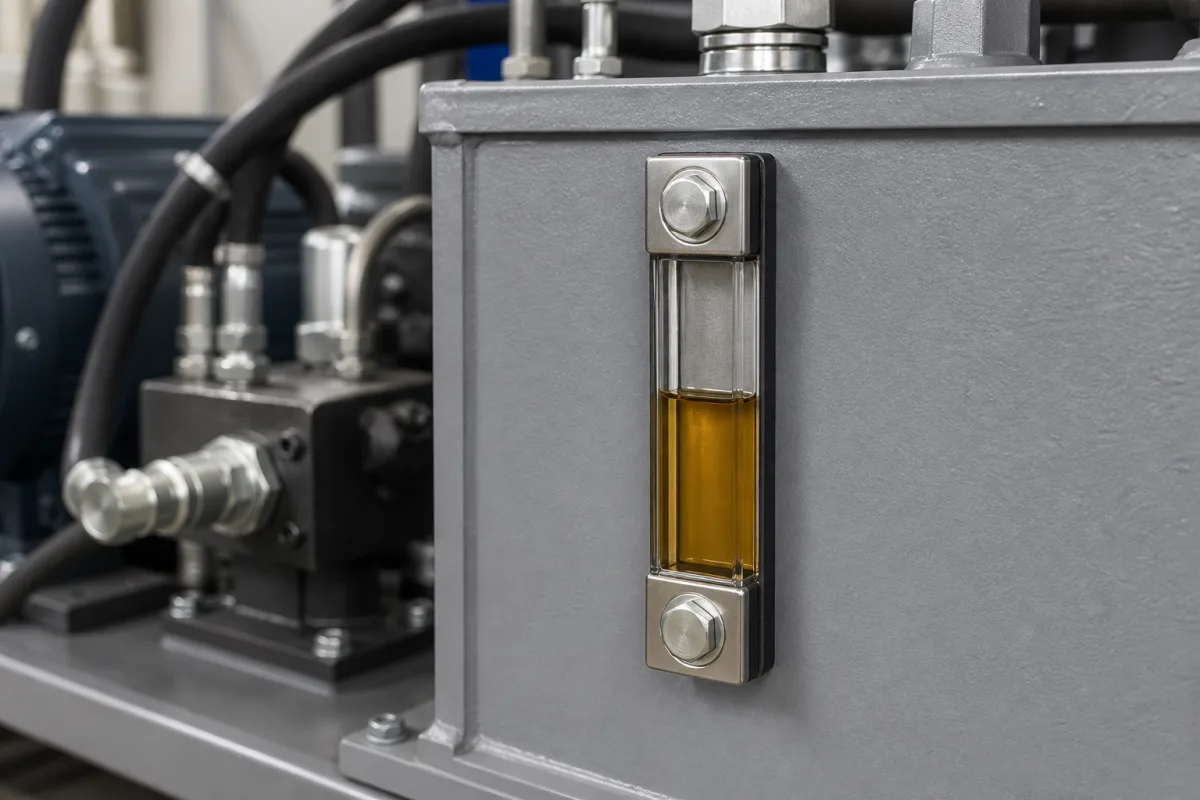
Technical details and manufacturing context for Oil Level Indicator
| Parameter | Typical range | Notes & selection driver |
|---|---|---|
| Sight Glass Diameter | 25–100 mm | Determines visibility and compatibility with mounting |
| Thread Size | G1/8–G1/2 | Must match tank portISO 228-1 |
| Operating Temperature | -20–90 °C | Beyond range may cause glass fogging or seal failure |
| Max Operating Pressure | 0.5–1.0 MPa | Exceeding may crack sight glass |
| Seal Material | NBR–FKM | FKM for high temperature or chemical resistance |
| Body Material | Al–SS304 | SS304 for corrosive environments |
| Sight Glass Material | Glass–PC | PC for impact resistance, glass for chemical compatibility |
| Weight | 0.1–0.5 kg | Affects mounting and handling |
Ranges are indicative industry figures for RFQ preparation, not a supplier commitment. Confirm every value and standard with the legal manufacturer before ordering.
| pressure: | 0 to 10 bar |
| flow rate: | N/A (static measurement) |
| temperature: | -40°C to 125°C |
| slurry concentration: | Up to 5% solids by volume |
Indicative industry ranges for design and RFQ preparation. Confirm the exact figures and applicable standard with the manufacturer before specifying.
Quoted from the published standard.
A practical evidence checklist for RFQ preparation and supplier evaluation.
Compare the published product scope and source details, then include your specifications and quantity in an enquiry.
Manufacturer profiles associated with Oil Level Indicator.
Explore company information and manufacturing capabilities, then discuss the scope of your project with a relevant supplier.
Ask for use case, specification boundaries, supplier type, and RFQ preparation information for this product.
The typical operating temperature range is -20 to 90 °C. Beyond this range, the sight glass may fog or the seal may fail. Always confirm the exact range for your specific model.
The thread size must match the tank port. Common sizes are G1/8 to G1/2 per ISO 228-1. Measure the port thread and compare with the indicator's specifications.
Sight glass materials include glass and polycarbonate. Glass offers chemical compatibility, while polycarbonate provides impact resistance. Select based on the fluid and environment.
The maximum operating pressure is typically 0.5 to 1.0 MPa. Exceeding this may crack the sight glass. Verify the pressure rating for your application.
This component is essential for the following industrial systems and equipment:
Editorial classification, named public sources where available, and source-reviewed manufacturer records.
Compare manufacturer profiles with relevant product and process capability.