Industry-Verified Manufacturing Data (2026)

Sight Glass

Based on aggregated insights from multiple verified factory profiles within the CNFX directory, the standard Sight Glass used in the Machinery and Equipment Manufacturing sector typically supports operational capacities ranging from standard industrial configurations to heavy-duty production requirements.

Technical Definition & Core Assembly

A canonical Sight Glass is characterized by the integration of Transparent panel and Sealing gasket. In industrial production environments, manufacturers listed on CNFX commonly emphasize Borosilicate glass construction to support stable, high-cycle operation across diverse manufacturing scenarios.

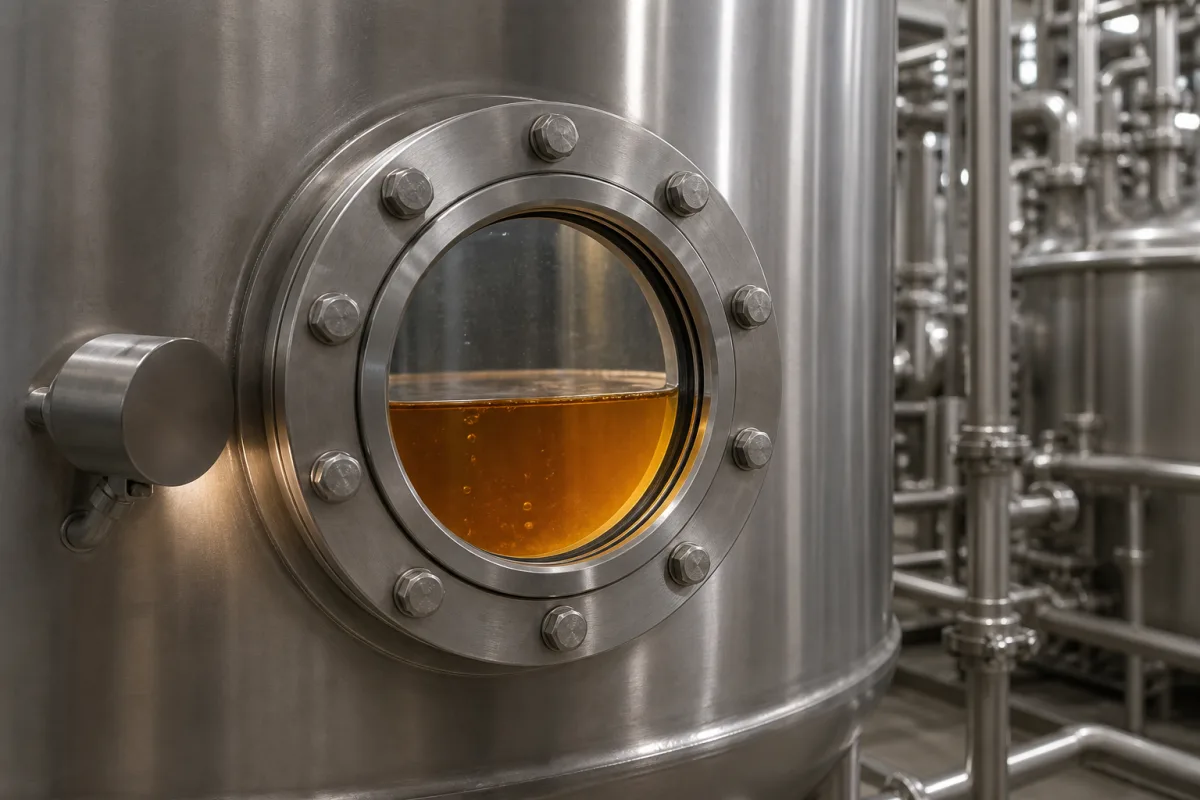
A transparent window installed on a liquid reservoir to allow visual inspection of fluid level, color, clarity, and flow without opening the vessel.
Product Specifications

Technical details and manufacturing context for Sight Glass

Definition
A sight glass is a critical monitoring component integrated into liquid reservoirs, tanks, and vessels across multiple industries. It consists of a transparent panel (typically glass or polymer) mounted in a sealed frame that provides a direct visual interface to the reservoir's interior. This allows operators to continuously monitor liquid levels to prevent overfilling or running dry, observe fluid characteristics (color changes, contamination, phase separation), and verify process conditions in real-time. As part of the liquid reservoir system, it enhances operational safety, process control, and maintenance efficiency by eliminating the need for physical opening or sampling.
Working Principle
The sight glass operates on the principle of direct optical observation through a transparent medium. It is installed flush with the reservoir wall, with the transparent panel forming a pressure-tight barrier between the interior liquid and external environment. Light passes through the panel, allowing the liquid and its meniscus to be visible. The design maintains structural integrity while providing clarity, often incorporating gaskets, seals, and protective features (like guards or double-pane construction) for durability and safety in various pressure, temperature, and chemical conditions.
Common Materials
Borosilicate glass, Tempered glass, Polycarbonate, Acrylic (PMMA), Stainless steel (frame)
Technical Parameters
  • Diameter or rectangular dimensions of the viewing area; common sizes range from 25mm to 300mm depending on reservoir scale and application. (mm) Customizable
Components / BOM
  • Transparent panel
    Provides the viewing surface; must be clear, chemically resistant, and mechanically durable.
    Material: Borosilicate glass or engineered polymer
  • Sealing gasket
    Creates a pressure-tight seal between the panel and reservoir body; prevents leaks.
    Material: EPDM, Viton, silicone, or PTFE
  • Mounting frame
    Secures the panel to the reservoir wall; often includes bolts, clamps, or threaded rings.
    Material: Stainless steel, aluminum, or coated carbon steel
  • Protective guard (optional)
    Shields the transparent panel from physical impact or environmental damage.
    Material: Perforated metal or polycarbonate
Engineering Reasoning
0-25 bar at 20-120°C for borosilicate glass, 0-40 bar at -20-80°C for polycarbonate
Glass: 30 bar internal pressure causing tensile stress >70 MPa; Polycarbonate: 50 bar causing yield stress >62 MPa
Design Rationale: Brittle fracture due to surface microcracks (Griffith theory) propagating under tensile stress exceeding fracture toughness (K_IC=0.75 MPa·m^0.5 for borosilicate)
Risk Mitigation (FMEA)
Trigger Thermal shock ΔT>80°C creating surface tensile stress >35 MPa
Mode: Radial crack propagation from sealing edge
Strategy: Annealed borosilicate glass with thermal expansion coefficient 3.3×10^-6/°C and graded thermal transition gaskets
Trigger Cavitation bubbles collapsing at 500-1500 bar creating microjet impact
Mode: Surface pitting erosion at 0.1-10 μm/material loss per cycle
Strategy: Hardened sapphire viewing window with Vickers hardness 1800-2000 HV and anti-cavitation flow design

Industry Taxonomies & Aliases

Commonly used trade names and technical identifiers for Sight Glass.

Applied To / Applications

This component is essential for the following industrial systems and equipment:

Industrial Ecosystem & Supply Chain DNA

Complementary Systems
Downstream Applications
Specialized Tooling

Application Fit & Sizing Matrix

Operational Limits
pressure: Up to 10 bar (150 psi) standard, higher with reinforced designs
flow rate: Not applicable (static observation window)
temperature: -40°C to 200°C (varies by gasket/seal material)
slurry concentration: Up to 40% solids by weight (requires abrasion-resistant glass)
Media Compatibility
✓ Water-based coolants ✓ Hydraulic oils ✓ Food-grade liquids
Unsuitable: Hydrofluoric acid or strong alkaline solutions (attacks glass)
Sizing Data Required
  • Vessel connection diameter (NPT, flange, etc.)
  • Required viewing area dimensions
  • Glass thickness based on pressure/temperature

Reliability & Engineering Risk Analysis

Failure Mode & Root Cause
Cracking or Fracture
Cause: Thermal shock from rapid temperature changes, mechanical stress from improper installation or pressure surges, or impact damage from external forces.
Leakage or Seal Failure
Cause: Degradation of gasket or O-ring materials due to chemical attack, temperature extremes, or aging; improper sealing surface preparation or torque during installation.
Maintenance Indicators
  • Visible cracks, chips, or clouding in the glass or plastic viewing window
  • Leakage or weeping around the seal or body, often accompanied by fluid streaks or deposits
Engineering Tips
  • Ensure proper material selection: Match the sight glass material (e.g., borosilicate glass, polycarbonate) and seal materials to the process fluid, temperature, and pressure to prevent chemical attack and thermal stress.
  • Follow precise installation procedures: Use correct gasket/O-ring types, apply specified torque in a crisscross pattern to avoid uneven stress, and avoid overtightening, which can distort the housing or crack the glass.

Compliance & Manufacturing Standards

Reference Standards
ISO 9001:2015 (Quality Management Systems) ASME B31.3 (Process Piping) DIN 7080 (Sight Glasses for Pressure Vessels)
Manufacturing Precision
  • Bore Diameter: +/-0.05mm
  • Parallelism of Glass Surfaces: 0.1mm
Quality Inspection
  • Hydrostatic Pressure Test
  • Visual and Dimensional Inspection

Factories Producing Sight Glass

Verified manufacturers with capability to produce this product in China

✓ 95% Supplier Capability Match Found

T Technical Director from Brazil Feb 11, 2026
★★★★★
"Reliable performance in harsh Machinery and Equipment Manufacturing environments. No issues with the Sight Glass so far."
Technical Specifications Verified
P Project Engineer from Canada Feb 08, 2026
★★★★☆
"Testing the Sight Glass now; the technical reliability results are within 1% of the laboratory datasheet. (Delivery took slightly longer than expected, but technical support was excellent.)"
Technical Specifications Verified
S Sourcing Manager from United States Feb 05, 2026
★★★★★
"Impressive build quality. Especially the technical reliability is very stable during long-term operation."
Technical Specifications Verified
Verification Protocol

“Feedback is collected from verified sourcing managers during RFQ (Request for Quote) and factory evaluation processes on CNFX. These reports represent historical performance data and technical audit summaries from our B2B manufacturing network.”

11 sourcing managers are analyzing this specification now. Last inquiry for Sight Glass from Mexico (1h ago).

Supply Chain Compatible Machinery & Devices

Hydraulic Press

Industrial machine using hydraulic pressure to compress, form, or assemble materials

Explore Specs →
Heavy-Duty CNC Plasma Cutting Machine

Industrial machine for precision metal cutting using plasma arc technology

Explore Specs →
Automated Assembly Line System

Integrated production system for sequential component assembly operations

Explore Specs →
Automated Powder Coating System

Integrated industrial system for applying dry powder coatings to metal substrates.

Explore Specs →

Frequently Asked Questions

What materials are best for sight glass in corrosive environments?

Borosilicate glass offers excellent chemical resistance for corrosive fluids, while polycarbonate provides impact resistance. Stainless steel frames ensure durability in harsh conditions.

How do I install a sight glass on existing equipment?

Installation requires proper sealing with gaskets and secure mounting frames. Ensure compatibility with vessel pressure/temperature ratings and consider optional protective guards for safety.

Can sight glasses handle high-pressure applications?

Yes, tempered glass and polycarbonate sight glasses with reinforced frames are rated for high-pressure systems. Always verify specifications match your operating conditions.

Can I contact factories directly on CNFX?

CNFX is an open directory, not a transaction platform. Each factory profile provides direct contact information and production details to help you initiate direct inquiries with Chinese suppliers.

Get Quote for Sight Glass

Request technical pricing, lead times, or customized specifications for Sight Glass directly from verified manufacturing units.

Your business information is encrypted and only shared with verified Sight Glass suppliers.

Thank you! Your message has been sent. We'll respond within 1–3 business days.

Need to Manufacture Sight Glass?

Connect with verified factories specializing in this product category

Add Your Factory Contact Us
Previous Product
Shotcrete Machine
Next Product
Sight Glass/Level Indicator