Editorial Technical Reference

Sealing Flange

This page explains how Sealing Flange is classified within Rubber and Plastic Product Manufacturing. Technical values and manufacturer relationships are research references; confirm the current specification and supplier evidence for each order.

Technical Definition & Core Assembly

A specialized flange component designed to create a hermetic seal in pharmaceutical vial rubber stoppers.
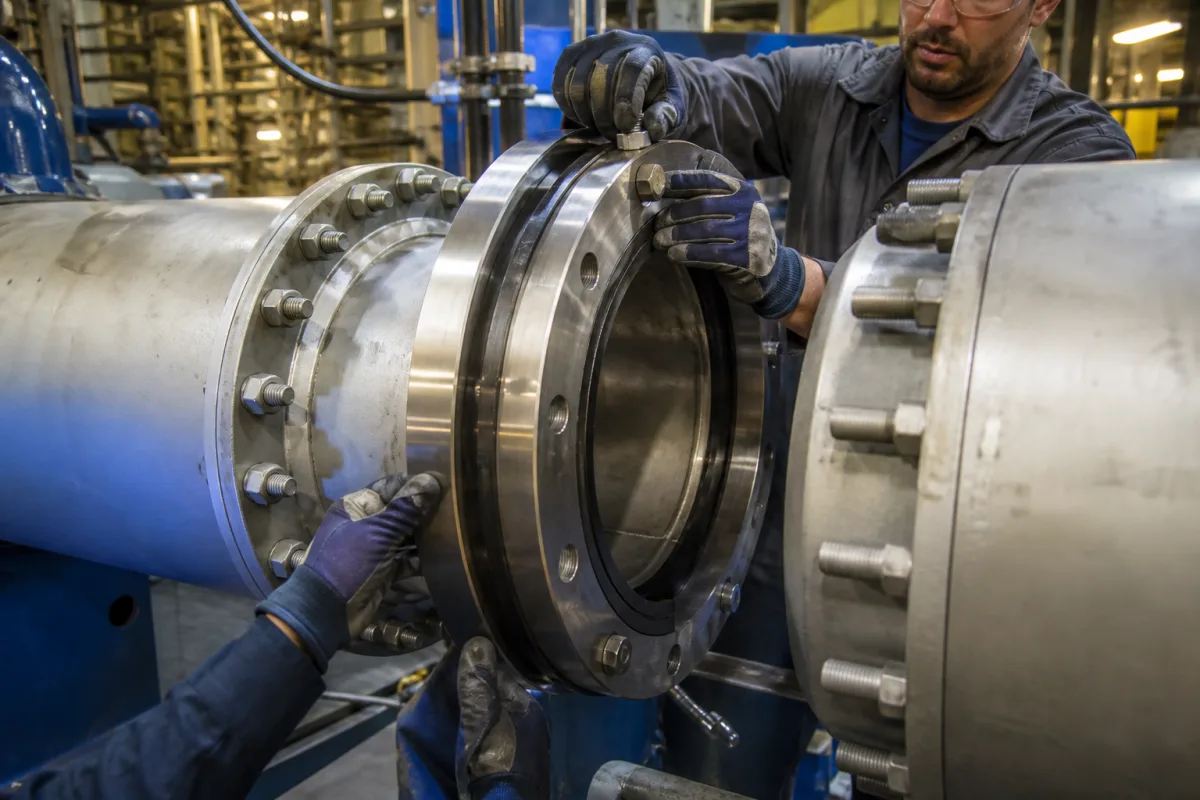
Sealing Flange in a manufacturing environment
Representative product image. Confirm appearance and specifications with the manufacturer.

Product Specifications

Technical details and manufacturing context for Sealing Flange

Definition
The sealing flange is a critical component of pharmaceutical vial rubber stoppers that provides the primary sealing interface between the stopper and vial neck. It creates a hermetic barrier to prevent contamination, maintain sterility, and preserve the integrity of pharmaceutical products during storage and transportation. This component is typically manufactured from pharmaceutical-grade elastomers such as bromobutyl rubber or silicone rubber, which offer the necessary elasticity and chemical resistance for demanding applications. The flange's geometry is precisely designed to ensure a proper fit with standard vial necks, with critical dimensions including outer diameter, inner diameter, flange thickness, and sealing surface geometry. These dimensions must be verified against the specific vial and stopper system to ensure optimal performance. The sealing flange operates through compression and elastic deformation when the rubber stopper is inserted into the vial neck. The flange's geometry and material properties create radial pressure against the vial's inner surface, forming a tight seal that prevents gas exchange, microbial ingress, and liquid leakage while allowing for needle penetration during administration. This working principle is essential for maintaining the sterility and stability of pharmaceutical products. When selecting a sealing flange, it is important to consider the specific vial dimensions, the required sealing performance, and the compatibility of the elastomer with the pharmaceutical formulation. Verification of model-specific values, such as dimensions and material specifications, should be conducted with the legal manufacturer or supplier to ensure suitability for the intended application. Regular inspection of the flange for signs of wear, deformation, or degradation is recommended to maintain sealing integrity. Any visible damage or loss of elasticity may indicate the need for replacement. The sealing flange is a component within a larger stopper assembly, and its performance is influenced by the overall design and manufacturing quality of the stopper. As with all critical components, it is essential to follow the manufacturer's guidelines and regulatory requirements to ensure safety and efficacy.
Working Principle
The sealing flange operates through compression and elastic deformation when the rubber stopper is inserted into the vial neck. The flange's geometry and material properties create radial pressure against the vial's inner surface, forming a tight seal that prevents gas exchange, microbial ingress, and liquid leakage while allowing for needle penetration during administration.
Common Materials
Pharmaceutical-grade elastomer (e.g., bromobutyl rubber), Silicone rubber
Technical Parameters

What to specify in your RFQ

  • Critical dimensions including outer diameter, inner diameter, flange thickness, and sealing surface geometry that ensure proper fit and sealing performance with standard pharmaceutical vials. in mm

These are the quantities to specify to the manufacturer when sizing or requesting a quote. The manufacturer's own documentation governs the exact figures and applicable standard.

Components / BOM
  • Sealing Lip Part
    Primary contact surface that creates the hermetic seal against the vial
  • Compression Zone Part
    Area designed to deform elastically during stopper insertion to maintain sealing pressure
  • Transition Section Part
    Connects the sealing flange to the main stopper body while maintaining structural integrity

Applied To / Applications

This component is essential for the following industrial systems and equipment:

Industrial Ecosystem & Supply Chain Structure

Complementary Systems
Downstream Applications
Specialized Tooling

Application Fit & Sizing Matrix

Operational Limits
pressure: Up to 10 bar (145 psi)
other spec: Flow Rate: N/A (static sealing component), Slurry Concentration: Not applicable for hermetic sealing applications
temperature: -40°C to 150°C
Media Compatibility
✓ Pharmaceutical-grade silicone elastomers ✓ EPDM rubber stoppers ✓ Aqueous injectable solutions
Unsuitable: Organic solvents (e.g., acetone, toluene)
Sizing Data Required
  • Vial neck outer diameter (OD)
  • Stopper compression force requirement
  • Required seal integrity level (e.g., helium leak rate specification)

Reliability & Engineering Risk Analysis

Failure Mode & Root Cause
Gasket compression failure
Cause: Insufficient bolt torque leading to uneven compression and loss of seal integrity
Flange face corrosion/pitting
Cause: Chemical attack from process fluids or environmental exposure compromising sealing surfaces
Maintenance Indicators
  • Visible fluid leakage at flange joint
  • Audible hissing or whistling sound indicating pressure loss
Engineering Tips
  • Implement proper bolt torque sequence and tension monitoring during installation
  • Apply appropriate protective coatings and conduct regular surface inspection for early corrosion detection

Indicative industry ranges for design and RFQ preparation. Confirm the exact figures and applicable standard with the manufacturer before specifying.

Compliance & Manufacturing Standards

Applicable Standards
ISO 5211:2017 - Industrial valves - Part-turn actuator attachments ANSI/ASME B16.5:2020 - Pipe Flanges and Flanged Fittings DIN EN 1092-1:2018 - Flanges and their joints - Circular flanges for pipes, valves, fittings and accessories, PN designated

Quoted from the published standard.

Manufacturing Precision
  • Bore diameter: +/-0.05mm
  • Flatness: 0.08mm across entire sealing surface
Quality Inspection
  • Helium Leak Test for sealing integrity
  • Surface Roughness Test (Ra measurement) on sealing face

Manufacturers of Sealing Flange

Manufacturer profiles associated with Sealing Flange.

Sourcing Sealing Flange from China?
Tell us your specification and target quantity — we will match it against manufacturer records and come back with the factories that fit.
Request manufacturers We manufacture this

Manufacturer listings support early research and capability understanding. They are not certification, ranking, or transaction guarantees.

Share this page
Technical documentation
Request current drawings, revision history, and a signed specification sheet.
Manufacturing capability
Verify equipment lists, process limits, capacity, and representative production evidence.
Inspection readiness
Confirm test methods, calibrated equipment, sampling plans, and traceable reports.
Supplier transparency
Check the legal entity, factory address, ownership, certifications, and direct contacts.

CNFX does not score or rank suppliers. Buyers must verify all claims and documents with the legal manufacturer before ordering.

Supply Chain Compatible Machinery & Devices

Silicone Rubber

A synthetic elastomer composed of silicone polymers with exceptional temperature resistance, flexibility, and chemical stability.

Explore Specs →
Non-post Cured

A rubber or plastic processing machine that produces cured products without requiring a separate post-curing stage.

Explore Specs →
Fumed Silicone Rubber

A high-performance silicone rubber reinforced with fumed silica, offering enhanced mechanical strength and thermal stability.

Explore Specs →
Medical Silicone Gels

Medical-grade silicone-based gels used for wound care, scar management, and medical device applications.

Explore Specs →

Frequently Asked Questions

What is the primary function of a sealing flange?

The sealing flange provides the primary sealing interface between a pharmaceutical vial rubber stopper and the vial neck, creating a hermetic barrier to prevent contamination and maintain sterility.

What materials are commonly used for sealing flanges?

Pharmaceutical-grade elastomers such as bromobutyl rubber and silicone rubber are commonly used due to their elasticity and chemical resistance.

How does the sealing flange achieve a seal?

When the stopper is inserted, the flange compresses and elastically deforms, creating radial pressure against the vial's inner surface, which forms a tight seal.

What should be verified before using a sealing flange?

Verify critical dimensions (outer diameter, inner diameter, flange thickness, sealing surface geometry) and material compatibility with the specific vial and pharmaceutical product. Confirm with the manufacturer or supplier.

Data Basis

Editorial classification, named public sources where available, and source-reviewed manufacturer records.

Preliminary Technical Classification
This page supports structured research, RFQ preparation, and supplier evaluation. It does not replace buyer-led supplier qualification, standards review, or technical approval.
Buyer enquiry

Request manufacturing insight for Sealing Flange

Ask for use case, specification boundaries, supplier type, and RFQ preparation information for this product.

Where it goes
Straight to the CNFX editorial desk, and to the manufacturer if this product is linked to a claimed profile. Nothing is broadcast to a supplier list.
Your details stay here
We do not sell or rent enquiry data, and we do not add you to a mailing list. Used only to answer this request.
No commission, no middleman
CNFX is a directory. We take no cut of any order and never negotiate on a supplier's behalf.
What we don't claim
A listing is not an endorsement. Qualify every supplier and verify every figure yourself before ordering.

Your business information is used only to process this request.

Thank you! Your message has been sent. We'll respond within 1–3 business days.
Sorry, we couldn't send your message. Please try again, or email us at [email protected].

Need to Manufacture Sealing Flange?

Compare manufacturer profiles with relevant product and process capability.

Previous Product
Spray Manipulator
Last Product
Get QuotesChat