Editorial Technical Reference

Industrial-Grade Vibration Motor Assembly Tester

This page explains how Industrial-Grade Vibration Motor Assembly Tester is classified within Sex Toys Manufacturing. Technical values and manufacturer relationships are research references; confirm the current specification and supplier evidence for each order.

Technical Definition & Core Assembly

Automated testing machine for assembled vibration motors in adult toy manufacturing
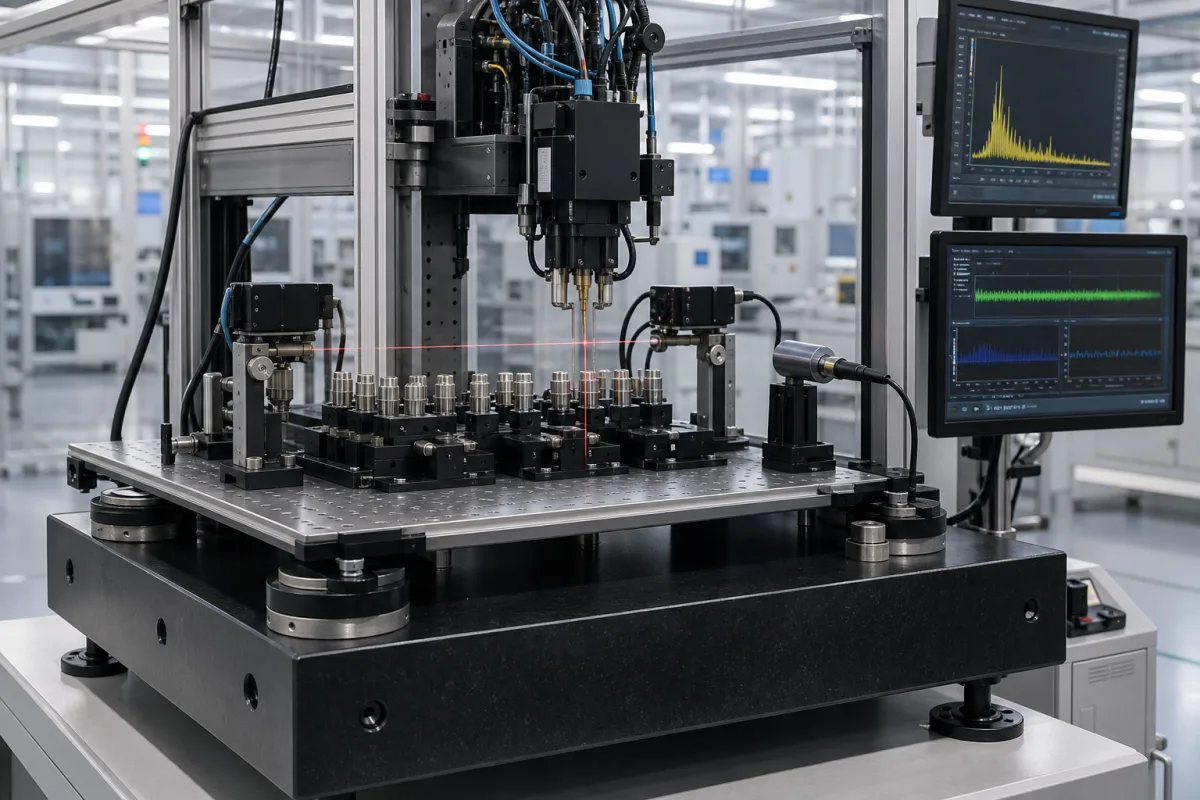
Representative product image. Confirm appearance and specifications with the manufacturer.

Product Specifications

Technical details and manufacturing context for Industrial-Grade Vibration Motor Assembly Tester

Definition
This standalone industrial testing instrument is designed specifically for quality control of assembled vibration motors used in adult pleasure devices. It performs automated functional testing of vibration frequency, amplitude, noise levels, and power consumption under simulated operating conditions. The machine features programmable test sequences, data logging capabilities, and pass/fail sorting outputs for production line integration. It ensures consistent motor performance before final product assembly.

The tester clamps the assembled motor, applies power, and measures vibration characteristics using a sensor array. It compares the measured values to preset tolerances and provides a pass/fail output. The device is built with an aluminum frame and stainless steel fixtures, housing a control PCB and sensor array. It offers a test throughput of 1200–1800 units per hour, with frequency accuracy of ±0.1%, amplitude accuracy of ±0.05 mm (per ISO 10816), and a noise measurement range of 30–90 dB (per IEC 61672-1). The test voltage range is 0–30 V DC, and the power supply is 220 V AC ±10%, 50/60 Hz. Measurement resolution is 0.01 mm/s for velocity and displacement readings. The operating temperature range is 10–40 °C, humidity range is 20–80% RH (non-condensing), and the ingress protection rating is IP54 (per IEC 60529). The machine weighs 350–450 kg depending on configuration, with a footprint of 1200×800×1600 mm (L×W×H).

This tester is intended for integration into production lines. Verify model-specific values and standards with the legal manufacturer or supplier before procurement.
Working Principle
The tester operates by clamping the assembled vibration motor into a fixture. It then applies a controlled DC voltage (0–30 V) to power the motor. A sensor array measures vibration frequency, amplitude, and noise, while power consumption is monitored. The measured values are compared against preset tolerances programmed into the control PCB. If all parameters fall within acceptable ranges, the unit is marked as pass; otherwise, it is rejected. The system can be programmed for different motor models and test sequences, and it logs data for quality analysis. The pass/fail output can be integrated with sorting mechanisms on the production line.
Common Materials
aluminum frame, stainless steel fixtures, sensor array, control PCB
Technical Parameters
ParameterTypical rangeNotes & selection driver
Test ThroughputRequired1200–1800 units/hourMaximum testing capacity
Frequency AccuracyRequired±0.1 %Vibration frequency measurement accuracy
Noise Measurement Range30–90 dBAcoustic noise measurement capabilityIEC 61672-1
Power SupplyRequired220 V AC ±10%, 50/60 Hz VOperating voltage input
Test Voltage Range0–30 V DCAdjustable for different motor ratings
Vibration Amplitude Accuracy±0.05 mmCritical for product consistencyISO 10816
Measurement Resolution0.01 mm/sFor velocity and displacement readings
Operating Temperature Range10–40 °COutside this range, accuracy may degrade
Humidity Range20–80 % RHNon-condensing
Ingress Protection RatingIP54Dust and splash resistantIEC 60529
Machine Weight350–450 kgDepends on configuration
Footprint (L×W×H)1200×800×1600 mmCompact design for production lines

Ranges are indicative industry figures for RFQ preparation, not a supplier commitment. Confirm every value and standard with the legal manufacturer before ordering.

Components / BOM
  • Motor Fixture Part
    Secures motor during testing
    Material: Stainless Steel
  • Vibration Sensor
    Mechanical vibration detection
    Material: Piezoelectric Crystal
  • Control Module
    Test sequence execution
    Material: PCB with Microcontroller
  • Data Display Optional Part
    Test results visualization
    Material: LCD Screen
  • DC Power Supply
    Applies the controlled 0-30 V DC test voltage to the motor under test.

Industry Taxonomies & Aliases

Commonly used trade names and technical identifiers for Industrial-Grade Vibration Motor Assembly Tester.

Industrial Ecosystem & Supply Chain Structure

Complementary Systems
Downstream Applications
Specialized Tooling

Application Fit & Sizing Matrix

Operational Limits
humidity: 20-80% RH non-condensing
pressure: Atmospheric only (non-pressurized testing)
temperature: 15-35°C (operating), 0-50°C (storage)
power supply: 100-240V AC, 50/60 Hz
acceleration range: 0.1-5 g
vibration frequency range: 10-200 Hz
Media Compatibility
✓ Assembled vibration motor units (encapsulated) ✓ Silicone-encased electromechanical assemblies ✓ Small DC motor assemblies with attached eccentric weights
Unsuitable: Wet or liquid-immersed testing environments
Sizing Data Required
  • Maximum motor dimensions (LxWxH)
  • Required vibration test frequency range
  • Production throughput rate (units/hour)

Reliability & Engineering Risk Analysis

Failure Mode & Root Cause
Bearing fatigue failure
Cause: Inadequate lubrication leading to metal-to-metal contact, or excessive loading from misalignment or imbalance during vibration testing cycles.
Electrical insulation breakdown
Cause: Thermal cycling and vibration-induced stress causing insulation cracking, or contamination from dust/oil ingress compromising dielectric strength.
Maintenance Indicators
  • Audible high-frequency whining or grinding noise from motor bearings during operation
  • Visible excessive lateral vibration or wobble in the motor assembly during idle spin-up tests
Engineering Tips
  • Implement precision laser alignment during installation and quarterly verification to minimize parasitic loads on bearings and shafts
  • Establish a condition-based lubrication program using vibration analysis trends to optimize grease intervals rather than fixed time schedules

Indicative industry ranges for design and RFQ preparation. Confirm the exact figures and applicable standard with the manufacturer before specifying.

Compliance & Manufacturing Standards

Applicable Standards
ISO 1940-1:2003 (Balance quality requirements for rotors in a constant state) ANSI/ASA S2.71-1983 (Guide to the Evaluation of Human Exposure to Vibration in Buildings) DIN EN 60034-14:2004 (Vibration measurement and evaluation of rotating electrical machinery)

Quoted from the published standard.

Manufacturing Precision
  • Shaft runout: +/-0.01mm
  • Mounting surface flatness: 0.05mm
Quality Inspection
  • Vibration profile analysis (FFT spectrum verification)
  • Thermal cycling endurance test (-40°C to +85°C, 500 cycles)

Manufacturers of Industrial-Grade Vibration Motor Assembly Tester

Manufacturer profiles associated with Industrial-Grade Vibration Motor Assembly Tester.

Sourcing Industrial-Grade Vibration Motor Assembly Tester from China?
Tell us your specification and target quantity — we will match it against manufacturer records and come back with the factories that fit.
Request manufacturers We manufacture this

Manufacturer listings support early research and capability understanding. They are not certification, ranking, or transaction guarantees.

Technical documentation
Request current drawings, revision history, and a signed specification sheet.
Manufacturing capability
Verify equipment lists, process limits, capacity, and representative production evidence.
Inspection readiness
Confirm test methods, calibrated equipment, sampling plans, and traceable reports.
Supplier transparency
Check the legal entity, factory address, ownership, certifications, and direct contacts.

CNFX does not score or rank suppliers. Buyers must verify all claims and documents with the legal manufacturer before ordering.

Frequently Asked Questions

What parameters does the tester measure?

It measures vibration frequency, amplitude, noise level, and power consumption of assembled vibration motors.

What is the test throughput?

The tester can process 1200–1800 units per hour, depending on the test sequence and configuration.

Can the tester be used for different motor models?

Yes, the test voltage range is 0–30 V DC, and test sequences are programmable to accommodate various motor ratings.

What standards are referenced?

Noise measurement references IEC 61672-1, amplitude accuracy references ISO 10816, and ingress protection references IEC 60529. Verify compliance with the manufacturer.

Data Basis

Editorial classification, named public sources where available, and source-reviewed manufacturer records.

Preliminary Technical Classification
This page supports structured research, RFQ preparation, and supplier evaluation. It does not replace buyer-led supplier qualification, standards review, or technical approval.
Buyer enquiry

Request manufacturing insight for Industrial-Grade Vibration Motor Assembly Tester

Ask for use case, specification boundaries, supplier type, and RFQ preparation information for this product.

Where it goes
Straight to the CNFX editorial desk, and to the manufacturer if this product is linked to a claimed profile. Nothing is broadcast to a supplier list.
Your details stay here
We do not sell or rent enquiry data, and we do not add you to a mailing list. Used only to answer this request.
No commission, no middleman
CNFX is a directory. We take no cut of any order and never negotiate on a supplier's behalf.
What we don't claim
A listing is not an endorsement. Qualify every supplier and verify every figure yourself before ordering.

Your business information is used only to process this request.

Thank you! Your message has been sent. We'll respond within 1–3 business days.
Sorry, we couldn't send your message. Please try again, or email us at contact@cnfx.com.

Need to Manufacture Industrial-Grade Vibration Motor Assembly Tester?

Compare manufacturer profiles with relevant product and process capability.

Get QuotesChat