Structured Manufacturing Data (2026)

Aluminum Profile Integrated Fabrication System

Based on aggregated insights from structured factory profiles within the CNFX directory, the standard Aluminum Profile Integrated Fabrication System used in the Aluminum Product Manufacturing sector typically supports operational capacities ranging from standard industrial configurations to heavy-duty production requirements.

Technical Definition & Core Assembly

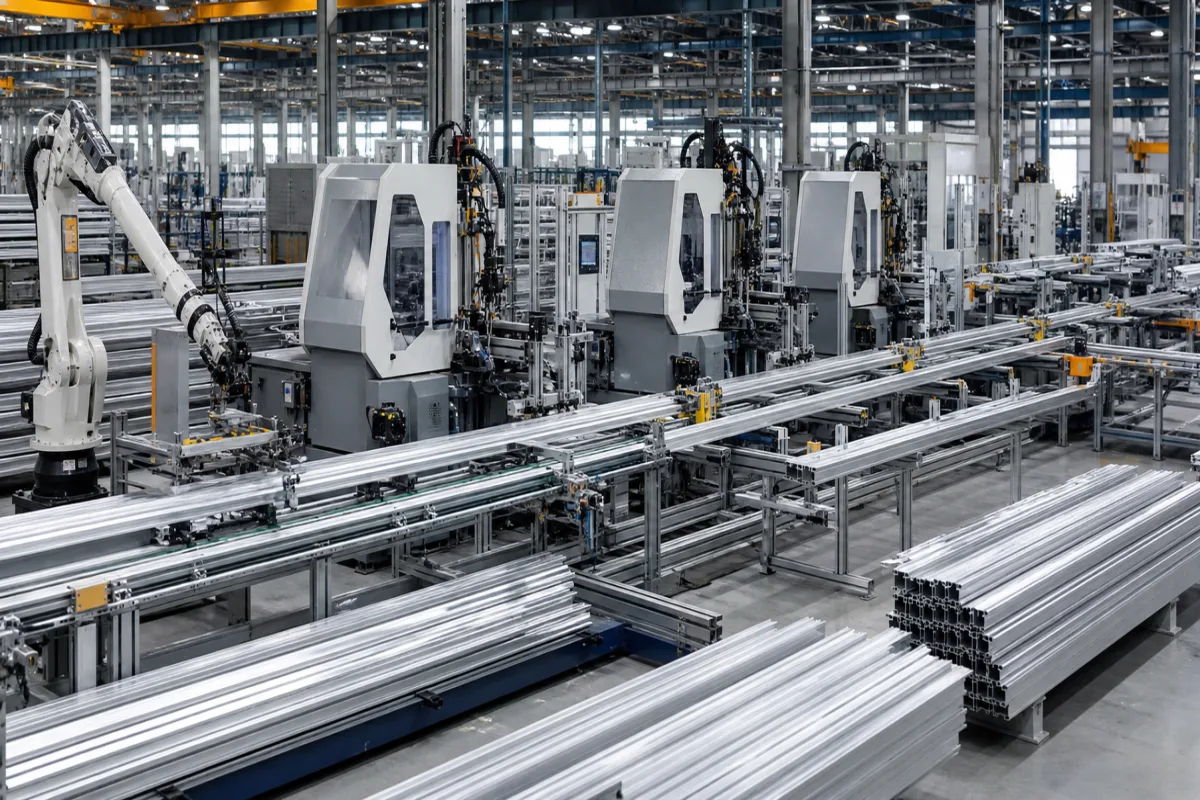
A canonical Aluminum Profile Integrated Fabrication System is characterized by the integration of Automated Profile Feeder and CNC Cutting Module. In industrial production environments, manufacturers listed on CNFX commonly emphasize Aluminum Alloy 6063 construction to support stable, high-cycle operation across diverse manufacturing scenarios.

Complete automated system for processing aluminum extrusion profiles into finished components
Product Specifications

Technical details and manufacturing context for Aluminum Profile Integrated Fabrication System

Definition
A fully integrated industrial system that transforms raw aluminum extrusion profiles into finished structural components through coordinated processing modules. This system combines multiple fabrication operations including cutting, drilling, milling, tapping, and assembly into a seamless production workflow. It enables high-volume manufacturing of aluminum profile assemblies for construction frameworks, industrial machinery enclosures, and structural support systems. The integrated approach minimizes material handling and optimizes production efficiency for complex aluminum profile applications.
Working Principle
Raw aluminum profiles are automatically fed through sequential processing stations where computer-controlled modules perform specific fabrication operations based on programmed specifications, with automated transfer systems moving components between stations to create finished assemblies.
Common Materials
Aluminum Alloy 6063, Aluminum Alloy 6061, Stainless Steel Fasteners
Technical Parameters
  • Maximum profile cross-section dimension (mm) Per Request
  • Maximum linear processing speed (m/min) Per Request
Components / BOM
  • Automated Profile Feeder
    Handles and positions raw aluminum profiles for processing
    Material: Carbon Steel Frame with Polyurethane Rollers
  • CNC Cutting Module
    Precisely cuts profiles to specified lengths with miter capabilities
    Material: Cast Iron Base with Tungsten Carbide Blades
  • Multi-Axis Machining Center
    Performs drilling, milling, and tapping operations on profile surfaces
    Material: Steel Frame with High-Speed Steel Tooling
  • Automated Assembly Station
    Joins processed profiles with fasteners and connectors
    Material: Aluminum Frame with Pneumatic Actuators
  • Conveyor Transfer System
    Moves components between processing stations
    Material: Stainless Steel Rails with Belt Drives

Industry Taxonomies & Aliases

Commonly used trade names and technical identifiers for Aluminum Profile Integrated Fabrication System.

Industrial Ecosystem & Supply Chain Structure

Complementary Systems
Downstream Applications
Specialized Tooling

Application Fit & Sizing Matrix

Operational Limits
pressure: Max 10 bar (hydraulic/pneumatic systems)
other spec: Profile dimensions: 20-300mm width, 1-8mm wall thickness, 0.5-15 m/min feed rate, ±0.1mm positioning accuracy
temperature: 5°C to 40°C (operating environment)
Media Compatibility
✓ 6063-T5 aluminum extrusions ✓ 6005A-T6 structural profiles ✓ powder-coated anodized profiles
Unsuitable: High-corrosion environments (e.g., marine, chemical plants) without additional protective measures
Sizing Data Required
  • Maximum profile cross-sectional dimensions (width × height)
  • Required throughput (components/hour)
  • Component complexity (number of fabrication operations required)

Reliability & Engineering Risk Analysis

Failure Mode & Root Cause
Profile Misalignment
Cause: Wear in guide rails, bearing degradation, or improper calibration leading to dimensional inaccuracies in fabricated profiles.
Cutting/Drilling Tool Failure
Cause: Tool wear from abrasive aluminum chips, overheating due to insufficient coolant, or fatigue from high-cycle operations.
Maintenance Indicators
  • Unusual grinding or screeching noises during profile feeding or cutting operations
  • Visible aluminum chip accumulation or discoloration (burn marks) around cutting/drilling stations
Engineering Tips
  • Implement a predictive maintenance program using vibration analysis on spindle bearings and linear guides to detect early wear
  • Optimize coolant filtration and flow rates specific to aluminum alloys to reduce tool wear and prevent chip welding

Compliance & Manufacturing Standards

Reference Standards
ISO 9001:2015 Quality Management Systems ASTM B221 Standard Specification for Aluminum-Alloy Extruded Bars, Rods, Wire, Profiles, and Tubes EN 12020-2:2016 Aluminum and aluminum alloys - Extruded precision profiles in alloys EN AW-6060 and EN AW-6063 - Part 2: Tolerances on dimensions and form
Manufacturing Precision
  • Profile length: +/- 0.5mm per meter
  • Surface flatness: 0.1mm per 100mm
Quality Inspection
  • Dimensional Verification with CMM (Coordinate Measuring Machine)
  • Hardness Testing (e.g., Brinell or Rockwell)

Factories Producing Aluminum Profile Integrated Fabrication System

Manufacturer profiles with relevant production capability in China

Manufacturer listings support early research and capability understanding. They are not certification, ranking, or transaction guarantees.

Technical documentation
4/5
Manufacturing capability
4/5
Inspection readiness
5/5
Supplier transparency
3/5

These scores are example evaluation dimensions, not real customer ratings, country-specific buyer feedback, or live inquiry activity.

Frequently Asked Questions

What aluminum alloys are compatible with this integrated fabrication system?

The system is designed to process Aluminum Alloy 6063 and Aluminum Alloy 6061 profiles, with stainless steel fasteners for assembly, ensuring compatibility with common industrial extrusion materials.

What is the typical system throughput for aluminum component production?

The system delivers high throughput measured in components per hour, with exact rates depending on profile complexity and size, optimized for continuous automated operation in manufacturing environments.

How does the system ensure processing accuracy for aluminum profiles?

Precision is achieved through CNC cutting modules and multi-axis machining centers with tight tolerance controls, maintaining consistent accuracy measured in millimeters for reliable component fabrication.

Can I contact factories directly on CNFX?

CNFX is an open directory, not a transaction platform. Each factory profile provides direct contact information and production details to help you initiate direct inquiries with Chinese suppliers.

Data Basis

CNFX manufacturer profiles, technical classification, publicly available product information, and ongoing plausibility checks.

Preliminary Technical Classification
This page supports structured research, RFQ preparation, and supplier evaluation. It does not replace buyer-led supplier qualification, standards review, or technical approval.

Request Manufacturing Insight for Aluminum Profile Integrated Fabrication System

Ask for use case, specification boundaries, supplier type, and RFQ preparation information for Aluminum Profile Integrated Fabrication System.

Your business information is used only to process this request.

Thank you! Your message has been sent. We'll respond within 1–3 business days.

Need to Manufacture Aluminum Profile Integrated Fabrication System?

Compare manufacturer profiles with relevant product and process capability.

Create Manufacturer Profile Contact Us
Previous Product
Aluminum Profile Extrusion Production Line
Next Product
Aluminum Profile T-Slot Nut