Editorial Technical Reference

Automated Profile Feeder

This page explains how Automated Profile Feeder is classified within Fabricated Metal Product Manufacturing. Technical values and manufacturer relationships are research references; confirm the current specification and supplier evidence for each order.

Technical Definition & Core Assembly

Automated feeding mechanism for aluminum profiles in integrated fabrication systems
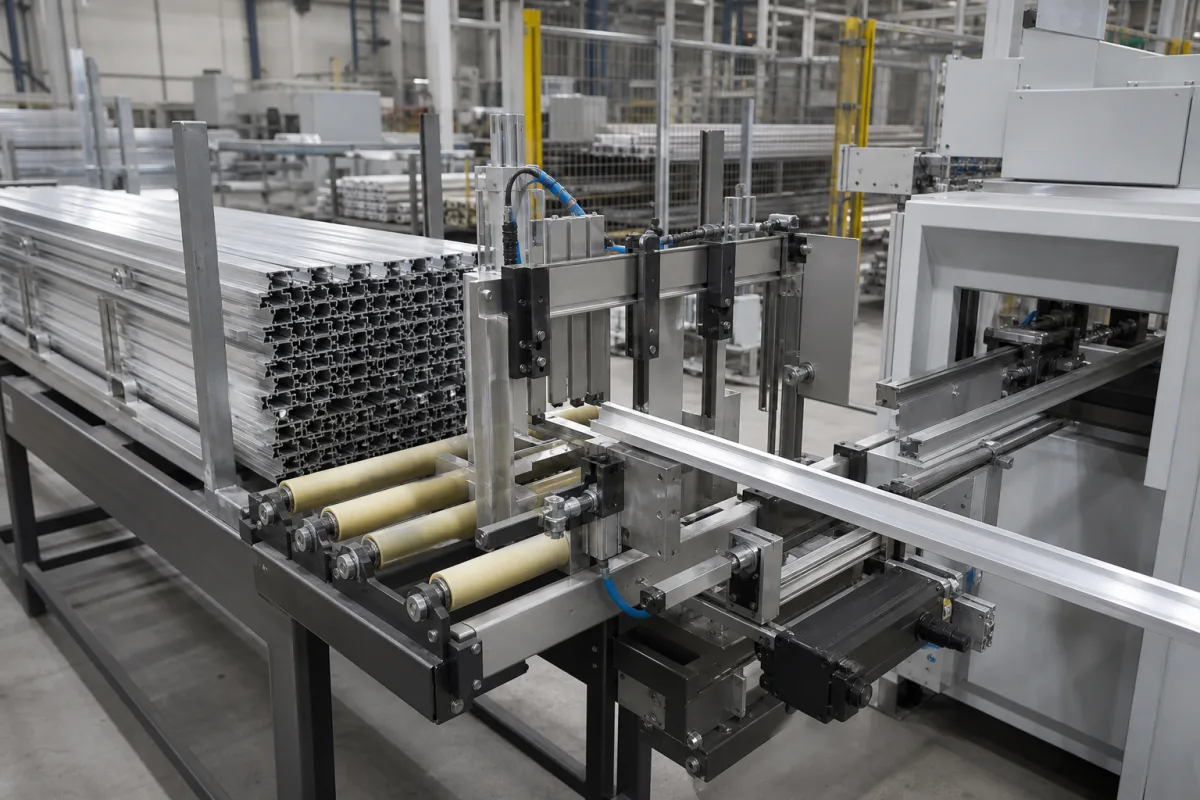
Representative product image. Confirm appearance and specifications with the manufacturer.

Product Specifications

Technical details and manufacturing context for Automated Profile Feeder

Definition
The Automated Profile Feeder is a component designed for use within an Aluminum Profile Integrated Fabrication System. Its primary function is to automatically supply aluminum profiles to downstream processing stations, ensuring a continuous and precisely timed material flow. The feeder employs motor-driven rollers or belts to transport profiles from storage racks to the next stage of production. Sensors detect the position of each profile, and automated controls adjust the feed rate and alignment to match the requirements of downstream equipment. This coordination helps maintain production efficiency and reduces manual handling.

Typical specifications for this feeder include a feeding speed of 10–60 m/min, a profile width range of 20–400 mm, and a profile length range of 500–6000 mm. Positioning accuracy is ±0.1 mm, and repeatability is ±0.05 mm, both referenced to ISO 230-2. The operating pressure is 0.5–0.8 MPa, and the supply voltage is 220/380 V AC (IEC 60038). Power consumption ranges from 1.5 to 3.0 kW, and the operating temperature range is 0–50°C. The protection class is IP54 (IEC 60529). The machine weight is approximately 800–1200 kg, and the footprint is about 3000×1200×1500 mm (L×W×H).

Materials used in construction include aluminum alloy, stainless steel, and industrial-grade plastics. These specifications are reference values and must be verified with the legal manufacturer or supplier for the specific model and application. The feeder is intended for use in fabricated metal product manufacturing environments. It is not a standalone machine but a part of a larger integrated system. Buyers should confirm that the feeder's parameters align with their existing equipment and production requirements. Standards listed are for verification purposes only and do not imply certification or compliance of any specific product.
Working Principle
The feeder operates by using motor-driven rollers or belts to move aluminum profiles from a storage rack to downstream processing stations. Sensors along the path detect the position of each profile, sending signals to an automated control system. This system adjusts the feed rate and alignment to match the speed and positioning requirements of the downstream equipment. The control logic ensures that profiles are fed at the correct time and in the correct orientation, preventing jams or misalignment. The system can handle profiles of varying widths and lengths within the specified ranges, and it can be integrated with other components of the fabrication line. The use of sensors and automated controls allows for precise positioning and repeatable feeding, which is critical for downstream machining operations. The feeder is designed to operate within specified pressure, voltage, and temperature ranges, and it requires proper maintenance to ensure consistent performance.
Common Materials
Aluminum alloy, Stainless steel, Industrial-grade plastics
Technical Parameters
ParameterTypical rangeNotes & selection driver
Feeding Speed10–60 m/minHigher speeds may require increased pneumatic pressure
Profile Width Range20–400 mmOutside range requires custom grippers
Profile Length Range500–6000 mmLonger profiles may need additional support
Positioning Accuracy±0.1 mmCritical for downstream machiningISO 230-2
Repeatability±0.05 mmEnsures consistent feedingISO 230-2
Operating Pressure0.5–0.8 MPaBelow 0.5 MPa may cause insufficient clamping force
Supply Voltage220/380 V ACThree-phase; other voltages on requestIEC 60038
Power Consumption1.5–3.0 kWDepends on profile weight and speed
Operating Temperature0–50 °CBelow 0°C may cause pneumatic issues
Protection ClassIP54Suitable for dusty environmentsIEC 60529
Machine Weight800–1200 kgVaries with configuration
Footprint (L×W×H)3000×1200×1500 mmApproximate; custom sizes available

Ranges are indicative industry figures for RFQ preparation, not a supplier commitment. Confirm every value and standard with the legal manufacturer before ordering.

Components / BOM
  • Drive Motor
    Provides power for profile transportation
    Material: Steel housing with copper windings
  • Feed Rollers Part
    Contact and transport aluminum profiles
    Material: Polyurethane or rubber-coated steel
  • Positioning Sensors
    Detect profile position and alignment
    Material: Stainless steel with optical/inductive elements
  • Control System
    Coordinates feeding operations with downstream equipment
    Material: Electronic components in aluminum enclosure

Industrial Ecosystem & Supply Chain Structure

Complementary Systems
Downstream Applications
Specialized Tooling

Application Fit & Sizing Matrix

Operational Limits
pressure: 0 to 2 bar
flow rate: Up to 15 profiles/min
temperature: 0°C to 50°C
profile dimensions: 20x20mm to 120x120mm cross-section
slurry concentration: Not applicable (dry feeding)
Media Compatibility
✓ Aluminum extrusions ✓ Anodized aluminum profiles ✓ Powder-coated aluminum sections
Unsuitable: Corrosive chemical environments (e.g., acid baths, salt spray chambers)
Sizing Data Required
  • Profile cross-sectional dimensions (mm)
  • Required feed rate (profiles/min)
  • System integration interface requirements (e.g., PLC protocol, mounting constraints)

Reliability & Engineering Risk Analysis

Failure Mode & Root Cause
Belt misalignment and slippage
Cause: Worn or loose drive components, improper tensioning, or accumulation of material debris on pulleys causing tracking issues.
Motor or gearbox overheating and failure
Cause: Excessive load due to material jams, inadequate lubrication, or electrical issues such as voltage fluctuations or phase imbalance.
Maintenance Indicators
  • Unusual grinding or squealing noises from the drive assembly, indicating belt wear or misalignment.
  • Inconsistent or jerky material feeding, suggesting motor strain, sensor malfunction, or mechanical obstruction.
Engineering Tips
  • Implement a routine inspection schedule for belt tension, alignment, and pulley condition, using laser alignment tools and tension gauges for precision.
  • Install condition monitoring sensors (vibration, temperature) on motors and gearboxes, and use predictive maintenance software to analyze trends and schedule interventions before failures occur.

Indicative industry ranges for design and RFQ preparation. Confirm the exact figures and applicable standard with the manufacturer before specifying.

Compliance & Manufacturing Standards

Applicable Standards
ANSI B11.19 - Performance Requirements for Safeguarding CE Marking - Machinery Directive 2006/42/EC

Quoted from the published standard.

Manufacturing Precision
  • Feed Roller Diameter: +/-0.05mm
  • Guide Rail Parallelism: 0.1mm per meter
Quality Inspection
  • Dimensional Verification with CMM
  • Functional Safety Test with Load Simulation

Manufacturers of Automated Profile Feeder

Manufacturer profiles associated with Automated Profile Feeder.

Sourcing Automated Profile Feeder from China?
Tell us your specification and target quantity — we will match it against manufacturer records and come back with the factories that fit.
Request manufacturers We manufacture this

Manufacturer listings support early research and capability understanding. They are not certification, ranking, or transaction guarantees.

Technical documentation
Request current drawings, revision history, and a signed specification sheet.
Manufacturing capability
Verify equipment lists, process limits, capacity, and representative production evidence.
Inspection readiness
Confirm test methods, calibrated equipment, sampling plans, and traceable reports.
Supplier transparency
Check the legal entity, factory address, ownership, certifications, and direct contacts.

CNFX does not score or rank suppliers. Buyers must verify all claims and documents with the legal manufacturer before ordering.

Supply Chain Compatible Machinery & Devices

Hydraulic Cylinder Piston Rod

A hydraulic cylinder piston rod is a precision-machined, load-bearing component that converts hydraulic pressure into linear mechanical force.

Explore Specs →
Industrial Tube Bending Machine

An industrial tube bending machine is a CNC-controlled device designed to precisely bend metal tubes and pipes to specific angles and radii.

Explore Specs →
Precision Linear Motion Guide Rail

Precision linear guide component for smooth, accurate motion in industrial machinery

Explore Specs →
Precision Aluminum Extrusion Profile

Precision aluminum extrusion profiles are semi-finished structural components produced by forcing heated aluminum alloy through a shaped die.

Explore Specs →

Frequently Asked Questions

What is the primary function of the Automated Profile Feeder?

The Automated Profile Feeder automatically supplies aluminum profiles to downstream processing stations within an integrated fabrication system. It ensures continuous material flow with precise positioning and timing control, reducing manual handling and improving production efficiency.

What are the key specifications to verify before purchasing?

Key specifications include feeding speed (10–60 m/min), profile width range (20–400 mm), profile length range (500–6000 mm), positioning accuracy (±0.1 mm), repeatability (±0.05 mm), operating pressure (0.5–0.8 MPa), supply voltage (220/380 V AC), power consumption (1.5–3.0 kW), operating temperature (0–50°C), protection class (IP54), machine weight (800–1200 kg), and footprint (3000×1200×1500 mm). These are reference values; confirm with the manufacturer for your specific model.

How does the feeder ensure accurate positioning?

The feeder uses sensors to detect the position of each profile and automated controls to adjust feed rate and alignment. This closed-loop control allows for positioning accuracy of ±0.1 mm and repeatability of ±0.05 mm, as referenced to ISO 230-2, ensuring consistent feeding for downstream operations.

What maintenance signals should be monitored?

Monitor for irregular feeding, increased noise, or deviations in positioning accuracy. Check pneumatic pressure (should be within 0.5–0.8 MPa) and ensure the operating temperature stays within 0–50°C. Regular inspection of rollers, belts, and sensors is recommended. If issues persist, consult the manufacturer.

Data Basis

Editorial classification, named public sources where available, and source-reviewed manufacturer records.

Preliminary Technical Classification
This page supports structured research, RFQ preparation, and supplier evaluation. It does not replace buyer-led supplier qualification, standards review, or technical approval.
Buyer enquiry

Request manufacturing insight for Automated Profile Feeder

Ask for use case, specification boundaries, supplier type, and RFQ preparation information for this product.

Where it goes
Straight to the CNFX editorial desk, and to the manufacturer if this product is linked to a claimed profile. Nothing is broadcast to a supplier list.
Your details stay here
We do not sell or rent enquiry data, and we do not add you to a mailing list. Used only to answer this request.
No commission, no middleman
CNFX is a directory. We take no cut of any order and never negotiate on a supplier's behalf.
What we don't claim
A listing is not an endorsement. Qualify every supplier and verify every figure yourself before ordering.

Your business information is used only to process this request.

Thank you! Your message has been sent. We'll respond within 1–3 business days.
Sorry, we couldn't send your message. Please try again, or email us at contact@cnfx.com.

Need to Manufacture Automated Profile Feeder?

Compare manufacturer profiles with relevant product and process capability.

Previous Product
Welding Positioner
Last Product
Get QuotesChat