Industry-Verified Manufacturing Data (2026)

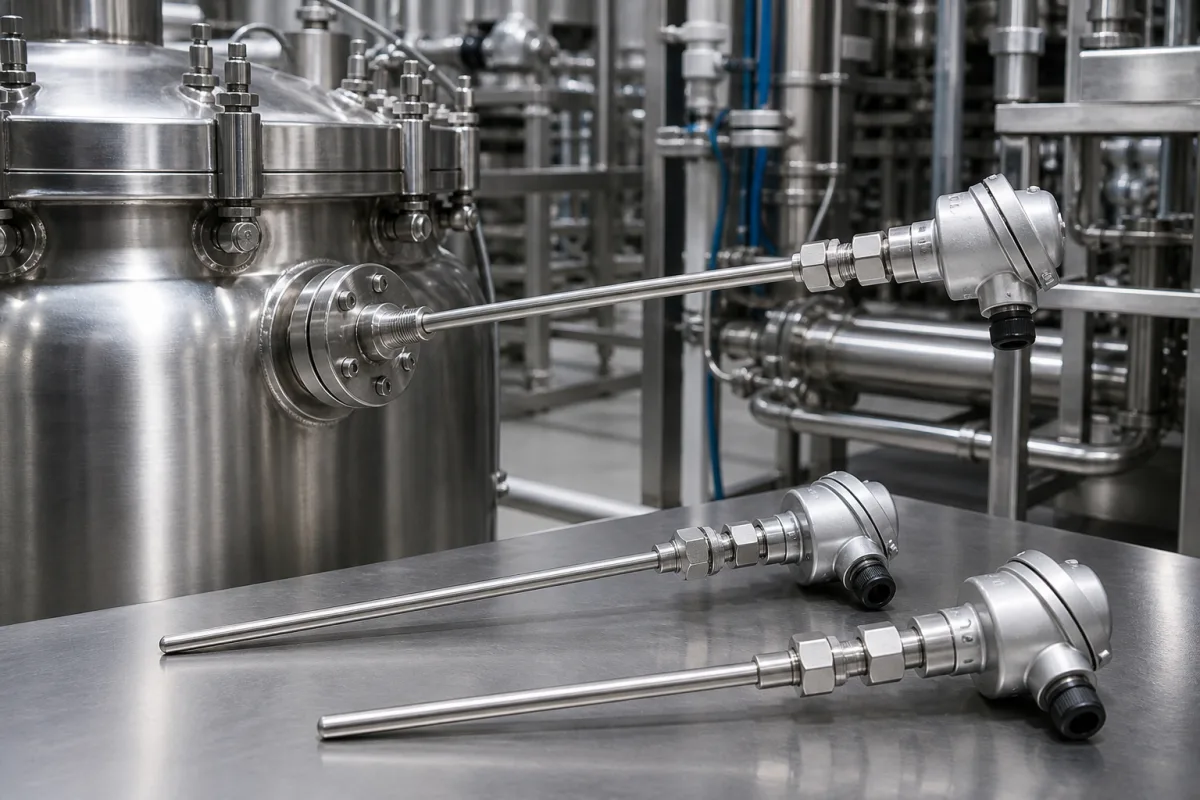
Chemical Reactor Temperature Sensor Probe

Based on aggregated insights from multiple verified factory profiles within the CNFX directory, the standard Chemical Reactor Temperature Sensor Probe used in the Basic Chemical Manufacturing sector typically supports operational capacities ranging from standard industrial configurations to heavy-duty production requirements.

Technical Definition & Core Assembly

A canonical Chemical Reactor Temperature Sensor Probe is characterized by the integration of Sensing Element and Protection Sheath. In industrial production environments, manufacturers listed on CNFX commonly emphasize stainless steel 316L construction to support stable, high-cycle operation across diverse manufacturing scenarios.

Temperature measurement probe for chemical reactor vessels

Product Specifications

Technical details and manufacturing context for Chemical Reactor Temperature Sensor Probe

Definition
A specialized temperature sensor probe designed for insertion into chemical reactor vessels to monitor process temperatures. This component provides critical temperature data for reaction control, safety monitoring, and quality assurance in chemical manufacturing processes. It is engineered to withstand corrosive chemical environments and high-pressure conditions typical in reactor operations. The probe is manufactured as a standalone component that can be integrated into various reactor monitoring systems.
Working Principle
Uses thermocouple or RTD sensing elements to detect temperature changes, converting thermal energy into electrical signals for measurement systems
Common Materials
stainless steel 316L, PTFE insulation, mineral insulated cable, ceramic insulator
Technical Parameters
  • Maximum working pressure (MPa) Per Request
  • Operating temperature range (°C) Per Request
Components / BOM
  • Sensing Element
    Temperature detection
    Material: Platinum RTD or Thermocouple
  • Protection Sheath
    Corrosion and pressure protection
    Material: Stainless Steel 316L
  • Terminal Head
    Electrical connection housing
    Material: Stainless Steel or Aluminum
  • Compression Fitting Optional
    Reactor vessel mounting
    Material: Stainless Steel
  • Signal Cable
    Electrical signal transmission
    Material: Mineral Insulated Cable
Engineering Reasoning
-50°C to 400°C
425°C for Pt100 RTD sensors, 450°C for Type K thermocouples
Design Rationale: Phase transformation of platinum wire at 425°C causing permanent resistance shift in RTDs; oxidation of chromel-alumel junction at 450°C creating measurement drift in thermocouples
Risk Mitigation (FMEA)
Trigger Thermal shock exceeding 100°C/min rate
Mode: Shear fracture at thermowell-probe interface
Strategy: Installation of thermal buffer sleeves with 0.5mm Inconel 625 expansion gap
Trigger Corrosive fluid ingress through 0.1mm micro-cracks
Mode: Galvanic corrosion between 316L stainless sheath and Pt100 element
Strategy: Hermetic sealing with laser-welded Hastelloy C-276 caps and helium leak testing at 1×10⁻⁸ mbar·L/s

Industry Taxonomies & Aliases

Commonly used trade names and technical identifiers for Chemical Reactor Temperature Sensor Probe.

Industrial Ecosystem & Supply Chain DNA

Complementary Systems
Downstream Applications
Specialized Tooling

Application Fit & Sizing Matrix

Operational Limits
pressure: 0 to 100 bar
flow rate: 0 to 5 m/s
temperature: -50°C to 400°C
slurry concentration: Up to 40% solids by weight
Media Compatibility
✓ Aqueous solutions ✓ Organic solvents ✓ Polymer melts
Unsuitable: Hydrofluoric acid or highly concentrated caustic solutions
Sizing Data Required
  • Reactor vessel diameter
  • Required insertion length
  • Process temperature gradient

Reliability & Engineering Risk Analysis

Failure Mode & Root Cause
Thermal stress cracking
Cause: Rapid temperature cycling or thermal shock exceeding the sensor's design limits, causing material fatigue and fracture in the probe sheath or sensing element.
Chemical corrosion/degradation
Cause: Exposure to aggressive process chemicals (acids, caustics, solvents) that attack the probe materials (e.g., Inconel sheath, PTFE insulation), leading to pitting, thinning, or insulation breakdown.
Maintenance Indicators
  • Erratic or drifting temperature readings compared to other process indicators or control loops
  • Visible physical damage to the probe (cracks, bulging sheath, discoloration) or leakage at the connection point
Engineering Tips
  • Implement a thermal shock prevention protocol: ensure gradual heating/cooling rates during reactor startups/shutdowns, and use thermal wells or protection tubes to buffer the probe from direct rapid temperature changes.
  • Select probe materials compatible with the specific chemical environment (e.g., Hastelloy for acidic conditions, ceramic coatings for abrasion resistance) and regularly inspect/replace based on corrosion rate data and manufacturer's service life recommendations.

Compliance & Manufacturing Standards

Reference Standards
ISO 9001:2015 (Quality Management Systems) ASTM E230/E230M-17 (Standard Specification for Temperature-Electromotive Force (emf) Tables for Standardized Thermocouples) CE Marking (EU Directive 2014/35/EU for Electrical Equipment)
Manufacturing Precision
  • Temperature Accuracy: +/-0.5°C over operating range
  • Response Time: 90% of final reading within 10 seconds
Quality Inspection
  • Calibration Verification against NIST-traceable standards
  • Pressure Testing for hermetic seal integrity

Factories Producing Chemical Reactor Temperature Sensor Probe

Verified manufacturers with capability to produce this product in China

✓ 92% Supplier Capability Match Found

T Technical Director from United States Feb 27, 2026
★★★★★
"Found 42+ suppliers for Chemical Reactor Temperature Sensor Probe on CNFX, but this spec remains the most cost-effective."
Technical Specifications Verified
P Project Engineer from United Arab Emirates Feb 24, 2026
★★★★☆
"The technical documentation for this Chemical Reactor Temperature Sensor Probe is very thorough, especially regarding Temperature Range (°C). (Delivery took slightly longer than expected, but technical support was excellent.)"
Technical Specifications Verified
S Sourcing Manager from Australia Feb 21, 2026
★★★★★
"Reliable performance in harsh Basic Chemical Manufacturing environments. No issues with the Chemical Reactor Temperature Sensor Probe so far."
Technical Specifications Verified
Verification Protocol

“Feedback is collected from verified sourcing managers during RFQ (Request for Quote) and factory evaluation processes on CNFX. These reports represent historical performance data and technical audit summaries from our B2B manufacturing network.”

13 sourcing managers are analyzing this specification now. Last inquiry for Chemical Reactor Temperature Sensor Probe from Germany (18m ago).

Frequently Asked Questions

What materials make this temperature probe suitable for chemical reactor applications?

Constructed with corrosion-resistant stainless steel 316L, PTFE insulation for chemical inertness, mineral insulated cable for durability, and ceramic insulator for high-temperature stability.

How do I select the proper insertion length for my chemical reactor vessel?

Insertion length should be chosen based on reactor vessel dimensions and process requirements to ensure the sensing element reaches the optimal measurement point within the chemical medium.

What maintenance is required for chemical reactor temperature probes?

Regular inspection of the protection sheath and compression fitting for corrosion or damage, verification of signal integrity, and calibration checks according to process requirements and manufacturer recommendations.

Can I contact factories directly on CNFX?

CNFX is an open directory, not a transaction platform. Each factory profile provides direct contact information and production details to help you initiate direct inquiries with Chinese suppliers.

Get Quote for Chemical Reactor Temperature Sensor Probe

Request technical pricing, lead times, or customized specifications for Chemical Reactor Temperature Sensor Probe directly from verified manufacturing units.

Your business information is encrypted and only shared with verified Chemical Reactor Temperature Sensor Probe suppliers.

Thank you! Your message has been sent. We'll respond within 1–3 business days.

Need to Manufacture Chemical Reactor Temperature Sensor Probe?

Connect with verified factories specializing in this product category

Add Your Factory Contact Us
Previous Product
Chemical Reactor Sealing Gland
Next Product
Continuous Flow Chemical Reactor System