Industry-Verified Manufacturing Data (2026)

Alignment Guide

Based on aggregated insights from multiple verified factory profiles within the CNFX directory, the standard Alignment Guide used in the Computer, Electronic and Optical Product Manufacturing sector typically supports operational capacities ranging from standard industrial configurations to heavy-duty production requirements.

Technical Definition & Core Assembly

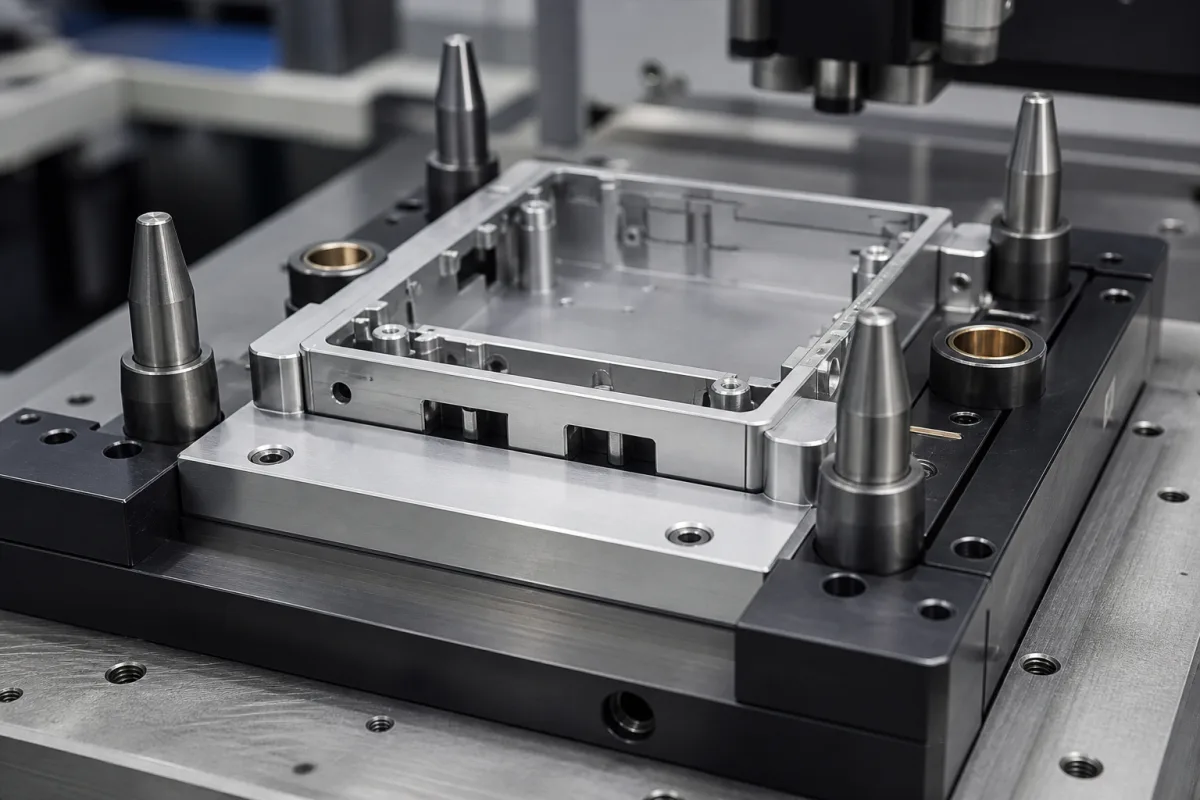
A canonical Alignment Guide is characterized by the integration of Guide Rail / Surface and Mounting Base. In industrial production environments, manufacturers listed on CNFX commonly emphasize Stainless Steel construction to support stable, high-cycle operation across diverse manufacturing scenarios.

A precision component within a test fixture interface that ensures accurate positioning and alignment of test specimens or devices during measurement or testing procedures.
Product Specifications

Technical details and manufacturing context for Alignment Guide

Definition
The Alignment Guide is a critical component of the Test Fixture Interface, designed to provide precise mechanical guidance and repeatable positioning for items under test. It functions to eliminate positional errors, ensure consistent contact points, and maintain proper orientation between the test specimen and the fixture's measurement probes, sensors, or connection points. This is essential for achieving reliable, high-precision test results in manufacturing quality control and R&D validation.
Working Principle
The guide typically employs a combination of mechanical features such as pins, rails, slots, or tapered surfaces. These features physically constrain the movement of the test specimen, guiding it into a single, predefined correct position against datum points or reference surfaces on the test fixture. This ensures that every test cycle begins with the specimen in an identical location and orientation relative to the test interface.
Common Materials
Stainless Steel, Anodized Aluminum, Engineering Plastic (e.g., PEEK, Delrin)
Technical Parameters
  • Dimensional tolerance (e.g., ±0.01mm) for critical guiding features to ensure positioning accuracy. (mm) Per Request
Components / BOM
  • Guide Rail / Surface
    Primary contact surface that physically guides the test specimen into position.
    Material: Hardened Steel or Ceramic-coated Aluminum
  • Mounting Base
    Structural platform that secures the guide to the main test fixture body.
    Material: Aluminum Alloy
  • Datum Pin / Stop
    Fixed reference point that defines the final, correct position of the specimen.
    Material: Stainless Steel
Engineering Reasoning
0.5-25 μm positional tolerance, 0-50 N clamping force, -20°C to 85°C temperature range
Positional deviation exceeding 25 μm, clamping force exceeding 50 N causing plastic deformation, temperature exceeding 85°C causing thermal expansion beyond tolerance
Design Rationale: Wear-induced clearance exceeding Hertzian contact stress limits (σ_max > 0.3×yield strength), thermal expansion coefficient mismatch (Δα > 2×10^-6 K^-1) causing binding, surface fatigue from cyclic loading below endurance limit (σ_a < 0.5×σ_uts)
Risk Mitigation (FMEA)
Trigger Abrasive particle contamination (ISO 4406:2017 Class 14/12/9 or worse)
Mode: Progressive wear increasing clearance beyond 25 μm tolerance
Strategy: Integrate labyrinth seals with 0.1 μm filtration, apply tungsten carbide coating (HV 1500) on sliding surfaces
Trigger Thermal gradient exceeding 10°C/mm across interface
Mode: Differential expansion causing binding torque > 2 N·m
Strategy: Implement Invar 36 (α=1.2×10^-6 K^-1) alignment pins with active thermal compensation using Peltier elements

Industry Taxonomies & Aliases

Commonly used trade names and technical identifiers for Alignment Guide.

Applied To / Applications

This component is essential for the following industrial systems and equipment:

Industrial Ecosystem & Supply Chain DNA

Complementary Systems
Downstream Applications
Specialized Tooling

Application Fit & Sizing Matrix

Operational Limits
pressure: 0 to 100 psi
temperature: -40°C to +150°C
alignment tolerance: ±0.001 inches
vibration resistance: Up to 5g RMS
Media Compatibility
✓ Metallic test specimens ✓ Ceramic substrates ✓ Semiconductor wafers
Unsuitable: High-viscosity slurry environments with abrasive particles
Sizing Data Required
  • Test specimen dimensions (LxWxH)
  • Required alignment accuracy (tolerance)
  • Fixture interface mounting specifications

Reliability & Engineering Risk Analysis

Failure Mode & Root Cause
Misalignment-induced bearing failure
Cause: Incorrect shaft alignment causing excessive radial/axial loads, leading to premature bearing wear, overheating, and eventual seizure or catastrophic failure.
Coupling degradation and fatigue fracture
Cause: Persistent angular or parallel misalignment generating cyclic stress concentrations in coupling components, resulting in material fatigue, cracking, or sudden rupture during operation.
Maintenance Indicators
  • Abnormal vibration patterns or audible knocking/grinding noises from the drive train during operation
  • Rapid or uneven temperature rise in bearings or coupling housings, often accompanied by thermal discoloration
Engineering Tips
  • Implement laser alignment during installation and after major maintenance, ensuring alignment tolerances are within manufacturer specifications (typically ≤0.05mm offset and ≤0.1mm/m angularity for precision equipment).
  • Establish routine alignment verification schedules using vibration analysis and thermal imaging to detect early misalignment trends before component degradation occurs.

Compliance & Manufacturing Standards

Reference Standards
ISO 1101:2017 (Geometrical product specifications - Geometrical tolerancing) ANSI B4.1-1967 (Preferred Limits and Fits for Cylindrical Parts) DIN 7182-1 (Alignment and adjustment elements - Part 1: General principles)
Manufacturing Precision
  • Parallelism: +/-0.05mm per 100mm length
  • Bore diameter: H7 tolerance class (e.g., +0.025mm/-0mm for 50mm bore)
Quality Inspection
  • Coordinate Measuring Machine (CMM) verification of alignment features
  • Surface roughness test (Ra ≤ 1.6μm for sliding surfaces)

Factories Producing Alignment Guide

Verified manufacturers with capability to produce this product in China

✓ 93% Supplier Capability Match Found

P Project Engineer from Germany Jan 25, 2026
★★★★★
"Testing the Alignment Guide now; the technical reliability results are within 1% of the laboratory datasheet."
Technical Specifications Verified
S Sourcing Manager from Brazil Jan 22, 2026
★★★★★
"Impressive build quality. Especially the technical reliability is very stable during long-term operation."
Technical Specifications Verified
P Procurement Specialist from Canada Jan 19, 2026
★★★★★
"As a professional in the Computer, Electronic and Optical Product Manufacturing sector, I confirm this Alignment Guide meets all ISO standards."
Technical Specifications Verified
Verification Protocol

“Feedback is collected from verified sourcing managers during RFQ (Request for Quote) and factory evaluation processes on CNFX. These reports represent historical performance data and technical audit summaries from our B2B manufacturing network.”

16 sourcing managers are analyzing this specification now. Last inquiry for Alignment Guide from Brazil (1h ago).

Supply Chain Compatible Machinery & Devices

Industrial Smart Camera Module

Embedded vision system for industrial automation and quality inspection.

Explore Specs →
Industrial Wireless Power Transfer Module

Wireless power transfer module for industrial equipment applications

Explore Specs →
Industrial Smart Sensor Module

Modular industrial sensor with embedded processing and wireless connectivity

Explore Specs →
Surface Mount Resistor

Passive electronic component for current limiting and voltage division in circuits

Explore Specs →

Frequently Asked Questions

What materials are available for the alignment guide?

Our alignment guides are manufactured from high-quality materials including Stainless Steel for durability, Anodized Aluminum for lightweight precision, and Engineering Plastics like PEEK or Delrin for specialized applications requiring electrical insulation or chemical resistance.

How does the alignment guide ensure accurate testing procedures?

The alignment guide features precisely machined datum pins, guide rails, and mounting bases that create a repeatable reference system. This ensures test specimens or electronic devices are positioned consistently during measurement, eliminating variables and improving test reliability in computer and optical product manufacturing.

Can the alignment guide be customized for specific test fixtures?

Yes, our alignment guides can be customized with different BOM configurations including various datum pin arrangements, guide rail lengths, and mounting base designs to integrate seamlessly with your existing test fixtures and meet specific positioning requirements for electronic or optical testing applications.

Can I contact factories directly on CNFX?

CNFX is an open directory, not a transaction platform. Each factory profile provides direct contact information and production details to help you initiate direct inquiries with Chinese suppliers.

Get Quote for Alignment Guide

Request technical pricing, lead times, or customized specifications for Alignment Guide directly from verified manufacturing units.

Your business information is encrypted and only shared with verified Alignment Guide suppliers.

Thank you! Your message has been sent. We'll respond within 1–3 business days.

Need to Manufacture Alignment Guide?

Connect with verified factories specializing in this product category

Add Your Factory Contact Us
Previous Product
Algorithmic Processing Unit
Next Product
Alignment Mechanism