Industry-Verified Manufacturing Data (2026)

Cap/Lid Assembly

Based on aggregated insights from multiple verified factory profiles within the CNFX directory, the standard Cap/Lid Assembly used in the Computer, Electronic and Optical Product Manufacturing sector typically supports operational capacities ranging from standard industrial configurations to heavy-duty production requirements.

Technical Definition & Core Assembly

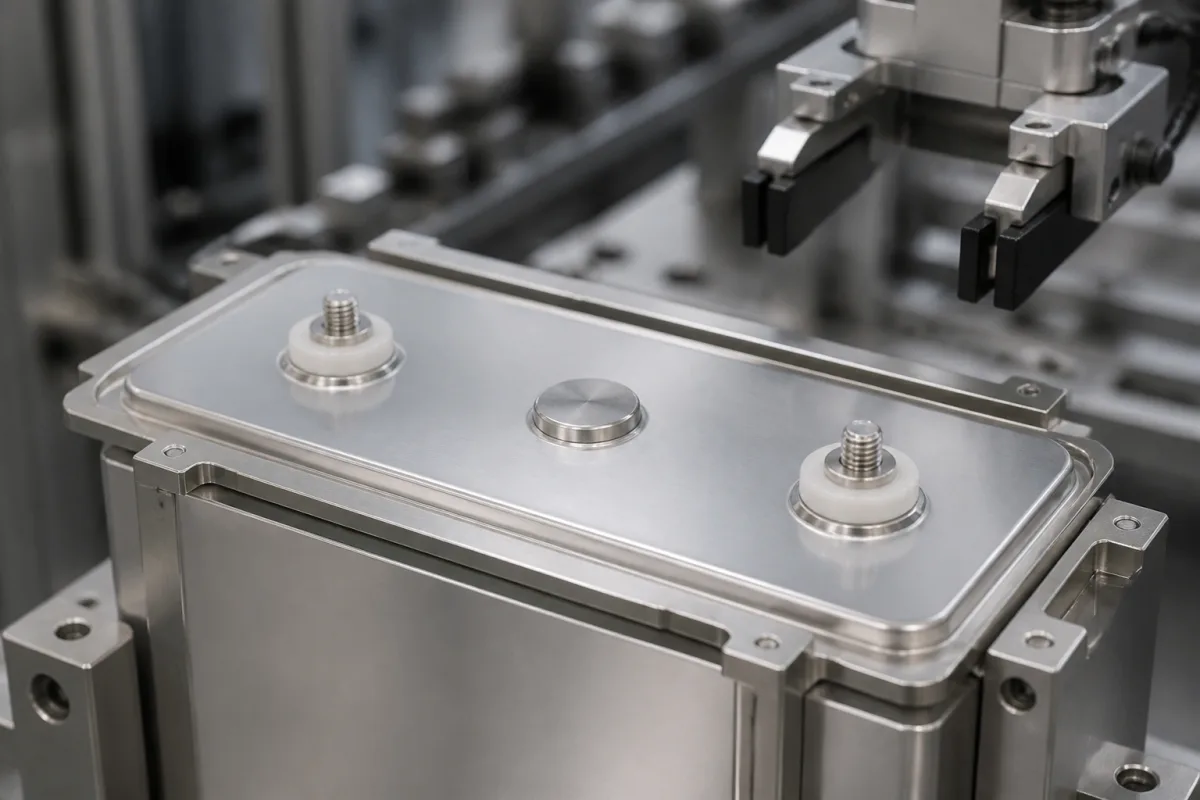
A canonical Cap/Lid Assembly is characterized by the integration of Main Lid Plate and Sealing Gasket. In industrial production environments, manufacturers listed on CNFX commonly emphasize Aluminum alloy construction to support stable, high-cycle operation across diverse manufacturing scenarios.

A sealing and protective assembly that covers the cell housing opening

Product Specifications

Technical details and manufacturing context for Cap/Lid Assembly

Definition
The Cap/Lid Assembly is a critical component of the Cell Housing Assembly that provides hermetic sealing, environmental protection, and structural integrity for the enclosed cell components. It typically includes the main lid, sealing gaskets, fastening mechanisms, and electrical feedthroughs where applicable.
Working Principle
The assembly creates a sealed enclosure by applying compression force through fasteners onto sealing materials, preventing ingress of contaminants while maintaining structural stability and electrical isolation as required.
Common Materials
Aluminum alloy, Stainless steel, Silicone rubber
Technical Parameters
  • Overall dimensions including diameter, thickness, and sealing surface specifications (mm) Per Request
Components / BOM
  • Main Lid Plate
    Primary structural component providing mechanical strength and sealing surface
    Material: Aluminum alloy
  • Sealing Gasket
    Creates hermetic seal between lid and housing body
    Material: Silicone rubber
  • Fastening Bolts
    Apply compression force to achieve proper sealing
    Material: Stainless steel
Engineering Reasoning
0-2.5 bar differential pressure, -40°C to 85°C temperature
3.0 bar differential pressure causing permanent deformation, 90°C causing elastomer degradation
Design Rationale: Plastic deformation of polymer components exceeding yield strength (25 MPa for polypropylene), thermal degradation of sealing elastomers above glass transition temperature
Risk Mitigation (FMEA)
Trigger Thermal cycling between -40°C and 85°C at 5 cycles/hour
Mode: Seal compression set exceeding 15% of original thickness
Strategy: Dual-material seal design with silicone outer layer and fluorocarbon inner layer
Trigger Vibration exposure at 200 Hz with 5 g acceleration
Mode: Fastener loosening leading to 0.5 mm gap formation
Strategy: Thread-locking adhesive application with 20 N·m torque specification

Industry Taxonomies & Aliases

Commonly used trade names and technical identifiers for Cap/Lid Assembly.

Applied To / Applications

This component is essential for the following industrial systems and equipment:

Industrial Ecosystem & Supply Chain DNA

Complementary Systems
Downstream Applications
Specialized Tooling

Application Fit & Sizing Matrix

Operational Limits
pressure: 0 to 50 psi
flow rate: N/A (static sealing application)
temperature: -40°C to 150°C
slurry concentration: 0-30% solids by weight
Media Compatibility
✓ Aqueous electrolytes ✓ Lithium-ion battery cells ✓ Industrial chemical storage tanks
Unsuitable: High-pressure steam systems (>100 psi)
Sizing Data Required
  • Cell housing opening diameter (mm)
  • Required sealing force (N)
  • Environmental exposure class (IP rating)

Reliability & Engineering Risk Analysis

Failure Mode & Root Cause
Seal degradation
Cause: Chemical attack from process fluids or cleaning agents compromising elastomeric seals, leading to leaks and loss of containment.
Thread galling or cross-threading
Cause: Misalignment during assembly, excessive torque application, or wear from repeated cycling causing mechanical damage to mating threads.
Maintenance Indicators
  • Visible leakage or weeping around the seal interface during operation.
  • Abnormal resistance or grinding noise during manual tightening/loosening indicating thread damage.
Engineering Tips
  • Implement torque-controlled installation procedures using calibrated tools to prevent over-tightening and ensure consistent seal compression.
  • Establish a regular inspection schedule for seal condition and thread integrity, with replacement based on wear indicators or time-in-service limits.

Compliance & Manufacturing Standards

Reference Standards
ISO 9001:2015 Quality Management Systems ASTM D4169 Standard Practice for Performance Testing of Shipping Containers and Systems CE Marking (EU Regulation 1935/2004 for Food Contact Materials)
Manufacturing Precision
  • Thread Engagement: +/-0.1mm
  • Sealing Surface Flatness: 0.05mm
Quality Inspection
  • Leak Test (Pressure/Vacuum Method)
  • Dimensional Verification with CMM

Factories Producing Cap/Lid Assembly

Verified manufacturers with capability to produce this product in China

✓ 93% Supplier Capability Match Found

S Sourcing Manager from Germany Jan 04, 2026
★★★★★
"Standard OEM quality for Computer, Electronic and Optical Product Manufacturing applications. The Cap/Lid Assembly arrived with full certification."
Technical Specifications Verified
P Procurement Specialist from Brazil Jan 01, 2026
★★★★☆
"Great transparency on the Cap/Lid Assembly components. Essential for our Computer, Electronic and Optical Product Manufacturing supply chain. (Delivery took slightly longer than expected, but technical support was excellent.)"
Technical Specifications Verified
T Technical Director from Canada Dec 29, 2025
★★★★★
"The Cap/Lid Assembly we sourced perfectly fits our Computer, Electronic and Optical Product Manufacturing production line requirements."
Technical Specifications Verified
Verification Protocol

“Feedback is collected from verified sourcing managers during RFQ (Request for Quote) and factory evaluation processes on CNFX. These reports represent historical performance data and technical audit summaries from our B2B manufacturing network.”

7 sourcing managers are analyzing this specification now. Last inquiry for Cap/Lid Assembly from Vietnam (1h ago).

Supply Chain Compatible Machinery & Devices

Industrial Smart Camera Module

Embedded vision system for industrial automation and quality inspection.

Explore Specs →
Industrial Wireless Power Transfer Module

Wireless power transfer module for industrial equipment applications

Explore Specs →
Industrial Smart Sensor Module

Modular industrial sensor with embedded processing and wireless connectivity

Explore Specs →
Surface Mount Resistor

Passive electronic component for current limiting and voltage division in circuits

Explore Specs →

Frequently Asked Questions

What materials are used in this cap/lid assembly?

This assembly uses premium aluminum alloy for the main lid plate, stainless steel for fastening bolts, and silicone rubber for the sealing gasket to ensure durability and reliable protection.

How does this assembly protect computer and optical products?

The cap/lid assembly creates a secure seal over cell housing openings, preventing dust, moisture, and contaminants from entering while providing structural protection for sensitive electronic and optical components.

What are the main components included in this assembly?

The assembly includes three key components: the main lid plate (aluminum alloy), sealing gasket (silicone rubber), and fastening bolts (stainless steel) for complete installation and sealing functionality.

Can I contact factories directly on CNFX?

CNFX is an open directory, not a transaction platform. Each factory profile provides direct contact information and production details to help you initiate direct inquiries with Chinese suppliers.

Get Quote for Cap/Lid Assembly

Request technical pricing, lead times, or customized specifications for Cap/Lid Assembly directly from verified manufacturing units.

Your business information is encrypted and only shared with verified Cap/Lid Assembly suppliers.

Thank you! Your message has been sent. We'll respond within 1–3 business days.

Need to Manufacture Cap/Lid Assembly?

Connect with verified factories specializing in this product category

Add Your Factory Contact Us
Previous Product
Camera Sensor (CMOS/CCD)
Next Product
Carry Computation Unit