Control Interface Board
View system integration details
This page explains how Communication Interface Chip is classified within Computer, Electronic and Optical Product Manufacturing. Technical values and manufacturer relationships are research references; confirm the current specification and supplier evidence for each order.
Integrated circuit that manages data exchange protocols between the Control Interface Board and external systems or devices.
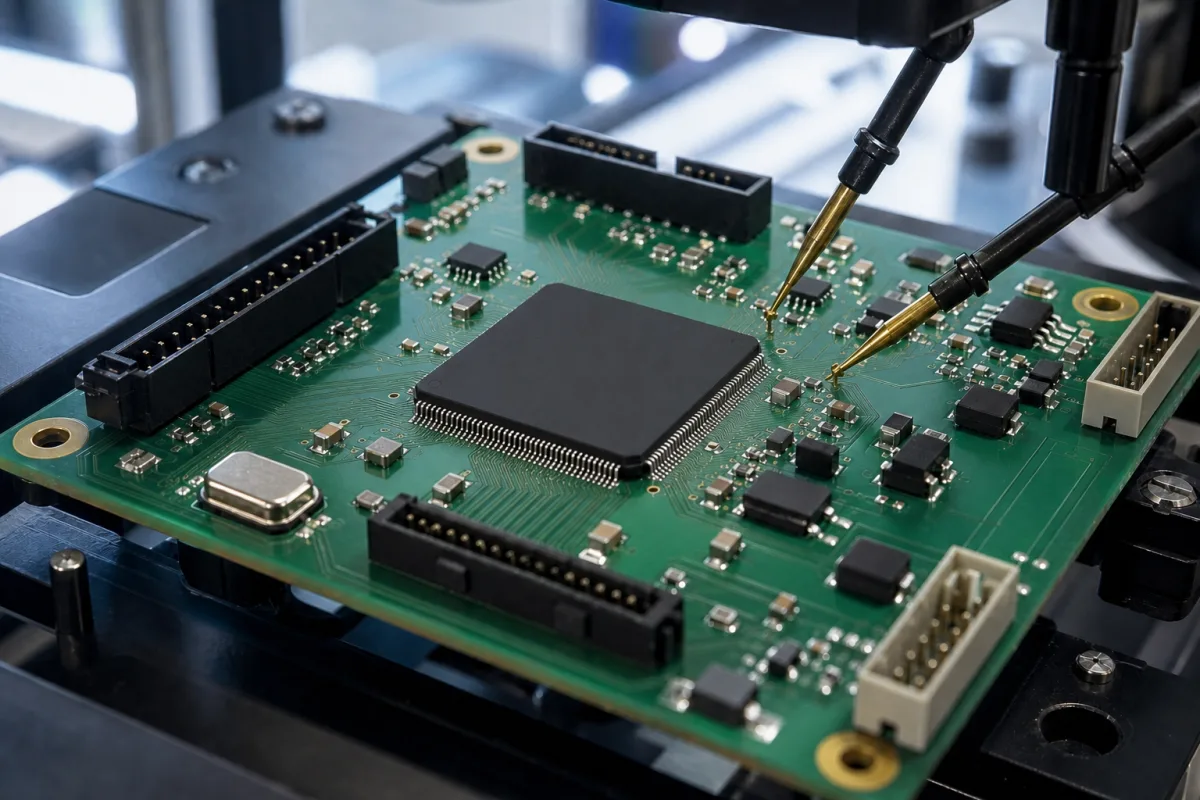
Technical details and manufacturing context for Communication Interface Chip
What to specify in your RFQ
These are the quantities to specify to the manufacturer when sizing or requesting a quote. The manufacturer's own documentation governs the exact figures and applicable standard.
This component is essential for the following industrial systems and equipment:
| pressure: | Not applicable (solid-state IC) |
| other spec: | Operating voltage: 1.8V to 3.3V, Data rate: Up to 10 Mbps, ESD protection: ±8kV HBM |
| temperature: | -40°C to +85°C (industrial grade), -40°C to +125°C (extended grade available) |
Indicative industry ranges for design and RFQ preparation. Confirm the exact figures and applicable standard with the manufacturer before specifying.
Quoted from the published standard.
Manufacturer profiles associated with Communication Interface Chip.
Manufacturer listings support early research and capability understanding. They are not certification, ranking, or transaction guarantees.
A practical evidence checklist for RFQ preparation and supplier evaluation.
CNFX does not score or rank suppliers. Buyers must verify all claims and documents with the legal manufacturer before ordering.
The chip supports common standards such as UART, SPI, I2C, CAN, and Ethernet, as listed in the product description. However, the specific protocols implemented depend on the exact model. Always verify the datasheet for the particular part number.
Package dimensions are specified in millimeters and may vary by model, with examples including QFN and TSSOP. The exact dimensions are provided in the product specification and must be confirmed with the manufacturer for the specific variant.
No, the chip interfaces with external physical layer transceivers to connect to wired or wireless media. The transceiver is a separate component that handles the actual electrical signaling.
Check the datasheet for electrical characteristics, timing, voltage levels, and protocol support. Also confirm package dimensions and environmental ratings. For procurement, contact the legal manufacturer or supplier to ensure the part meets your requirements.
Editorial classification, named public sources where available, and source-reviewed manufacturer records.
Ask for use case, specification boundaries, supplier type, and RFQ preparation information for this product.
Compare manufacturer profiles with relevant product and process capability.