Industry-Verified Manufacturing Data (2026)

Current Sensors

Based on aggregated insights from multiple verified factory profiles within the CNFX directory, the standard Current Sensors used in the Computer, Electronic and Optical Product Manufacturing sector typically supports operational capacities ranging from standard industrial configurations to heavy-duty production requirements.

Technical Definition & Core Assembly

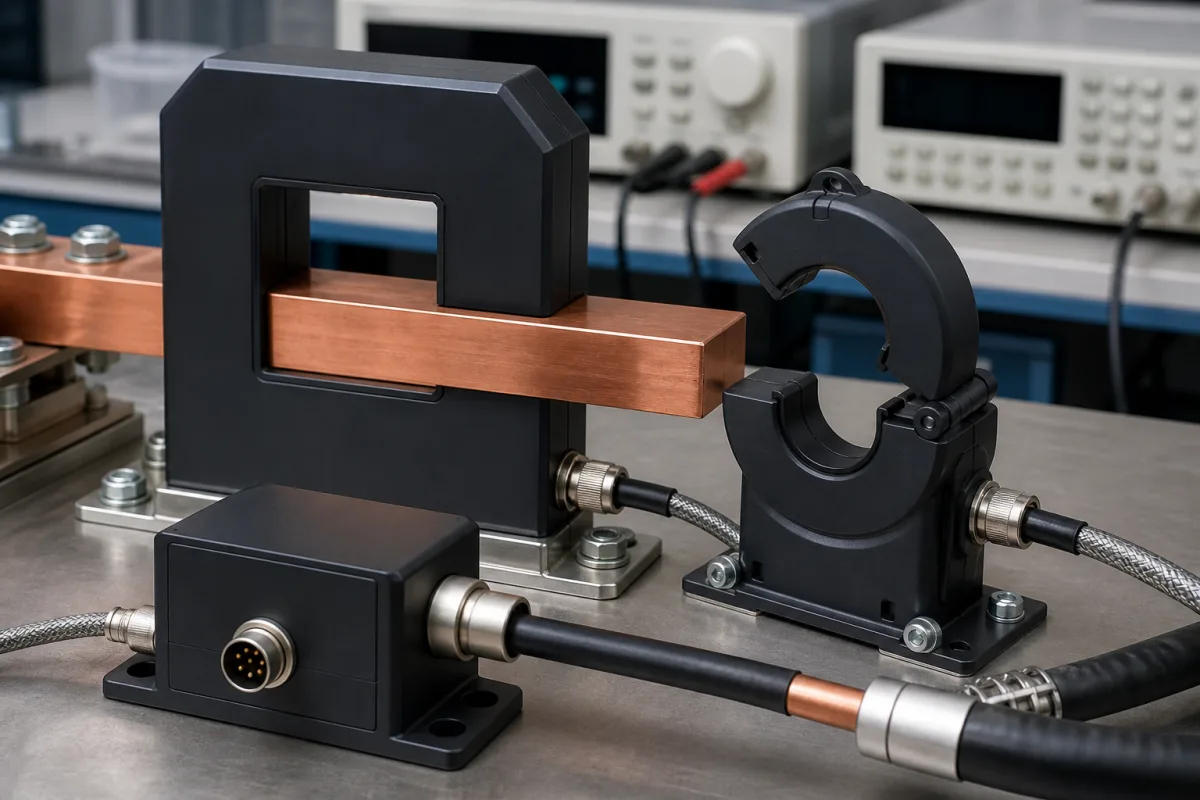
A canonical Current Sensors is characterized by the integration of Magnetic Core and Hall-Effect Sensor. In industrial production environments, manufacturers listed on CNFX commonly emphasize Semiconductor silicon construction to support stable, high-cycle operation across diverse manufacturing scenarios.

Electronic components that measure and monitor electrical current flow in circuits.
Product Specifications

Technical details and manufacturing context for Current Sensors

Definition
Current sensors are essential components on power electronics boards that detect, measure, and convert electrical current into a proportional output signal (typically voltage or digital data) for monitoring, control, and protection purposes within electronic systems.
Working Principle
Current sensors operate by detecting the magnetic field generated by current flow through a conductor. Common technologies include Hall-effect sensors (measuring magnetic field perpendicular to current), shunt resistors (measuring voltage drop across a known resistance), current transformers (inductive coupling for AC), and Rogowski coils (air-core coils for AC). The sensor produces an output signal proportional to the measured current.
Common Materials
Semiconductor silicon, Ferrite cores, Copper windings, Ceramic substrates, Epoxy encapsulation
Technical Parameters
  • Current measurement range (e.g., ±5A to ±1000A) (A) Per Request
Components / BOM
  • Magnetic Core
    Concentrates magnetic field from current-carrying conductor for measurement
    Material: Ferrite or laminated silicon steel
  • Hall-Effect Sensor
    Detects magnetic field and generates proportional voltage output
    Material: Semiconductor silicon
  • Signal Conditioning Circuit
    Amplifies, filters, and processes raw sensor signal
    Material: Semiconductor components on PCB
  • Primary Conductor
    Carries the current to be measured through or near the sensor
    Material: Copper or aluminum
Engineering Reasoning
0-100 A DC, -50 to +50 A AC at 50-60 Hz
150 A continuous current, 200 A peak for 100 ms, 85°C junction temperature
Design Rationale: Joule heating exceeding 2.5 W/cm² thermal dissipation capacity, Hall effect sensor saturation at 0.3 T magnetic flux density
Risk Mitigation (FMEA)
Trigger Transient current surge exceeding 200 A for >100 ms
Mode: Hall effect sensor magnetic core saturation, output signal clipping at 4.5 V
Strategy: Implement 10 kA/μs MOV transient voltage suppressor with 400 V clamping voltage
Trigger Ambient temperature exceeding 125°C for >1 hour
Mode: Thermal runaway in semiconductor junctions, resistance drift exceeding ±5% from 25°C baseline
Strategy: Integrate PTC thermistor with 130°C trip point in thermal feedback loop

Industry Taxonomies & Aliases

Commonly used trade names and technical identifiers for Current Sensors.

Applied To / Applications

This component is essential for the following industrial systems and equipment:

Industrial Ecosystem & Supply Chain DNA

Complementary Systems
Downstream Applications
Specialized Tooling

Application Fit & Sizing Matrix

Operational Limits
pressure: Atmospheric to 5 bar (depends on housing/IP rating)
temperature: -40°C to +125°C (operating range varies by model)
current range: 0.1 mA to 2000 A (depends on sensor type)
frequency response: DC to 1 MHz (varies by technology)
Media Compatibility
✓ Copper conductors ✓ Aluminum busbars ✓ PCB traces
Unsuitable: High-voltage arc flash environments (>1000V)
Sizing Data Required
  • Maximum current to be measured (A)
  • Required accuracy (% of reading)
  • Electrical isolation requirements (kV)

Reliability & Engineering Risk Analysis

Failure Mode & Root Cause
Signal Drift/Inaccuracy
Cause: Sensor element contamination from process media (oil, dust, moisture), thermal degradation of internal components, or electromagnetic interference from nearby equipment.
Complete Signal Loss/Open Circuit
Cause: Mechanical damage to wiring or connectors (vibration, impact), internal component failure due to voltage spikes or overheating, or corrosion of electrical contacts from harsh environments.
Maintenance Indicators
  • Erratic or fluctuating readings on the control system display inconsistent with process conditions
  • Audible electrical arcing or buzzing from the sensor housing, or visible physical damage like cracked casing, loose connections, or corrosion
Engineering Tips
  • Implement regular calibration checks against a known reference standard, adjusting for environmental factors like temperature, and ensure proper shielding/conduit routing to minimize EMI/RFI interference.
  • Use vibration-resistant mounting hardware, install protective enclosures or boots in harsh environments, and maintain clean, dry electrical connections with appropriate dielectric grease to prevent corrosion.

Compliance & Manufacturing Standards

Reference Standards
IEC 61800-9-2:2017 (Energy efficiency of power drive systems) IEC 61000-6-2:2019 (Electromagnetic compatibility - Immunity standard) EN 50178:1997 (Electronic equipment for use in power installations)
Manufacturing Precision
  • Accuracy: ±0.5% of full scale output
  • Linearity: ±0.2% of full scale output
Quality Inspection
  • Calibration verification against traceable standards
  • Insulation resistance test (minimum 100 MΩ at 500 VDC)

Factories Producing Current Sensors

Verified manufacturers with capability to produce this product in China

✓ 95% Supplier Capability Match Found

P Procurement Specialist from Brazil Feb 12, 2026
★★★★★
"Testing the Current Sensors now; the technical reliability results are within 1% of the laboratory datasheet."
Technical Specifications Verified
T Technical Director from Canada Feb 09, 2026
★★★★★
"Impressive build quality. Especially the technical reliability is very stable during long-term operation."
Technical Specifications Verified
P Project Engineer from United States Feb 06, 2026
★★★★★
"As a professional in the Computer, Electronic and Optical Product Manufacturing sector, I confirm this Current Sensors meets all ISO standards."
Technical Specifications Verified
Verification Protocol

“Feedback is collected from verified sourcing managers during RFQ (Request for Quote) and factory evaluation processes on CNFX. These reports represent historical performance data and technical audit summaries from our B2B manufacturing network.”

10 sourcing managers are analyzing this specification now. Last inquiry for Current Sensors from Turkey (1h ago).

Supply Chain Compatible Machinery & Devices

Industrial Smart Camera Module

Embedded vision system for industrial automation and quality inspection.

Explore Specs →
Industrial Wireless Power Transfer Module

Wireless power transfer module for industrial equipment applications

Explore Specs →
Industrial Smart Sensor Module

Modular industrial sensor with embedded processing and wireless connectivity

Explore Specs →
Surface Mount Resistor

Passive electronic component for current limiting and voltage division in circuits

Explore Specs →

Frequently Asked Questions

What are the main applications of current sensors in computer and electronics manufacturing?

Current sensors are essential for power management, circuit protection, energy monitoring, and performance optimization in computers, servers, optical devices, and electronic equipment, ensuring safe operation and preventing overload damage.

How do Hall-effect current sensors differ from other current sensing technologies?

Hall-effect sensors use magnetic fields to measure current without physical contact with the conductor, offering electrical isolation, high accuracy, and minimal power loss compared to shunt resistors or current transformers.

What materials ensure reliability in industrial current sensors?

Semiconductor silicon for sensing elements, ferrite cores for magnetic concentration, copper windings for conductivity, ceramic substrates for thermal stability, and epoxy encapsulation for environmental protection ensure durability in demanding manufacturing environments.

Can I contact factories directly on CNFX?

CNFX is an open directory, not a transaction platform. Each factory profile provides direct contact information and production details to help you initiate direct inquiries with Chinese suppliers.

Get Quote for Current Sensors

Request technical pricing, lead times, or customized specifications for Current Sensors directly from verified manufacturing units.

Your business information is encrypted and only shared with verified Current Sensors suppliers.

Thank you! Your message has been sent. We'll respond within 1–3 business days.

Need to Manufacture Current Sensors?

Connect with verified factories specializing in this product category

Add Your Factory Contact Us
Previous Product
Current Limiter
Next Product
Current source cell