Editorial Technical Reference

Database Server

This page explains how Database Server is classified within Computer, Electronic and Optical Product Manufacturing. Technical values and manufacturer relationships are research references; confirm the current specification and supplier evidence for each order.

Technical Definition & Core Assembly

A specialized server component within the Central Control System (WMS) that stores, manages, and provides access to warehouse management data.
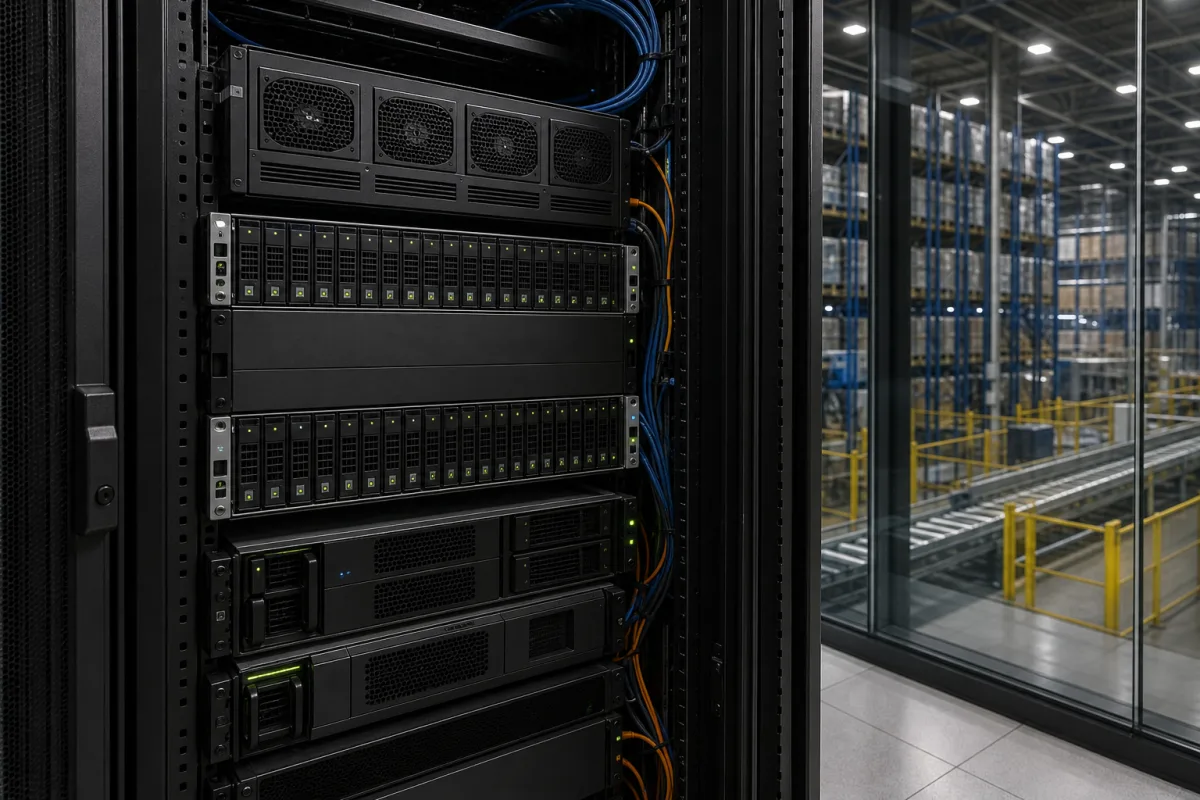
Representative product image. Confirm appearance and specifications with the manufacturer.

Product Specifications

Technical details and manufacturing context for Database Server

Definition
The Database Server is a critical hardware component of the Central Control System (WMS) responsible for the centralized storage, organization, retrieval, and management of all warehouse operational data. It serves as the primary data repository for inventory records, transaction logs, order information, location data, and system configurations, ensuring data integrity, security, and availability for the WMS software applications. This server is designed to handle high-concurrency workloads typical of warehouse management, supporting virtualization and multiple simultaneous users. It typically features Intel Xeon Scalable processors, memory capacities ranging from 64 to 512 GB, and storage capacities from 4 to 48 TB, with RAID 10 recommended for data redundancy. Network throughput is provided via dual 10GbE ports, with options up to 100 Gbps. The server is built with redundant hot-swappable power supplies (1+1) to ensure continuous operation. It operates within a temperature range of 10–35°C and a humidity range of 20–80% RH (non-condensing). The ingress protection rating varies from IP20 to IP54, depending on the environment, and rack heights range from 1U to 4U. Maximum power consumption is between 500 and 2000 W, and the mean time between failures (MTBF) is estimated at 50,000 to 100,000 hours. The server is constructed from electronic components (CPU, RAM, storage controllers), a server-grade chassis (steel/aluminum), printed circuit boards, and data storage media (HDDs/SSDs). It runs database management system software such as SQL Server, Oracle, or PostgreSQL, and communicates with WMS application servers via network protocols. The Database Server is a component-level product; for specific model details, always verify with the legal manufacturer or supplier.
Working Principle
The Database Server operates by running database management system (DBMS) software (e.g., SQL Server, Oracle, PostgreSQL) on dedicated server hardware. It receives data queries and transaction requests from WMS application servers via network protocols. The server's processor executes these requests, reading from or writing to high-speed storage drives (HDDs/SSDs) organized in a structured database schema. It manages concurrent access, maintains data consistency through transaction logging, and performs backup and recovery operations to ensure continuous data availability for warehouse control functions.
Common Materials
Electronic components (CPU, RAM, storage controllers), Server-grade chassis (steel/aluminum), Printed circuit boards, Data storage media (HDDs/SSDs)
Technical Parameters
ParameterTypical rangeNotes & selection driver
Processor TypeIntel Xeon ScalableSupports virtualization and high concurrency
Memory Capacity64–512 GBMinimum 64 GB for WMS workloads
Storage Capacity4–48 TBRAID 10 recommended for data redundancy
Network Throughput10–100 GbpsDual 10GbE ports standard
Power Supply Redundancy1+1Hot-swappable redundant power supplies
Operating Temperature10–35 °CAbove 35°C may cause thermal throttling
Humidity Range20–80 % RHNon-condensing
Ingress Protection RatingIP20–IP54IP54 for dusty environmentsIEC 60529
Rack Height1U–4U1U for space-constrained, 4U for expandability
Max Power Consumption500–2000 WDepends on configuration
MTBF50000–100000 hHigher MTBF indicates better reliability

Ranges are indicative industry figures for RFQ preparation, not a supplier commitment. Confirm every value and standard with the legal manufacturer before ordering.

Components / BOM
  • Central Processing Unit (CPU)
    Executes database queries, transactions, and management operations.
    Material: Silicon semiconductor
  • Memory Modules (RAM)
    Provides high-speed temporary storage for active data and query caching.
    Material: Electronic components on PCB
  • Storage Array
    Persistent storage for database files, transaction logs, and backups.
    Material: Hard disk drives (HDDs) or solid-state drives (SSDs)
  • Network Interface Card (NIC)
    Handles network communication with WMS application servers and other system components.
    Material: Electronic components on PCB
  • RAID Controller
    Manages multiple storage drives for data redundancy, performance, and reliability.
    Material: Electronic components on PCB

Applied To / Applications

This component is essential for the following industrial systems and equipment:

Industrial Ecosystem & Supply Chain Structure

Complementary Systems
Downstream Applications
Specialized Tooling

Application Fit & Sizing Matrix

Operational Limits
pressure: N/A (electronic component)
other spec: Humidity: 20% to 80% non-condensing, Power: 100-240V AC, 50-60Hz
temperature: 10°C to 35°C (operating), 0°C to 50°C (storage)
Media Compatibility
✓ Standard SQL databases (Oracle, SQL Server, PostgreSQL) ✓ NoSQL databases (MongoDB, Cassandra) ✓ Time-series databases (InfluxDB, TimescaleDB)
Unsuitable: High-vibration industrial floor environments without proper isolation
Sizing Data Required
  • Estimated data volume (TB) and growth rate
  • Concurrent user connections and query load
  • Required uptime/SLA and redundancy level

Reliability & Engineering Risk Analysis

Failure Mode & Root Cause
Disk Drive Mechanical Failure
Cause: Wear and tear of moving parts (spindle motors, actuator arms, bearings) due to continuous operation, thermal cycling, or mechanical shock/vibration exceeding specifications.
Memory Module Corruption/ECC Failure
Cause: Data corruption from bit flips due to cosmic radiation (soft errors), electrical noise, or physical degradation of memory cells from thermal stress and voltage fluctuations over time.
Maintenance Indicators
  • Audible: Unusual clicking, grinding, or repetitive beeping sounds from the server chassis, indicating potential imminent hard drive or fan failure.
  • Visual/System: Critical alerts in system logs for 'Uncorrectable ECC errors', 'SMART failure predicted', or 'RAID degradation' warnings on monitoring dashboards.
Engineering Tips
  • Implement predictive maintenance: Use server monitoring tools to track SMART attributes for drives, memory ECC error rates, and component temperatures. Schedule replacements based on trend analysis before catastrophic failure.
  • Optimize operating environment: Maintain strict environmental controls (temperature 18-27°C, humidity 40-60%), use vibration-dampening server racks, and ensure clean, stable power with UPS backup to reduce electrical and thermal stress on components.

Indicative industry ranges for design and RFQ preparation. Confirm the exact figures and applicable standard with the manufacturer before specifying.

Compliance & Manufacturing Standards

Applicable Standards
ANSI/TIA-942-C - Data center telecommunications infrastructure standards CE Marking - Compliance with EU safety, health, and environmental requirements

Quoted from the published standard.

Manufacturing Precision
  • Server rack mounting hole alignment: +/- 0.5mm
  • Power supply voltage regulation: +/- 5% of nominal rating
Quality Inspection
  • Thermal cycling test (operational stability under temperature variations)
  • Electromagnetic compatibility (EMC) testing for interference and susceptibility

Manufacturers of Database Server

Manufacturer profiles associated with Database Server.

Sourcing Database Server from China?
Tell us your specification and target quantity — we will match it against manufacturer records and come back with the factories that fit.
Request manufacturers We manufacture this

Manufacturer listings support early research and capability understanding. They are not certification, ranking, or transaction guarantees.

Technical documentation
Request current drawings, revision history, and a signed specification sheet.
Manufacturing capability
Verify equipment lists, process limits, capacity, and representative production evidence.
Inspection readiness
Confirm test methods, calibrated equipment, sampling plans, and traceable reports.
Supplier transparency
Check the legal entity, factory address, ownership, certifications, and direct contacts.

CNFX does not score or rank suppliers. Buyers must verify all claims and documents with the legal manufacturer before ordering.

Supply Chain Compatible Machinery & Devices

Industrial Smart Camera Module

The Industrial Smart Camera Module is a compact, self-contained vision processing unit designed for integration into industrial machinery and production lines.

Explore Specs →
Surface Mount Resistor

Passive electronic component for current limiting and voltage division in circuits

Explore Specs →
Surface Mount Capacitor

A surface mount capacitor is a fundamental electronic component used for energy storage, filtering, coupling, and decoupling in electronic circuits.

Explore Specs →
Surface Mount Technology (SMT) Pick-and-Place Machine

Automated machine that precisely places electronic components onto printed circuit boards.

Explore Specs →

Frequently Asked Questions

What is the typical processor type for this Database Server?

The processor type is listed as Intel Xeon Scalable, which supports virtualization and high concurrency. However, the exact model and configuration should be confirmed with the manufacturer for your specific application.

What storage capacity options are available?

The storage capacity ranges from 4 to 48 TB, with RAID 10 recommended for data redundancy. The actual capacity depends on the configuration and should be verified with the supplier.

What are the environmental operating limits?

The server operates within a temperature range of 10–35°C and a humidity range of 20–80% RH (non-condensing). Above 35°C, thermal throttling may occur. Always check the manufacturer's specifications for your environment.

What is the ingress protection rating?

The ingress protection rating ranges from IP20 to IP54, depending on the model and environment. IP54 is suitable for dusty environments. Verify the specific rating with the manufacturer.

Data Basis

Editorial classification, named public sources where available, and source-reviewed manufacturer records.

Preliminary Technical Classification
This page supports structured research, RFQ preparation, and supplier evaluation. It does not replace buyer-led supplier qualification, standards review, or technical approval.
Buyer enquiry

Request manufacturing insight for Database Server

Ask for use case, specification boundaries, supplier type, and RFQ preparation information for this product.

Where it goes
Straight to the CNFX editorial desk, and to the manufacturer if this product is linked to a claimed profile. Nothing is broadcast to a supplier list.
Your details stay here
We do not sell or rent enquiry data, and we do not add you to a mailing list. Used only to answer this request.
No commission, no middleman
CNFX is a directory. We take no cut of any order and never negotiate on a supplier's behalf.
What we don't claim
A listing is not an endorsement. Qualify every supplier and verify every figure yourself before ordering.

Your business information is used only to process this request.

Thank you! Your message has been sent. We'll respond within 1–3 business days.
Sorry, we couldn't send your message. Please try again, or email us at contact@cnfx.com.

Need to Manufacture Database Server?

Compare manufacturer profiles with relevant product and process capability.

Previous Product
XY Positioning Stage
Last Product
Get QuotesChat