Industry-Verified Manufacturing Data (2026)

Memory Modules (RAM)

Based on aggregated insights from multiple verified factory profiles within the CNFX directory, the standard Memory Modules (RAM) used in the Computer, Electronic and Optical Product Manufacturing sector typically supports operational capacities ranging from standard industrial configurations to heavy-duty production requirements.

Technical Definition & Core Assembly

A canonical Memory Modules (RAM) is characterized by the integration of Memory Chips and PCB (Printed Circuit Board). In industrial production environments, manufacturers listed on CNFX commonly emphasize Silicon construction to support stable, high-cycle operation across diverse manufacturing scenarios.

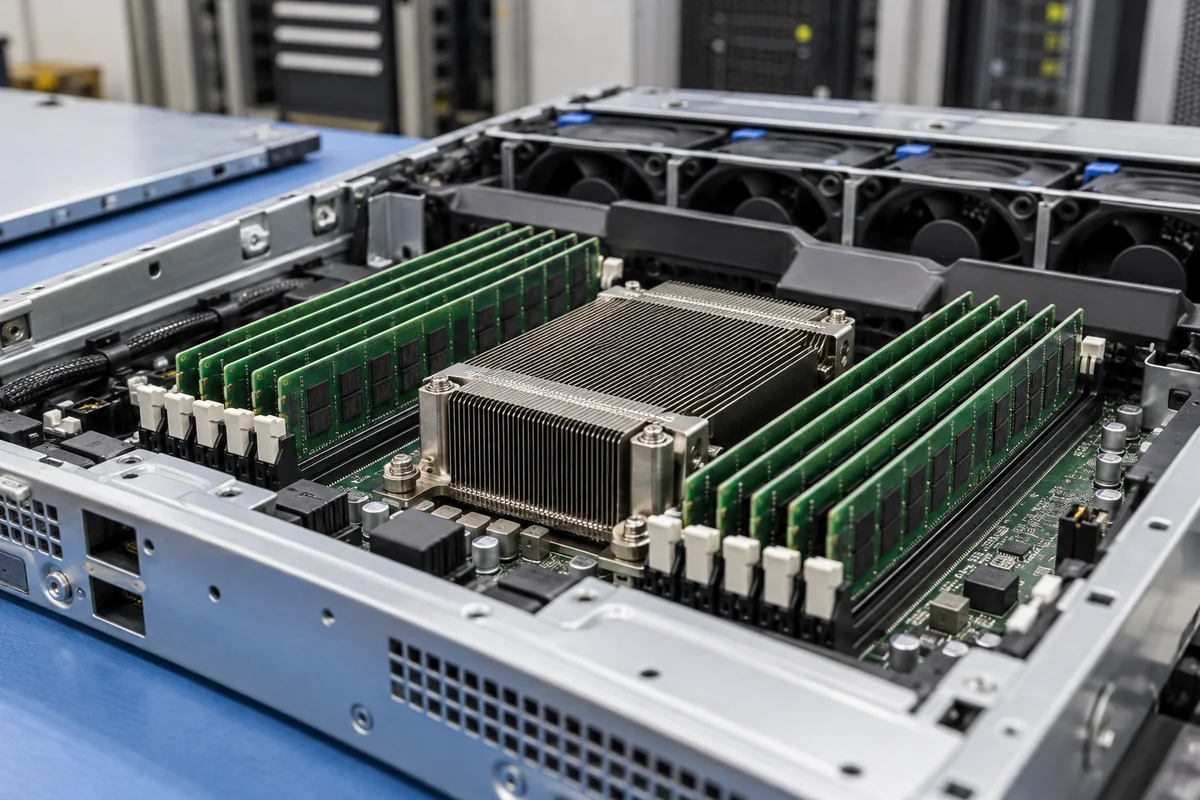
Electronic components that provide temporary data storage for database servers, enabling fast access to frequently used information.
Product Specifications

Technical details and manufacturing context for Memory Modules (RAM)

Definition
Memory modules (RAM) are critical hardware components in database servers that store data temporarily while the server is operational. They allow the database management system to quickly retrieve and manipulate data, significantly improving query performance and overall system responsiveness. In database environments, RAM serves as a high-speed cache between the CPU and slower storage devices like hard drives or SSDs.
Working Principle
RAM modules store data in integrated circuits using capacitors and transistors. When the database server needs to access data, it retrieves it from RAM rather than slower storage media. RAM operates on the principle of random access, meaning any storage location can be accessed directly without reading preceding data. Data in RAM is volatile and requires constant electrical power to maintain stored information.
Common Materials
Silicon, Copper, Gold, Plastic
Technical Parameters
  • Memory capacity measured in gigabytes (GB) or terabytes (TB) (GB) Customizable
Components / BOM
  • Memory Chips
    Store data in integrated circuits
    Material: Silicon
  • PCB (Printed Circuit Board)
    Provides electrical connections between components
    Material: Fiberglass with copper traces
  • Gold Contacts
    Electrical interface with motherboard memory slots
    Material: Gold-plated copper
  • Heat Spreader
    Dissipates heat generated during operation
    Material: Aluminum or copper
Engineering Reasoning
1.2-1.35 V (operating voltage), 0-85°C (ambient temperature), 0-95% relative humidity (non-condensing)
Voltage exceeding 1.5 V causes dielectric breakdown in DRAM cells; temperature exceeding 125°C initiates solder joint fatigue; relative humidity exceeding 95% enables electrochemical migration
Design Rationale: Electromigration in copper interconnects at current densities exceeding 10⁶ A/cm²; thermal expansion mismatch between silicon die (CTE 2.6 ppm/°C) and PCB substrate (CTE 16 ppm/°C); time-dependent dielectric breakdown at electric fields exceeding 10 MV/cm
Risk Mitigation (FMEA)
Trigger Alpha particle radiation from packaging materials causing single-event upsets
Mode: Bit flips in DRAM cells leading to data corruption
Strategy: Error-correcting code (ECC) with Hamming distance 4, implementing SECDED (single-error correction, double-error detection)
Trigger Thermal cycling between 20-100°C at 5 cycles/hour
Mode: Solder joint fatigue at ball grid array interfaces following Coffin-Manson relationship
Strategy: Underfill epoxy with CTE 25 ppm/°C and glass transition temperature 150°C, plus thermal interface material with 5 W/m·K conductivity

Industry Taxonomies & Aliases

Commonly used trade names and technical identifiers for Memory Modules (RAM).

Applied To / Applications

This component is essential for the following industrial systems and equipment:

Industrial Ecosystem & Supply Chain DNA

Complementary Systems
Downstream Applications
Specialized Tooling

Application Fit & Sizing Matrix

Operational Limits
voltage: 1.2V to 1.35V (typical), ±5% tolerance
humidity: 5% to 95% non-condensing
frequency: 1600MHz to 4800MHz (DDR4/DDR5 range)
temperature: 0°C to 85°C (operating), -40°C to 95°C (storage)
Media Compatibility
✓ Enterprise server motherboards ✓ Database server racks ✓ High-performance computing clusters
Unsuitable: High-vibration industrial environments without proper shock mounting
Sizing Data Required
  • Server motherboard memory slot type (DDR4/DDR5, DIMM/RDIMM/LRDIMM)
  • Required total system memory capacity (GB/TB)
  • Maximum supported memory speed by CPU/chipset (MHz)

Reliability & Engineering Risk Analysis

Failure Mode & Root Cause
Data corruption and bit errors
Cause: Electromigration in semiconductor traces due to high current density and thermal cycling, leading to open circuits or increased resistance; alpha particle or cosmic ray strikes causing single-event upsets (SEUs) in memory cells.
Intermittent connection failures
Cause: Thermal expansion mismatch between RAM module PCB and connector pins, causing solder joint fatigue (tin whisker growth or cracking); oxidation or contamination of gold-plated contacts from humidity, dust, or handling residues.
Maintenance Indicators
  • System reports correctable error (ECC) counts spiking in logs, or frequent blue screens/crashes with memory-related error codes (e.g., Windows 'MEMORY_MANAGEMENT' BSOD).
  • Visible signs on RAM modules: discoloration or burn marks near ICs or voltage regulators indicating overheating, or bent/misaligned pins on the connector edge.
Engineering Tips
  • Implement active cooling with directed airflow over RAM modules and maintain ambient temperature below 40°C to reduce electromigration rates and thermal stress on solder joints.
  • Use anti-static handling procedures during installation/maintenance, and apply periodic contact cleaning with isopropyl alcohol and a fiberglass brush to remove oxidation from edge connectors.

Compliance & Manufacturing Standards

Reference Standards
ISO/IEC 24775:2017 - Information technology - Storage management ANSI/EIA-364-65C - Electrical Connector/Socket Test Procedures Including Environmental Classifications CE Marking - Directive 2014/35/EU (Low Voltage Directive) and 2014/30/EU (EMC Directive)
Manufacturing Precision
  • PCB Trace Width/Spacing: +/-10% of nominal design
  • Component Placement Accuracy: +/-0.1mm from specified coordinates
Quality Inspection
  • Electrical Functionality Test - Full memory access and timing verification
  • X-ray Inspection - Internal solder joint and component placement analysis

Factories Producing Memory Modules (RAM)

Verified manufacturers with capability to produce this product in China

✓ 93% Supplier Capability Match Found

P Procurement Specialist from Germany Jan 03, 2026
★★★★★
"The Memory Modules (RAM) we sourced perfectly fits our Computer, Electronic and Optical Product Manufacturing production line requirements."
Technical Specifications Verified
T Technical Director from Brazil Dec 31, 2025
★★★★★
"Found 27+ suppliers for Memory Modules (RAM) on CNFX, but this spec remains the most cost-effective."
Technical Specifications Verified
P Project Engineer from Canada Dec 28, 2025
★★★★★
"The technical documentation for this Memory Modules (RAM) is very thorough, especially regarding technical reliability."
Technical Specifications Verified
Verification Protocol

“Feedback is collected from verified sourcing managers during RFQ (Request for Quote) and factory evaluation processes on CNFX. These reports represent historical performance data and technical audit summaries from our B2B manufacturing network.”

8 sourcing managers are analyzing this specification now. Last inquiry for Memory Modules (RAM) from Turkey (57m ago).

Supply Chain Compatible Machinery & Devices

Industrial IoT Gateway

Edge computing device connecting industrial equipment to cloud platforms.

Explore Specs →
Modular Industrial Edge Computing Device

Rugged computing platform for industrial data processing at the network edge

Explore Specs →
Industrial Smart Camera Module

Embedded vision system for industrial automation and quality inspection.

Explore Specs →
Industrial Wireless Power Transfer Module

Wireless power transfer module for industrial equipment applications

Explore Specs →

Frequently Asked Questions

What are the key benefits of using gold contacts in memory modules?

Gold contacts provide superior conductivity, corrosion resistance, and durability compared to other metals, ensuring reliable data transfer and longer lifespan in server environments.

How do heat spreaders improve RAM performance in database servers?

Heat spreaders dissipate thermal energy from memory chips, preventing overheating that can cause data errors, slowdowns, or hardware failure, thus maintaining optimal performance during intensive database operations.

What makes these memory modules suitable for electronic and optical product manufacturing?

These modules use high-quality materials like silicon, copper, and gold with precise PCB manufacturing, meeting industrial standards for reliability, compatibility, and performance in specialized computing applications.

Can I contact factories directly on CNFX?

CNFX is an open directory, not a transaction platform. Each factory profile provides direct contact information and production details to help you initiate direct inquiries with Chinese suppliers.

Get Quote for Memory Modules (RAM)

Request technical pricing, lead times, or customized specifications for Memory Modules (RAM) directly from verified manufacturing units.

Your business information is encrypted and only shared with verified Memory Modules (RAM) suppliers.

Thank you! Your message has been sent. We'll respond within 1–3 business days.

Need to Manufacture Memory Modules (RAM)?

Connect with verified factories specializing in this product category

Add Your Factory Contact Us
Previous Product
Memory Modules
Next Product
Memory Subsystem