Image Processing Computer
View system integration details
This page explains how Frame Grabber / Vision Interface Card is classified within Computer, Electronic and Optical Product Manufacturing. Technical values and manufacturer relationships are research references; confirm the current specification and supplier evidence for each order.
A hardware component that captures and digitizes video frames from cameras for computer processing.
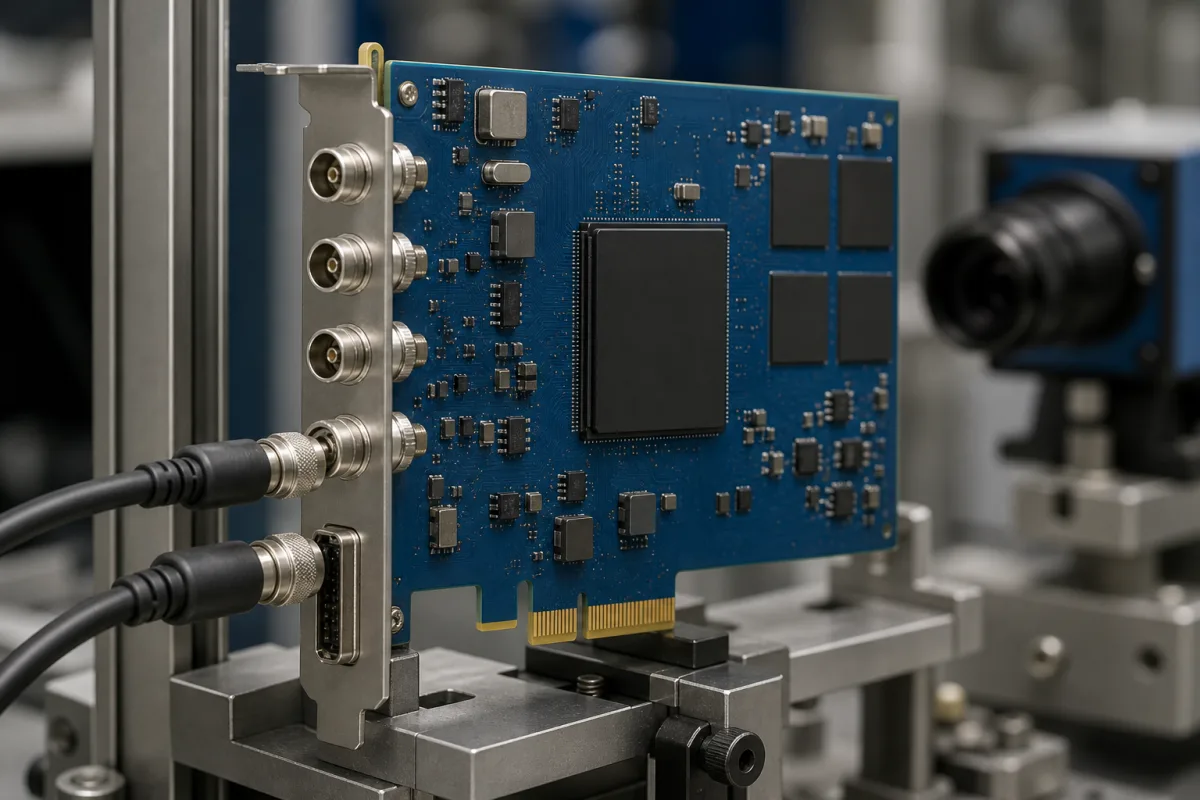
Technical details and manufacturing context for Frame Grabber / Vision Interface Card
| Parameter | Typical range | Notes & selection driver |
|---|---|---|
| Video Input Interface | GigE Vision, Camera Link, CoaXPress | Determines camera compatibility and bandwidth. |
| Maximum Frame Rate | 60–120 fps | Higher frame rates require more bandwidth and processing power. |
| Resolution Support | VGA–4K | Higher resolutions require more memory and bandwidth. |
| Pixel Clock | 25–85 MHz | Determines maximum data rate from camera. |
| Data Transfer Rate | 1–10 Gbps | Higher rates support higher resolutions and frame rates. |
| Onboard Memory | 256–1024 MB | Buffers frames to prevent data loss during burst capture. |
| Operating Temperature | 0–60 °C | Outside this range, performance may degrade or fail. |
| Storage Temperature | -40–85 °C | Non-operating storage limits. |
| Operating Humidity | 10–90 % RH | Non-condensing; higher humidity may cause corrosion. |
| Power Consumption | 5–15 W | Affects system power budget and cooling requirements. |
| Supply Voltage | 12 ±5% V DC | Must match system power supply; overvoltage can damage card. |
| MTBF | 50000–100000 hours | Reliability indicator; higher is better for industrial use. |
| Dimensions | 167.64 × 111.15 mm | Standard PCIe card footprint; check slot compatibility. |
| Weight | 100–200 g | Affects mechanical mounting and vibration resistance. |
Ranges are indicative industry figures for RFQ preparation, not a supplier commitment. Confirm every value and standard with the legal manufacturer before ordering.
Commonly used trade names and technical identifiers for Frame Grabber / Vision Interface Card.
This component is essential for the following industrial systems and equipment:
| pressure: | N/A (electronic component, no pressure rating) |
| other spec: | Humidity: 10% to 90% non-condensing, Power: 3.3V/5V PCIe slot, ESD: ±8kV contact discharge |
| temperature: | 0°C to 70°C (operating), -40°C to 85°C (storage) |
Indicative industry ranges for design and RFQ preparation. Confirm the exact figures and applicable standard with the manufacturer before specifying.
Quoted from the published standard.
1 company lists this product among what they make. Company figures are quoted from each company's own website; every card states where the relationship came from.
Manufacturer listings support early research and capability understanding. They are not certification, ranking, or transaction guarantees.
A practical evidence checklist for RFQ preparation and supplier evaluation.
CNFX does not score or rank suppliers. Buyers must verify all claims and documents with the legal manufacturer before ordering.
A frame grabber captures video signals from cameras, digitizes them if necessary, and transfers the image data to a computer for processing. It acts as the interface between the camera and the host system.
Common interfaces include GigE Vision, Camera Link, and CoaXPress. The specific interface determines camera compatibility and bandwidth, so it must match the camera's output.
Typical ranges include frame rates of 60–120 fps, resolution support from VGA to 4K, pixel clock of 25–85 MHz, and data transfer rates of 1–10 Gbps. These are reference values and should be confirmed for the specific model.
Check the datasheet for the exact parameters such as interface, frame rate, resolution, memory, and environmental limits. Always consult the legal manufacturer or supplier to confirm model-specific values and standards.
Editorial classification, named public sources where available, and source-reviewed manufacturer records.
Ask for use case, specification boundaries, supplier type, and RFQ preparation information for this product.
Compare manufacturer profiles with relevant product and process capability.