Editorial Technical Reference

Housing with Cooling

This page explains how Housing with Cooling is classified within Computer, Electronic and Optical Product Manufacturing. Technical values and manufacturer relationships are research references; confirm the current specification and supplier evidence for each order.

Technical Definition & Core Assembly

A protective enclosure for line scan camera components that incorporates cooling mechanisms to dissipate heat generated during operation.
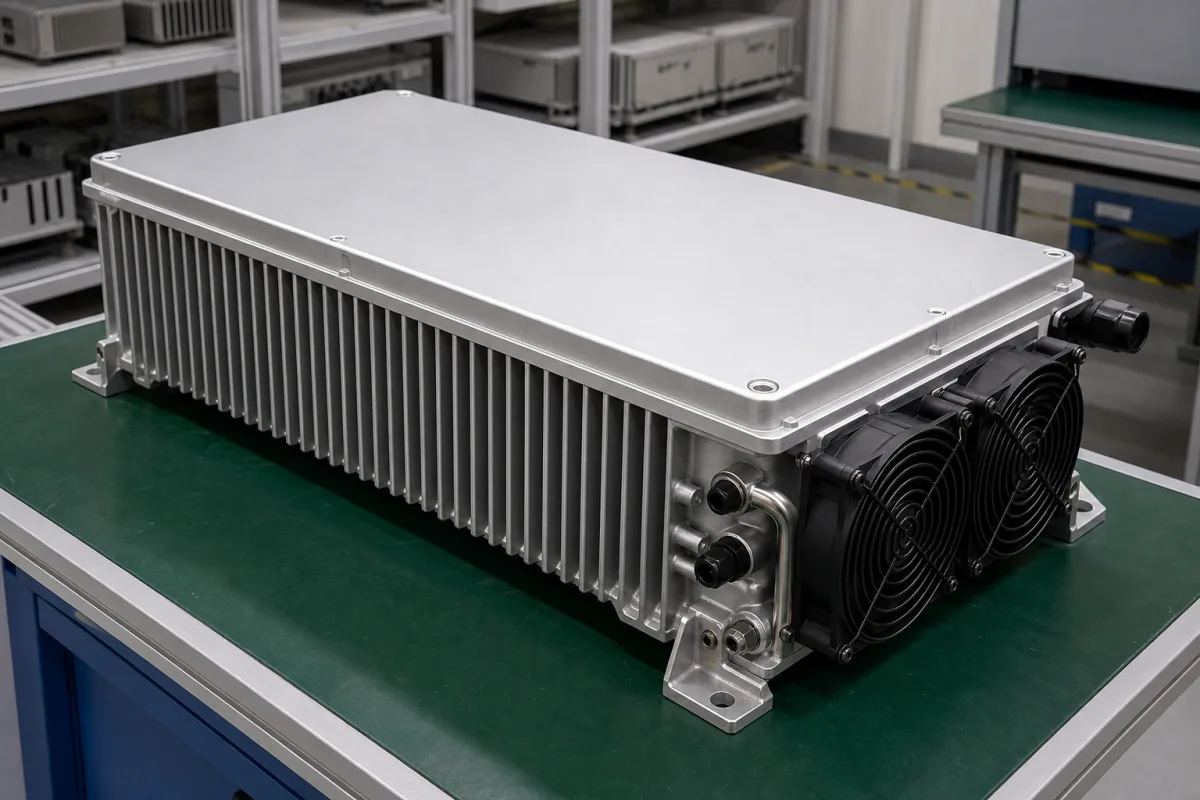
Representative product image. Confirm appearance and specifications with the manufacturer.

Product Specifications

Technical details and manufacturing context for Housing with Cooling

Definition
The Housing with Cooling is a component used in line scan camera systems. It serves as a protective enclosure for sensitive optical and electronic parts while also managing heat. The housing maintains optimal operating temperatures by dissipating heat from the imaging sensor, processing electronics, and illumination sources during continuous scanning. This helps ensure consistent image quality and prevents thermal damage to internal components.

The housing provides structural protection and includes cooling elements such as heat sinks, thermal pads, or integrated cooling channels. Heat generated inside is transferred to the housing material and then dissipated to the environment through conduction, convection, or forced air cooling. Some models use liquid cooling for higher heat loads. The housing is typically made from aluminum alloy or thermally conductive plastic, with aluminum 6061-T6 listed as a material option.

Key parameters include cooling capacity (50–200 W), operating temperature range (-10 to 50 °C), cooling method (air or liquid), IP rating (IP54–IP65 per IEC 60529), dimensions (150×80×60 mm), weight (1.5–2.5 kg), input voltage (24 V DC ±10%), power consumption (10–30 W), coolant flow rate (1–5 L/min for liquid cooling), noise level (≤50 dB(A) at 1 m per ISO 3744), and pressure drop (≤0.1 MPa for liquid cooling). These values are reference ranges and must be verified for the specific model and application.

When selecting a housing, confirm the required cooling capacity based on the camera's heat output, the operating environment (temperature, dust, moisture), and the available cooling method (air or liquid). Verify that the housing dimensions and mounting interfaces match the camera components. Check the IP rating for environmental protection and the input voltage for compatibility with the power supply. For liquid cooling models, ensure the coolant flow rate and pressure drop are within system capabilities.

Maintenance signals include reduced cooling performance, unusual noise from fans or pumps, or visible damage to the housing. Failure boundaries include operating outside the specified temperature range, exceeding the cooling capacity, or using incompatible coolants. Always verify model-specific values and standards with the legal manufacturer or supplier.
Working Principle
The housing provides structural protection while incorporating cooling elements such as heat sinks, thermal pads, or integrated cooling channels. Heat generated by internal components is transferred to the housing material, which then dissipates it to the surrounding environment through conduction, convection, or forced air cooling systems, maintaining the camera within its specified temperature range.
Common Materials
Aluminum alloy, Thermally conductive plastic
Technical Parameters
ParameterTypical rangeNotes & selection driver
Cooling Capacity50–200 WRequired to maintain operating temperature
Operating Temperature-10–50 °COutside range may affect cooling performance
Cooling MethodAir or liquidAir cooling for standard, liquid for high heat
IP RatingIP54–IP65Higher rating for dusty or wet environmentsIEC 60529
MaterialAluminum 6061-T6Corrosion resistant, lightweightASTM B221
Dimensions (L×W×H)150×80×60 mmCustomizable per camera size
Weight1.5–2.5 kgDepends on cooling configuration
Input Voltage24 ±10% V DCFor cooling fans or pumps
Power Consumption10–30 WFor cooling system only
Coolant Flow Rate1–5 L/minFor liquid cooling models
Noise Level≤50 dB(A)At 1m distanceISO 3744
Pressure Drop≤0.1 MPaFor liquid cooling circuit

Ranges are indicative industry figures for RFQ preparation, not a supplier commitment. Confirm every value and standard with the legal manufacturer before ordering.

Components / BOM
  • Heat Sink Part
    Increases surface area for heat dissipation through fins or other structures
    Material: Aluminum
  • Thermal Interface Material Part
    Improves heat transfer between components and housing
    Material: Thermal paste or pad
  • Mounting Brackets Part
    Secures the housing to the camera assembly and installation surface
    Material: Stainless steel
  • Housing Body
    The enclosure the product is named for; protects the internals and is the surface the heat is conducted into.
  • Forced Air Cooling Optional
    Blows air over the fins on versions that cannot shed the heat passively.

Applied To / Applications

This component is essential for the following industrial systems and equipment:

Industrial Ecosystem & Supply Chain Structure

Complementary Systems
Downstream Applications
Specialized Tooling

Application Fit & Sizing Matrix

Operational Limits
pressure: Atmospheric to 1.5 bar internal pressure differential
flow rate: Coolant flow rate: 0.5-5 L/min for optimal heat dissipation
temperature: -10°C to +50°C ambient, with cooling maintaining internal temperature below +40°C
slurry concentration: Not applicable - designed for clean air environments only
Media Compatibility
✓ Clean air environments ✓ Industrial machine vision systems ✓ Electronics cooling with forced air convection
Unsuitable: High particulate or corrosive chemical environments
Sizing Data Required
  • Camera component dimensions and heat generation (W)
  • Required internal temperature maintenance target
  • Available cooling method (air/water) and ambient conditions

Reliability & Engineering Risk Analysis

Failure Mode & Root Cause
Thermal fatigue cracking
Cause: Cyclic thermal stresses from repeated heating/cooling cycles, often due to uneven cooling flow, poor material selection for thermal expansion, or rapid temperature changes exceeding design limits.
Corrosion-induced leakage
Cause: Electrochemical degradation of housing material (e.g., galvanic corrosion at dissimilar metal joints, pitting from corrosive coolants/atmospheres) exacerbated by coolant contamination, inadequate protective coatings, or stagnant fluid conditions.
Maintenance Indicators
  • Visible coolant weeping or staining on housing exterior indicating seal/gasket failure or material degradation
  • Abnormal temperature differentials across housing surfaces (hot spots) detected via thermal imaging or touch, suggesting flow restriction or insulation breakdown
Engineering Tips
  • Implement predictive maintenance with periodic thermographic surveys to map thermal gradients and identify developing hot spots before cracking initiates
  • Optimize coolant chemistry control and filtration to maintain pH balance, inhibit biological growth, and remove particulates that accelerate erosion-corrosion

Indicative industry ranges for design and RFQ preparation. Confirm the exact figures and applicable standard with the manufacturer before specifying.

Compliance & Manufacturing Standards

Applicable Standards
ASTM E1530 - Standard Test Method for Evaluating the Resistance to Thermal Transmission of Materials CE Marking - Directive 2006/42/EC for Machinery Safety

Quoted from the published standard.

Manufacturing Precision
  • Flatness: +/-0.1mm per 100mm
  • Bore Diameter: +/-0.05mm
Quality Inspection
  • Dimensional Verification with CMM
  • Leak Test for Cooling System Integrity

Manufacturers of Housing with Cooling

Manufacturer profiles associated with Housing with Cooling.

Sourcing Housing with Cooling from China?
Tell us your specification and target quantity — we will match it against manufacturer records and come back with the factories that fit.
Request manufacturers We manufacture this

Manufacturer listings support early research and capability understanding. They are not certification, ranking, or transaction guarantees.

Technical documentation
Request current drawings, revision history, and a signed specification sheet.
Manufacturing capability
Verify equipment lists, process limits, capacity, and representative production evidence.
Inspection readiness
Confirm test methods, calibrated equipment, sampling plans, and traceable reports.
Supplier transparency
Check the legal entity, factory address, ownership, certifications, and direct contacts.

CNFX does not score or rank suppliers. Buyers must verify all claims and documents with the legal manufacturer before ordering.

Supply Chain Compatible Machinery & Devices

Industrial IoT Gateway

The Industrial IoT Gateway is a ruggedized edge computing device designed for industrial environments.

Explore Specs →
Modular Industrial Edge Computing Device

This modular industrial edge computing device is a ruggedized system designed for deployment in harsh industrial environments to perform real-time data processing, analytics, and control functions at the network edge.

Explore Specs →
Industrial Smart Camera Module

The Industrial Smart Camera Module is a compact, self-contained vision processing unit designed for integration into industrial machinery and production lines.

Explore Specs →
Surface Mount Resistor

Passive electronic component for current limiting and voltage division in circuits

Explore Specs →

Frequently Asked Questions

What is the purpose of the Housing with Cooling?

It protects sensitive optical and electronic components in a line scan camera while dissipating heat to maintain optimal operating temperatures, ensuring consistent image quality and preventing thermal damage.

What cooling methods are available?

Air cooling is standard, and liquid cooling is available for high heat loads. The specific method depends on the model and application requirements.

What are the typical operating temperature limits?

The reference operating temperature range is -10 to 50 °C. Operating outside this range may affect cooling performance and should be avoided.

How do I verify the housing meets my requirements?

Check the cooling capacity, dimensions, IP rating, input voltage, and other parameters against your camera's specifications. Always confirm model-specific values with the legal manufacturer or supplier.

Data Basis

Editorial classification, named public sources where available, and source-reviewed manufacturer records.

Preliminary Technical Classification
This page supports structured research, RFQ preparation, and supplier evaluation. It does not replace buyer-led supplier qualification, standards review, or technical approval.
Buyer enquiry

Request manufacturing insight for Housing with Cooling

Ask for use case, specification boundaries, supplier type, and RFQ preparation information for this product.

Where it goes
Straight to the CNFX editorial desk, and to the manufacturer if this product is linked to a claimed profile. Nothing is broadcast to a supplier list.
Your details stay here
We do not sell or rent enquiry data, and we do not add you to a mailing list. Used only to answer this request.
No commission, no middleman
CNFX is a directory. We take no cut of any order and never negotiate on a supplier's behalf.
What we don't claim
A listing is not an endorsement. Qualify every supplier and verify every figure yourself before ordering.

Your business information is used only to process this request.

Thank you! Your message has been sent. We'll respond within 1–3 business days.
Sorry, we couldn't send your message. Please try again, or email us at contact@cnfx.com.

Need to Manufacture Housing with Cooling?

Compare manufacturer profiles with relevant product and process capability.

Previous Product
High-Purity Silicon Wafer Substrate
Next Product
I/O Expansion Module
Get QuotesChat