Editorial Technical Reference

Lens Mount

This page explains how Lens Mount is classified within Computer, Electronic and Optical Product Manufacturing. Technical values and manufacturer relationships are research references; confirm the current specification and supplier evidence for each order.

Technical Definition & Core Assembly

Mechanical interface that connects a lens to an industrial camera body, ensuring precise alignment and secure attachment.
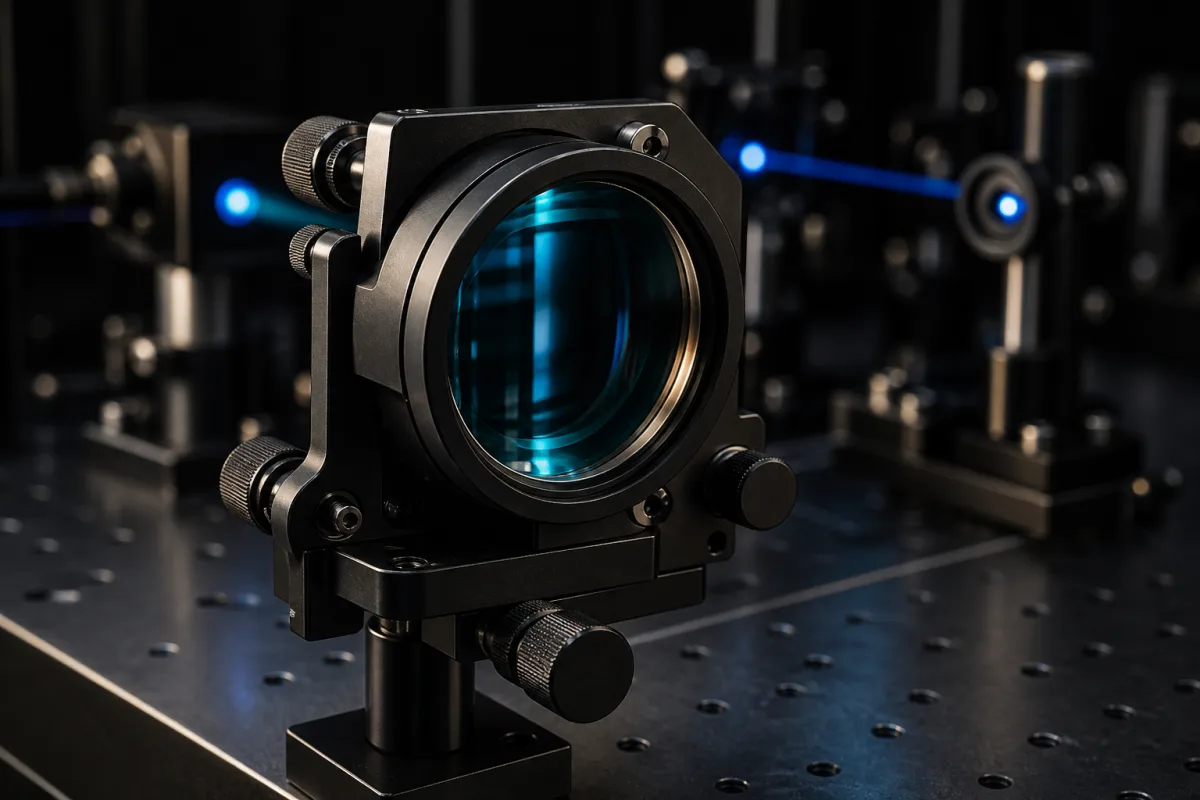
Representative product image. Confirm appearance and specifications with the manufacturer.

Product Specifications

Technical details and manufacturing context for Lens Mount

Definition
A lens mount is a critical mechanical component of an industrial camera system that provides the physical and optical interface between the camera body and interchangeable lenses. It ensures precise alignment of the lens optical axis with the camera sensor, maintains proper flange focal distance for accurate focus, and provides secure mechanical attachment. The mount includes mounting flanges, locking mechanisms, electrical contacts for lens communication, and sealing features for environmental protection in industrial applications. The design and materials of the lens mount are selected to withstand the rigors of industrial environments, including vibration, temperature variations, and exposure to dust or moisture. Common materials include stainless steel, aluminum alloy, and engineering plastics, each offering different trade-offs in weight, durability, and cost. The flange focal distance is a critical parameter, typically specified in millimeters, and must be maintained precisely to ensure that the lens focuses correctly on the sensor. This distance is a key specification that varies among different mount standards and must be matched between the camera body and the lens. When selecting a lens mount for an industrial application, it is essential to verify the specific mount type, flange focal distance, and any electrical or communication protocols required for the intended lens and camera combination. Always confirm model-specific values and standards with the legal manufacturer or supplier to ensure compatibility and performance.
Working Principle
The lens mount operates by providing a standardized mechanical interface with precise dimensional tolerances. When a compatible lens is attached, the mount's locking mechanism (typically bayonet or screw-type) secures the lens in place while maintaining exact flange focal distance. Electrical contacts on the mount enable communication between the camera and lens for functions like aperture control, autofocus, and image stabilization. The mechanical design ensures repeatable positioning for consistent optical performance across lens changes.
Common Materials
Stainless steel, Aluminum alloy, Engineering plastics
Technical Parameters

What to specify in your RFQ

  • Flange focal distance - the distance from the mounting flange to the image sensor plane in mm

These are the quantities to specify to the manufacturer when sizing or requesting a quote. The manufacturer's own documentation governs the exact figures and applicable standard.

Components / BOM
  • Mounting Flange Part
    Primary structural interface that connects to the camera body
    Material: Stainless steel
  • Locking Ring Part
    Secures the lens in place and maintains proper alignment
    Material: Aluminum alloy
  • Electrical Contacts Part
    Enable communication between camera and lens for electronic functions
    Material: Gold-plated copper
  • Sealing Gasket Part
    Provides environmental protection against dust and moisture
    Material: Silicone rubber

Applied To / Applications

This component is essential for the following industrial systems and equipment:

Industrial Ecosystem & Supply Chain Structure

Complementary Systems
Downstream Applications
Specialized Tooling

Application Fit & Sizing Matrix

Operational Limits
pressure: Atmospheric only (non-pressurized)
other spec: Vibration tolerance: ≤5g RMS, 10-2000 Hz
temperature: -20°C to +80°C
Media Compatibility
✓ Clean room air environments ✓ Dry inert gases (N2, Ar) ✓ Low particulate industrial atmospheres
Unsuitable: High moisture/condensing environments without protective coatings
Sizing Data Required
  • Camera body interface standard (e.g., C-mount, F-mount, M12)
  • Lens thread size and pitch
  • Required back focal distance tolerance

Reliability & Engineering Risk Analysis

Failure Mode & Root Cause
Thread wear and galling
Cause: Repeated installation/removal cycles, misalignment during mounting, or use of improper torque leading to metal-on-metal abrasion and thread deformation
Mounting surface contamination or corrosion
Cause: Exposure to environmental contaminants (dust, moisture, chemicals), inadequate sealing, or material incompatibility causing loss of optical alignment or binding
Maintenance Indicators
  • Excessive rotational resistance or binding during lens installation/removal
  • Visible wear, scoring, or discoloration on mounting threads or contact surfaces
Engineering Tips
  • Implement controlled torque procedures using calibrated tools and follow manufacturer's specifications to prevent over-tightening and thread damage
  • Establish regular cleaning protocols using appropriate solvents and lint-free materials, and apply manufacturer-recommended lubricants to mating surfaces to reduce friction and prevent corrosion

Indicative industry ranges for design and RFQ preparation. Confirm the exact figures and applicable standard with the manufacturer before specifying.

Compliance & Manufacturing Standards

Applicable Standards
ISO 10110-7:2017 (Optics and photonics - Preparation of drawings for optical elements and systems - Part 7: Surface imperfection tolerances) ANSI/ASME B46.1-2019 (Surface Texture, Surface Roughness, Waviness, and Lay) DIN 3140 (Dimensions for lens mounts and adapters)

Quoted from the published standard.

Manufacturing Precision
  • Bore diameter: +/-0.01mm
  • Mounting flange flatness: 0.02mm
Quality Inspection
  • Coordinate Measuring Machine (CMM) dimensional verification
  • Surface roughness measurement per ISO 4287

Manufacturers of Lens Mount

Manufacturer profiles associated with Lens Mount.

Sourcing Lens Mount from China?
Tell us your specification and target quantity — we will match it against manufacturer records and come back with the factories that fit.
Request manufacturers We manufacture this

Manufacturer listings support early research and capability understanding. They are not certification, ranking, or transaction guarantees.

Technical documentation
Request current drawings, revision history, and a signed specification sheet.
Manufacturing capability
Verify equipment lists, process limits, capacity, and representative production evidence.
Inspection readiness
Confirm test methods, calibrated equipment, sampling plans, and traceable reports.
Supplier transparency
Check the legal entity, factory address, ownership, certifications, and direct contacts.

CNFX does not score or rank suppliers. Buyers must verify all claims and documents with the legal manufacturer before ordering.

Supply Chain Compatible Machinery & Devices

Industrial Smart Camera Module

The Industrial Smart Camera Module is a compact, self-contained vision processing unit designed for integration into industrial machinery and production lines.

Explore Specs →
Surface Mount Resistor

Passive electronic component for current limiting and voltage division in circuits

Explore Specs →
Surface Mount Capacitor

A surface mount capacitor is a fundamental electronic component used for energy storage, filtering, coupling, and decoupling in electronic circuits.

Explore Specs →
Surface Mount Technology (SMT) Pick-and-Place Machine

Automated machine that precisely places electronic components onto printed circuit boards.

Explore Specs →

Frequently Asked Questions

What is the primary function of a lens mount?

The primary function is to provide a precise mechanical and optical interface between the camera body and the lens, ensuring correct alignment and secure attachment.

What is flange focal distance and why is it important?

Flange focal distance is the distance from the mounting flange to the image sensor plane. It must be maintained precisely for accurate focus and is a critical specification for compatibility.

What materials are commonly used for lens mounts?

Common materials include stainless steel, aluminum alloy, and engineering plastics, each offering different properties in terms of weight, durability, and cost.

How do I ensure compatibility between a lens and camera?

Verify the mount type, flange focal distance, and any electrical communication protocols with the legal manufacturer or supplier to ensure compatibility.

Data Basis

Editorial classification, named public sources where available, and source-reviewed manufacturer records.

Preliminary Technical Classification
This page supports structured research, RFQ preparation, and supplier evaluation. It does not replace buyer-led supplier qualification, standards review, or technical approval.
Buyer enquiry

Request manufacturing insight for Lens Mount

Ask for use case, specification boundaries, supplier type, and RFQ preparation information for this product.

Where it goes
Straight to the CNFX editorial desk, and to the manufacturer if this product is linked to a claimed profile. Nothing is broadcast to a supplier list.
Your details stay here
We do not sell or rent enquiry data, and we do not add you to a mailing list. Used only to answer this request.
No commission, no middleman
CNFX is a directory. We take no cut of any order and never negotiate on a supplier's behalf.
What we don't claim
A listing is not an endorsement. Qualify every supplier and verify every figure yourself before ordering.

Your business information is used only to process this request.

Thank you! Your message has been sent. We'll respond within 1–3 business days.
Sorry, we couldn't send your message. Please try again, or email us at contact@cnfx.com.

Need to Manufacture Lens Mount?

Compare manufacturer profiles with relevant product and process capability.

Previous Product
XY Positioning Stage
Last Product
Get QuotesChat