Synchronization Controller
View system integration details
This page explains how Master Clock Generator is classified within Computer, Electronic and Optical Product Manufacturing. Technical values and manufacturer relationships are research references; confirm the current specification and supplier evidence for each order.
A precision timing source that generates and distributes reference clock signals for synchronization systems.
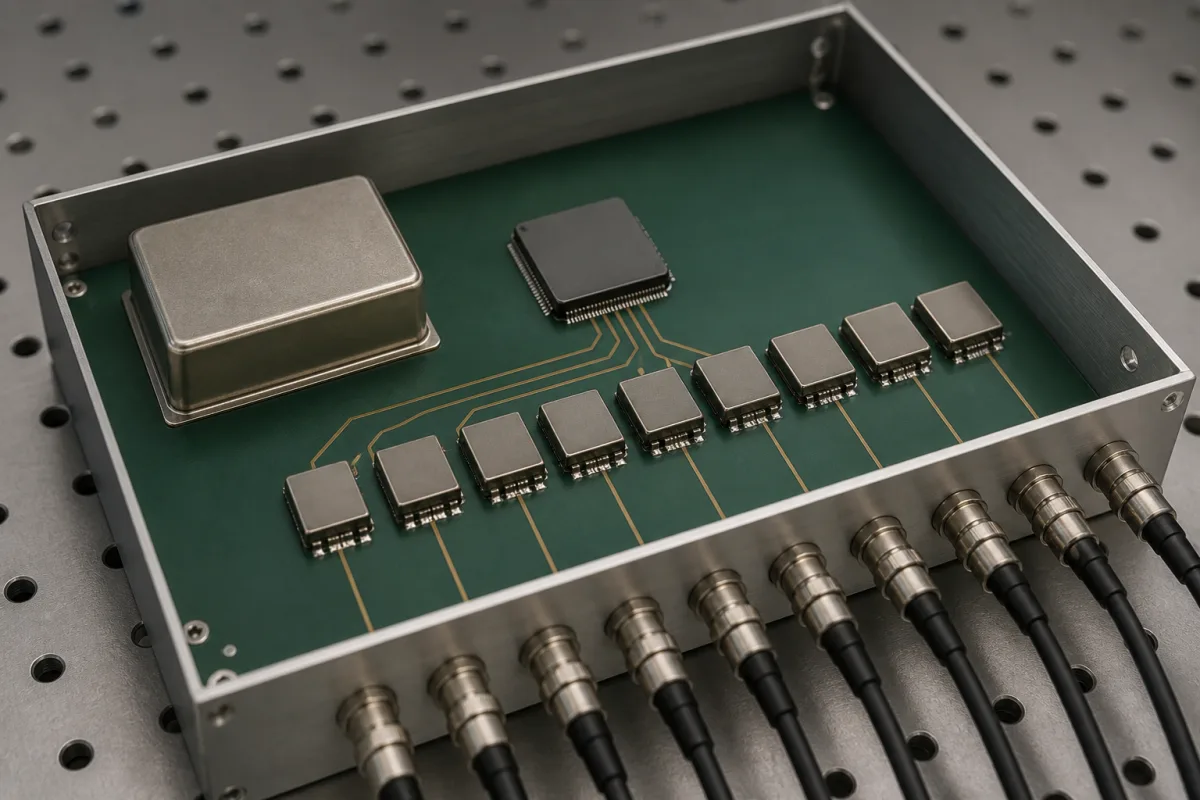
Technical details and manufacturing context for Master Clock Generator
| Parameter | Typical range | Notes & selection driver |
|---|---|---|
| Output Frequency | 10–100 MHz | Selectable via software or hardware |
| Frequency Stability | ±0.1 ppm | Over temperature range |
| Phase Noise | -140 dBc/Hz | At 10 kHz offset |
| Output Level | 0.8–3.3 V | LVCMOS or LVPECL compatible |
| Supply Voltage | 3.3 ±10% V DC | Single supply |
| Operating Temperature | -40–85 °C | Industrial grade |
| Humidity | 5–95 % RH | Non-condensing |
| Rise/Fall Time | ≤1 ns | At 20%–80% levels |
| Output Channels | 1–8 | Configurable |
| Dimensions | 100×60×25 mm | Module form factor |
| Weight | ≤150 g | Including enclosure |
Ranges are indicative industry figures for RFQ preparation, not a supplier commitment. Confirm every value and standard with the legal manufacturer before ordering.
| pressure: | Atmospheric (non-pressurized) |
| other spec: | Frequency stability: ±0.1 ppm, Output jitter: <1 ps RMS |
| temperature: | -40°C to +85°C |
Indicative industry ranges for design and RFQ preparation. Confirm the exact figures and applicable standard with the manufacturer before specifying.
Quoted from the published standard.
A practical evidence checklist for RFQ preparation and supplier evaluation.
Compare the published product scope and source details, then include your specifications and quantity in an enquiry.
Manufacturer profiles associated with Master Clock Generator.
Explore company information and manufacturing capabilities, then discuss the scope of your project with a relevant supplier.
Ask for use case, specification boundaries, supplier type, and RFQ preparation information for this product.
The output frequency is configurable from 10 to 100 MHz, selectable via software or hardware. The exact range and step size should be confirmed with the manufacturer for the specific model.
The frequency stability is ±0.1 ppm over the operating temperature range. This ensures precise timing even under varying environmental conditions.
The output levels are compatible with LVCMOS or LVPECL standards, with levels ranging from 0.8 to 3.3 V. This allows interfacing with various digital logic families.
The operating temperature range is -40 to 85 °C, and the humidity range is 5–95% RH (non-condensing). These ratings are for industrial-grade applications.
This component is essential for the following industrial systems and equipment:
Editorial classification, named public sources where available, and source-reviewed manufacturer records.
Compare manufacturer profiles with relevant product and process capability.