Industry-Verified Manufacturing Data (2026)

Memory Unit (RAM)

Based on aggregated insights from multiple verified factory profiles within the CNFX directory, the standard Memory Unit (RAM) used in the Computer, Electronic and Optical Product Manufacturing sector typically supports operational capacities ranging from standard industrial configurations to heavy-duty production requirements.

Technical Definition & Core Assembly

A canonical Memory Unit (RAM) is characterized by the integration of Memory Integrated Circuit (IC) / Die and Printed Circuit Board (PCB). In industrial production environments, manufacturers listed on CNFX commonly emphasize Semiconductor Silicon construction to support stable, high-cycle operation across diverse manufacturing scenarios.

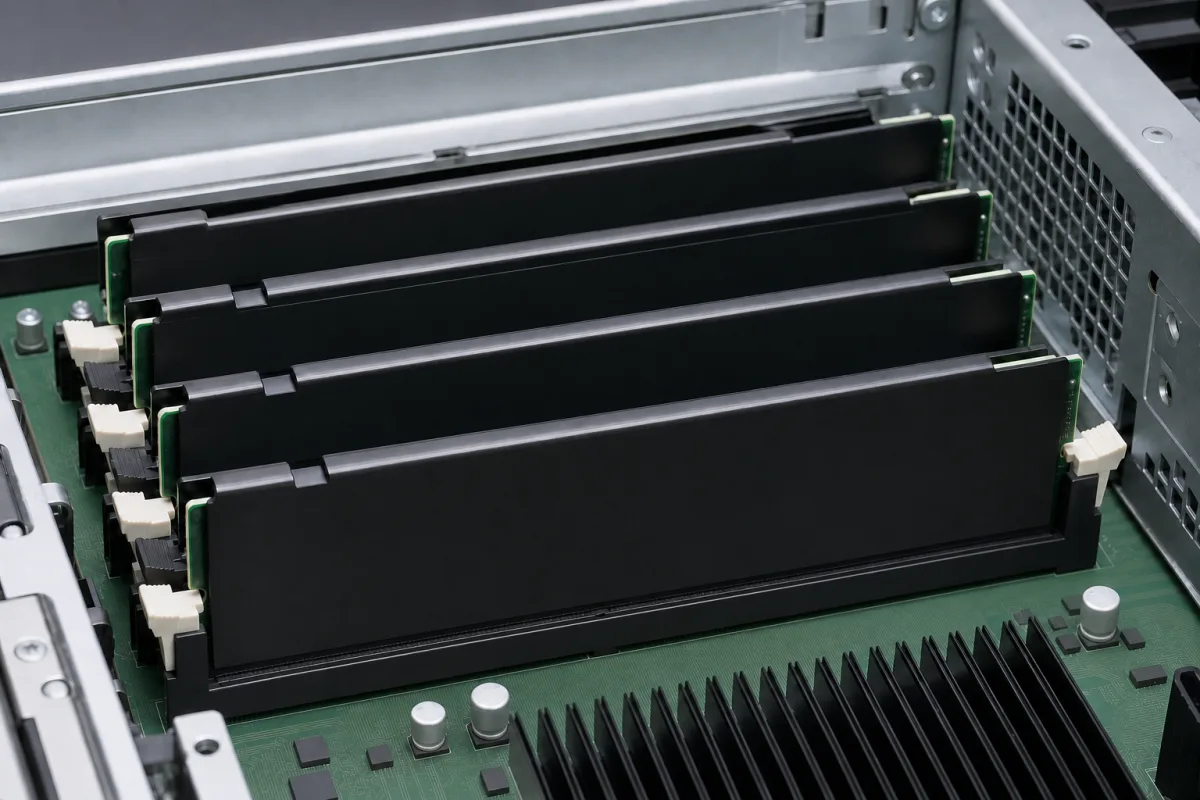
A volatile memory component within a computer system that temporarily stores data and program instructions for rapid access by the Central Processing Unit (CPU).
Product Specifications

Technical details and manufacturing context for Memory Unit (RAM)

Definition
The Memory Unit, specifically Random Access Memory (RAM), is a critical hardware component of the Central Processing Unit (CPU) subsystem. It serves as the CPU's primary working memory, providing high-speed, temporary storage for the data and machine code currently being processed. Unlike permanent storage (e.g., hard drives), RAM is volatile, meaning it loses its contents when power is removed. Its primary role is to act as a bridge between the fast CPU and slower storage devices, enabling efficient program execution and data manipulation by holding the active set of instructions and data the CPU needs at any given moment.
Working Principle
RAM operates by storing binary data (0s and 1s) in an array of memory cells, each typically composed of a capacitor and a transistor (in DRAM). The CPU sends an address via the address bus to specify which memory location to read from or write to. Data is then transferred over the data bus. Reading is non-destructive, while writing changes the state of the targeted cell. The memory controller manages timing, refresh cycles (for DRAM), and communication between the RAM modules and the CPU.
Common Materials
Semiconductor Silicon, Copper (for traces/interconnects), Plastic (for packaging/module substrate), Gold or Tin (for contact pins)
Technical Parameters
  • Capacity, measured in Gigabytes (GB), indicating the total amount of data the RAM module can hold. (GB) Standard Spec
Components / BOM
  • Memory Integrated Circuit (IC) / Die
    The core semiconductor chip containing the array of memory cells that store data.
    Material: Semiconductor Silicon
  • Printed Circuit Board (PCB)
    Provides the physical substrate, electrical pathways (traces), and mounting points for memory ICs and other components.
    Material: Fiberglass-reinforced epoxy laminate (e.g., FR4)
  • Memory Controller
    Integrated logic (often on the CPU or a separate chip) that manages data flow, address decoding, refresh commands, and timing for the RAM.
    Material: Semiconductor Silicon
  • Contact Pins (Edge Connector)
    Gold or tin-plated electrical contacts that connect the RAM module to the motherboard's memory slot.
    Material: Copper alloy with gold/tin plating
Engineering Reasoning
1.2-1.35 V (operating voltage), 0-85°C (temperature), 0.5-1.6 GHz (clock frequency)
Voltage: <1.14 V (data corruption), >1.4 V (dielectric breakdown); Temperature: >95°C (thermal runaway); Clock frequency: >1.7 GHz (timing violation)
Design Rationale: Electromigration at >10^6 A/cm² current density causing open circuits; Time-dependent dielectric breakdown at >10 MV/cm electric field; Alpha particle strikes from packaging materials causing single-event upsets
Risk Mitigation (FMEA)
Trigger Electromigration from sustained current density >2×10⁶ A/cm² at 85°C
Mode: Progressive resistance increase leading to timing failure and data corruption
Strategy: Copper interconnects with diffusion barriers and current density limits <1×10⁶ A/cm² in layout design
Trigger Row hammer effect: 139,000+ consecutive activations of adjacent memory rows
Mode: Capacitive coupling causing bit flips in adjacent memory cells
Strategy: Target row refresh (TRR) circuits with 64 ms refresh intervals and row activation counters

Industry Taxonomies & Aliases

Commonly used trade names and technical identifiers for Memory Unit (RAM).

Applied To / Applications

This component is essential for the following industrial systems and equipment:

Industrial Ecosystem & Supply Chain DNA

Complementary Systems
Downstream Applications
Specialized Tooling

Application Fit & Sizing Matrix

Operational Limits
voltage: 1.2V to 1.5V (depending on DDR generation)
frequency: 800 MHz to 6400 MHz (DDR3 to DDR5)
temperature: 0°C to 85°C (operating), -40°C to 125°C (storage)
power consumption: 1W to 5W per module
Media Compatibility
✓ Desktop/Server motherboards ✓ Laptop systems ✓ Embedded computing platforms
Unsuitable: High-vibration industrial environments without proper shock mounting
Sizing Data Required
  • Required memory capacity (GB)
  • System memory type compatibility (DDR generation)
  • Number of available memory slots/channels

Reliability & Engineering Risk Analysis

Failure Mode & Root Cause
Memory Cell Degradation
Cause: Electromigration and dielectric breakdown from prolonged high-temperature operation, voltage spikes, or manufacturing defects leading to bit errors and data corruption.
Solder Joint Fatigue
Cause: Thermal cycling from power on/off cycles or environmental temperature fluctuations causing mechanical stress, leading to intermittent connections or complete failure.
Maintenance Indicators
  • Frequent system crashes, blue screens, or application errors with memory-related codes (e.g., 'Memory Management' error in Windows)
  • Audible POST (Power-On Self-Test) beep codes indicating RAM failure (e.g., repetitive short beeps on many motherboards)
Engineering Tips
  • Implement proper cooling with adequate airflow and maintain ambient temperature below 40°C to reduce thermal stress on memory chips and solder joints.
  • Use ECC (Error-Correcting Code) RAM in critical applications and perform regular memory diagnostics (e.g., MemTest86) to detect early degradation before catastrophic failure.

Compliance & Manufacturing Standards

Reference Standards
ISO 9001:2015 (Quality Management Systems) ANSI/EIA-364 (Electrical Connector Test Procedures) CE Marking (EU Safety, Health, and Environmental Requirements)
Manufacturing Precision
  • Clock Signal Timing: +/- 50ps
  • Module Dimensions: +/- 0.5mm
Quality Inspection
  • Electrical Functionality Test (Signal Integrity & Timing Verification)
  • Environmental Stress Screening (Temperature & Humidity Cycling)

Factories Producing Memory Unit (RAM)

Verified manufacturers with capability to produce this product in China

✓ 92% Supplier Capability Match Found

P Project Engineer from United States Feb 10, 2026
★★★★★
"Impressive build quality. Especially the technical reliability is very stable during long-term operation."
Technical Specifications Verified
S Sourcing Manager from United Arab Emirates Feb 07, 2026
★★★★★
"As a professional in the Computer, Electronic and Optical Product Manufacturing sector, I confirm this Memory Unit (RAM) meets all ISO standards."
Technical Specifications Verified
P Procurement Specialist from Australia Feb 04, 2026
★★★★★
"Standard OEM quality for Computer, Electronic and Optical Product Manufacturing applications. The Memory Unit (RAM) arrived with full certification."
Technical Specifications Verified
Verification Protocol

“Feedback is collected from verified sourcing managers during RFQ (Request for Quote) and factory evaluation processes on CNFX. These reports represent historical performance data and technical audit summaries from our B2B manufacturing network.”

12 sourcing managers are analyzing this specification now. Last inquiry for Memory Unit (RAM) from Thailand (55m ago).

Supply Chain Compatible Machinery & Devices

Modular Industrial Edge Computing Device

Rugged computing platform for industrial data processing at the network edge

Explore Specs →
Industrial Smart Camera Module

Embedded vision system for industrial automation and quality inspection.

Explore Specs →
Industrial Wireless Power Transfer Module

Wireless power transfer module for industrial equipment applications

Explore Specs →
Industrial Smart Sensor Module

Modular industrial sensor with embedded processing and wireless connectivity

Explore Specs →

Frequently Asked Questions

What materials are used in manufacturing RAM modules?

RAM modules primarily use semiconductor silicon for memory ICs, copper for traces and interconnects, plastic for packaging and module substrates, and gold or tin for contact pins to ensure conductivity and durability.

What are the key components in a RAM bill of materials (BOM)?

The essential BOM components include Memory Integrated Circuits (ICs)/Die for data storage, Printed Circuit Boards (PCBs) for structural support, Memory Controllers for data management, and Contact Pins (Edge Connectors) for system connectivity.

How does RAM function within a computer system?

RAM serves as volatile memory that temporarily stores data and program instructions, enabling rapid access by the Central Processing Unit (CPU) to enhance system performance and efficiency in electronic devices.

Can I contact factories directly on CNFX?

CNFX is an open directory, not a transaction platform. Each factory profile provides direct contact information and production details to help you initiate direct inquiries with Chinese suppliers.

Get Quote for Memory Unit (RAM)

Request technical pricing, lead times, or customized specifications for Memory Unit (RAM) directly from verified manufacturing units.

Your business information is encrypted and only shared with verified Memory Unit (RAM) suppliers.

Thank you! Your message has been sent. We'll respond within 1–3 business days.

Need to Manufacture Memory Unit (RAM)?

Connect with verified factories specializing in this product category

Add Your Factory Contact Us
Previous Product
Memory Unit
Next Product
Memory Unit (ROM/Flash)