Editorial Technical Reference

Safety Shutter

This page explains how Safety Shutter is classified within Computer, Electronic and Optical Product Manufacturing. Technical values and manufacturer relationships are research references; confirm the current specification and supplier evidence for each order.

Technical Definition & Core Assembly

A protective mechanical or optical component that blocks or filters light output when the phototherapy device is not in active treatment mode.
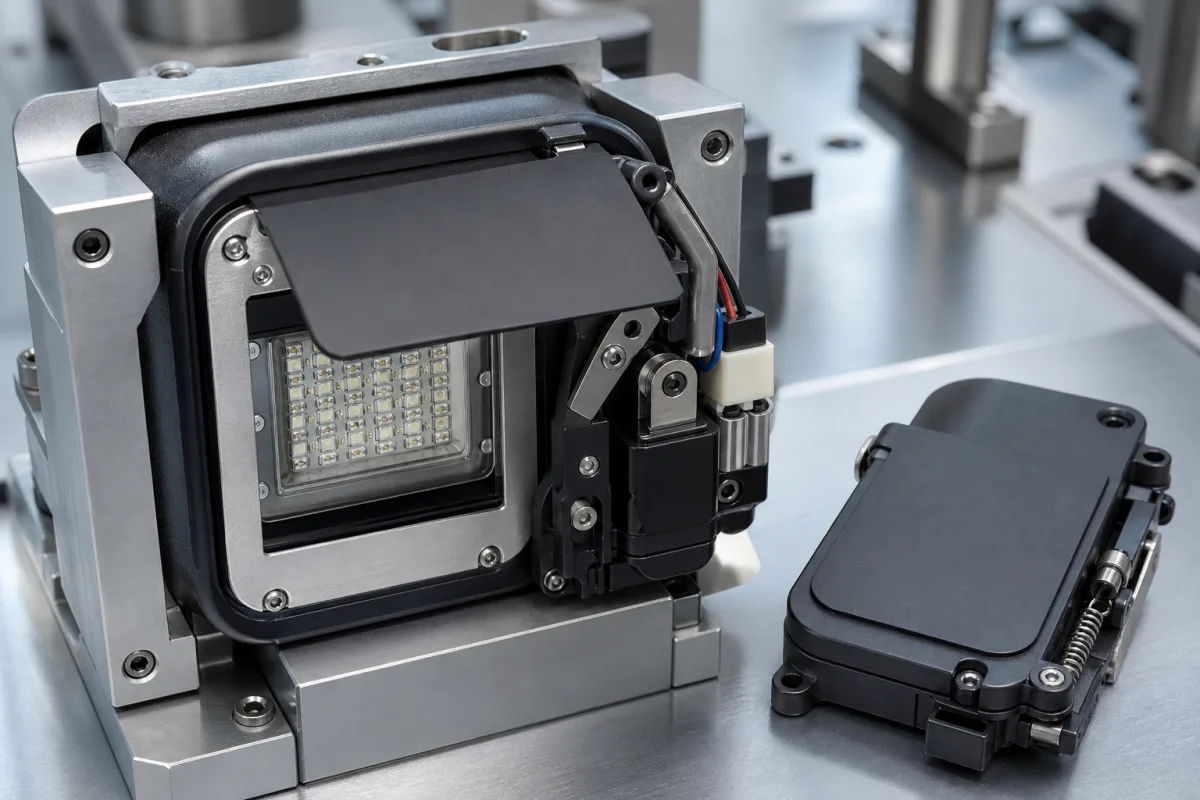
Representative product image. Confirm appearance and specifications with the manufacturer.

Product Specifications

Technical details and manufacturing context for Safety Shutter

Definition
The safety shutter is a critical safety component in portable home phototherapy devices that physically prevents accidental exposure to therapeutic light when the device is powered on but not actively treating a patient. It serves as a fail-safe mechanism that must be manually or automatically engaged/disengaged to ensure controlled light delivery only during intended treatment sessions. The shutter operates either mechanically (sliding barrier) or optically (filter wheel) to block the light path between the LED/lamp source and the treatment surface. It typically engages automatically when the device is powered on or when treatment is paused, and only retracts when the device is in active treatment mode with proper user confirmation. This component is designed for integration into phototherapy devices used in home settings, where user safety is paramount. The shutter is available in configurations using ABS plastic, polycarbonate, or aluminum alloy, with an anodized aluminum housing (Al 6061-T6) for corrosion resistance. Key parameters include an operating temperature range of -20 to 70 °C, a response time of ≤0.1 seconds, optical density ≥4 (blocking >99.99% of light), mechanical life of ≥100,000 cycles, operating voltage of 24 V DC ±10%, power consumption ≤5 W, IP rating IP54–IP65 per IEC 60529, weight 0.5–1.5 kg, aperture size 10–50 mm, leakage rate ≤0.1 mL/min at 1.0 MPa differential pressure, and operating pressure 1.0–1.6 MPa. These values are reference ranges for directory purposes and must be verified for the specific model and application with the legal manufacturer or supplier. The safety shutter is a component, not a standalone device, and its integration requires careful consideration of the phototherapy device's design and safety requirements.
Working Principle
The safety shutter operates by physically blocking or filtering the light path between the light source and the treatment surface. In mechanical designs, a sliding barrier moves into position to obstruct the beam; in optical designs, a filter wheel rotates to insert a light-absorbing or reflecting element. The shutter is typically actuated by a solenoid or motor, controlled by the device's electronics. It engages automatically when the device is powered on or when treatment is paused, and retracts only when active treatment is confirmed by the user. The response time of ≤0.1 seconds ensures rapid blocking to prevent accidental exposure. The optical density of ≥4 ensures that over 99.99% of light is blocked, providing effective protection. The mechanical life of ≥100,000 cycles ensures reliable operation over the device's lifetime. The shutter's design must maintain a leakage rate of ≤0.1 mL/min at 1.0 MPa differential pressure to ensure seal integrity, and it operates within a pressure range of 1.0–1.6 MPa. The operating temperature range of -20 to 70 °C defines the environmental limits for reliable function.
Common Materials
ABS plastic, Polycarbonate, Aluminum alloy
Technical Parameters
ParameterTypical rangeNotes & selection driver
Operating Temperature-20–70 °COutside this range, seal integrity may fail.
Response Time≤0.1 sCritical for safety interlock.
Optical Density≥4 ODBlocks >99.99% of light.
Mechanical Life≥100000 cyclesEndurance for repeated operations.
Operating Voltage24 ±10% V DCStandard actuator supply.
Power Consumption≤5 WPeak during actuation.
IP RatingIP54–IP65Protection against dust and water jets.IEC 60529
MaterialAl 6061-T6Housing; anodized for corrosion resistance.ASTM B221
Weight0.5–1.5 kgDepends on aperture size.
Aperture Size10–50 mmClear aperture for light path.
Leakage Rate≤0.1 mL/minAt 1.0 MPa differential pressure.

Ranges are indicative industry figures for RFQ preparation, not a supplier commitment. Confirm every value and standard with the legal manufacturer before ordering.

Components / BOM
  • Shutter Blade Part
    Primary light-blocking element that moves into the light path
    Material: ABS plastic with light-absorbing coating
  • Actuation Mechanism
    Motor or manual system that moves the shutter blade
    Material: Stainless steel components
  • Position Sensor
    Detects whether shutter is open or closed for safety interlock
    Material: Electronic components with plastic housing
  • Filter Wheel Optional
    Rotates an absorbing or reflecting element into the beam on optical-design shutters.

Industrial Ecosystem & Supply Chain Structure

Complementary Systems
Downstream Applications
Specialized Tooling

Application Fit & Sizing Matrix

Operational Limits
pressure: 0 to 1 bar (atmospheric)
other spec: Light wavelength range: 200-1100 nm, Response time: <100 ms
temperature: -20°C to +70°C
Media Compatibility
✓ Medical-grade plastics (e.g., polycarbonate) ✓ Optical glass ✓ Stainless steel (non-reflective coating)
Unsuitable: High-vibration industrial environments (e.g., heavy machinery)
Sizing Data Required
  • Aperture diameter (mm)
  • Light source intensity (mW/cm²)
  • Required safety standard (e.g., IEC 60601-2-50)

Reliability & Engineering Risk Analysis

Failure Mode & Root Cause
Mechanical binding or jamming
Cause: Accumulation of debris, dust, or foreign material in the shutter mechanism, leading to increased friction and eventual seizure.
Spring or actuator failure
Cause: Fatigue or corrosion of the spring or actuator components due to cyclic loading, environmental exposure, or lack of lubrication.
Maintenance Indicators
  • Unusual grinding, scraping, or squeaking noises during operation
  • Visible misalignment, hesitation, or incomplete closure of the shutter
Engineering Tips
  • Implement regular cleaning and inspection schedules to remove debris and ensure smooth operation of moving parts.
  • Apply appropriate lubricants to hinges, springs, and actuators as per manufacturer recommendations to reduce wear and prevent corrosion.

Indicative industry ranges for design and RFQ preparation. Confirm the exact figures and applicable standard with the manufacturer before specifying.

Compliance & Manufacturing Standards

Applicable Standards
ISO 13849-1: Safety of machinery - Safety-related parts of control systems ANSI B11.19: Performance Requirements for Risk Reduction and Safeguarding CE EN 60204-1: Safety of machinery - Electrical equipment of machines

Quoted from the published standard.

Manufacturing Precision
  • Shutter Blade Thickness: +/-0.05mm
  • Shutter Opening/Closing Timing: +/-10 milliseconds
Quality Inspection
  • Functional Safety Test (including response time verification)
  • Durability/Cycle Life Test (minimum 1 million operations)

Manufacturers of Safety Shutter

Manufacturer profiles associated with Safety Shutter.

Sourcing Safety Shutter from China?
Tell us your specification and target quantity — we will match it against manufacturer records and come back with the factories that fit.
Request manufacturers We manufacture this

Manufacturer listings support early research and capability understanding. They are not certification, ranking, or transaction guarantees.

Technical documentation
Request current drawings, revision history, and a signed specification sheet.
Manufacturing capability
Verify equipment lists, process limits, capacity, and representative production evidence.
Inspection readiness
Confirm test methods, calibrated equipment, sampling plans, and traceable reports.
Supplier transparency
Check the legal entity, factory address, ownership, certifications, and direct contacts.

CNFX does not score or rank suppliers. Buyers must verify all claims and documents with the legal manufacturer before ordering.

Supply Chain Compatible Machinery & Devices

Industrial Smart Camera Module

The Industrial Smart Camera Module is a compact, self-contained vision processing unit designed for integration into industrial machinery and production lines.

Explore Specs →
Surface Mount Resistor

Passive electronic component for current limiting and voltage division in circuits

Explore Specs →
Surface Mount Capacitor

A surface mount capacitor is a fundamental electronic component used for energy storage, filtering, coupling, and decoupling in electronic circuits.

Explore Specs →
Surface Mount Technology (SMT) Pick-and-Place Machine

Automated machine that precisely places electronic components onto printed circuit boards.

Explore Specs →

Frequently Asked Questions

What is the primary function of the safety shutter?

The safety shutter prevents accidental exposure to therapeutic light when the phototherapy device is powered on but not in active treatment mode. It blocks or filters the light path to ensure light is delivered only during intended treatment sessions.

What materials are used in the safety shutter?

The shutter can be made from ABS plastic, polycarbonate, or aluminum alloy. The housing is typically anodized aluminum (Al 6061-T6) for corrosion resistance. Material selection depends on the specific application and environmental requirements.

What are the key performance parameters to verify?

Key parameters include operating temperature (-20 to 70 °C), response time (≤0.1 s), optical density (≥4), mechanical life (≥100,000 cycles), operating voltage (24 V DC ±10%), power consumption (≤5 W), IP rating (IP54–IP65), weight (0.5–1.5 kg), aperture size (10–50 mm), leakage rate (≤0.1 mL/min at 1.0 MPa), and operating pressure (1.0–1.6 MPa). Always confirm these values with the manufacturer for your specific model.

How does the safety shutter engage and disengage?

The shutter engages automatically when the device is powered on or when treatment is paused. It retracts only when the device is in active treatment mode and the user confirms the start of treatment. This ensures controlled light delivery and prevents accidental exposure.

Data Basis

Editorial classification, named public sources where available, and source-reviewed manufacturer records.

Preliminary Technical Classification
This page supports structured research, RFQ preparation, and supplier evaluation. It does not replace buyer-led supplier qualification, standards review, or technical approval.
Buyer enquiry

Request manufacturing insight for Safety Shutter

Ask for use case, specification boundaries, supplier type, and RFQ preparation information for this product.

Where it goes
Straight to the CNFX editorial desk, and to the manufacturer if this product is linked to a claimed profile. Nothing is broadcast to a supplier list.
Your details stay here
We do not sell or rent enquiry data, and we do not add you to a mailing list. Used only to answer this request.
No commission, no middleman
CNFX is a directory. We take no cut of any order and never negotiate on a supplier's behalf.
What we don't claim
A listing is not an endorsement. Qualify every supplier and verify every figure yourself before ordering.

Your business information is used only to process this request.

Thank you! Your message has been sent. We'll respond within 1–3 business days.
Sorry, we couldn't send your message. Please try again, or email us at contact@cnfx.com.

Need to Manufacture Safety Shutter?

Compare manufacturer profiles with relevant product and process capability.

Previous Product
XY Positioning Stage
Last Product
Get QuotesChat