Industry-Verified Manufacturing Data (2026)

X-Ray Tube Rotor Assembly

Based on aggregated insights from multiple verified factory profiles within the CNFX directory, the standard X-Ray Tube Rotor Assembly used in the Computer, Electronic and Optical Product Manufacturing sector typically supports operational capacities ranging from standard industrial configurations to heavy-duty production requirements.

Technical Definition & Core Assembly

A canonical X-Ray Tube Rotor Assembly is characterized by the integration of Anode Target Disc and Rotor Shaft. In industrial production environments, manufacturers listed on CNFX commonly emphasize Molybdenum alloy construction to support stable, high-cycle operation across diverse manufacturing scenarios.

High-speed rotating anode assembly for medical X-ray generation.

Product Specifications

Technical details and manufacturing context for X-Ray Tube Rotor Assembly

Definition
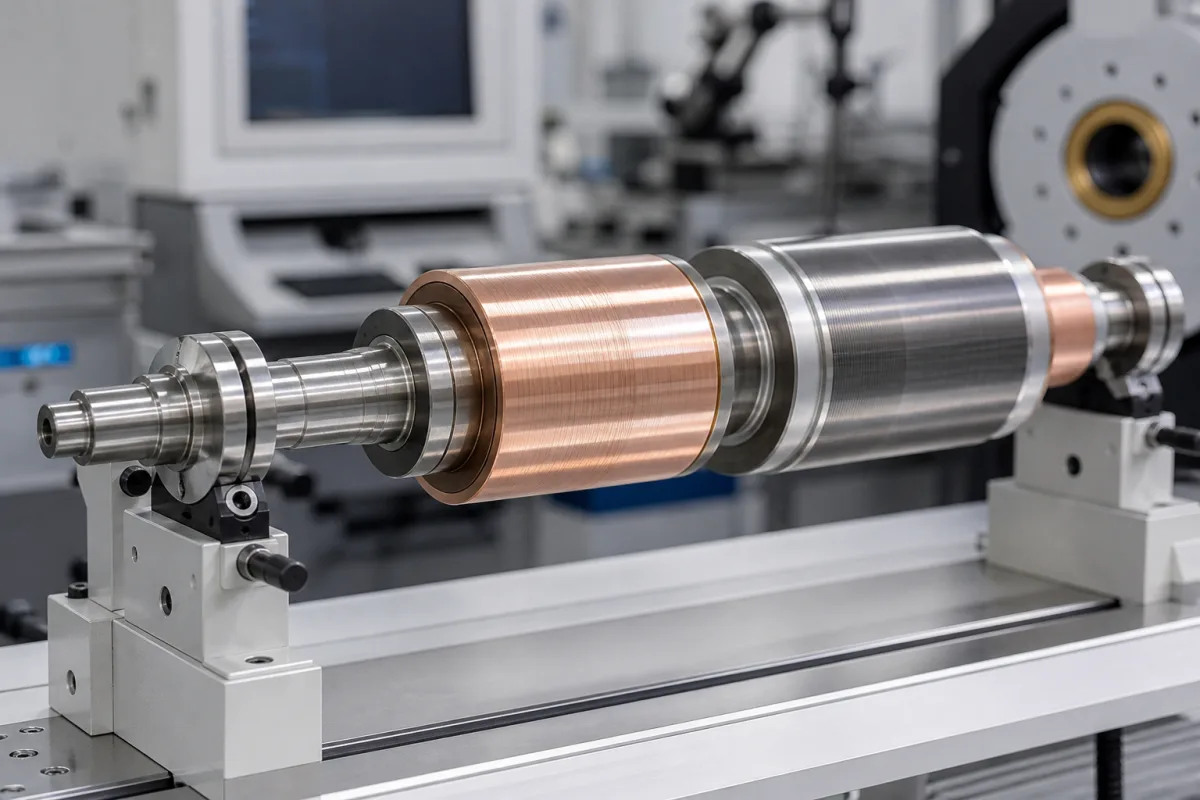
The X-ray tube rotor assembly is a critical rotating component within medical X-ray tubes used in diagnostic imaging equipment. It consists of a precisely balanced anode target mounted on a high-speed rotor shaft, which rotates to distribute heat during X-ray generation. This component enables higher power output and longer tube life by preventing localized overheating of the anode material. Manufacturers supply these assemblies to medical equipment OEMs for integration into X-ray tubes used in radiography, fluoroscopy, and CT scanning systems.
Working Principle
An electric motor drives the rotor assembly at high speeds (typically 3,000-10,000 RPM), causing the anode target to rotate. When electrons strike the rotating anode surface, X-rays are produced while centrifugal force helps dissipate heat across the entire target area rather than concentrating it at a single spot.
Common Materials
Molybdenum alloy, Tungsten-rhenium alloy, Copper, Stainless steel
Technical Parameters
  • Diameter of the rotating anode target (mm) Per Request
  • Maximum operational rotational speed (RPM) Per Request
Components / BOM
  • Anode Target Disc
    X-ray generation surface that electrons strike
    Material: Tungsten-rhenium alloy
  • Rotor Shaft
    Central rotating element connecting anode to bearings
    Material: Molybdenum alloy
  • Bearings
    Support and enable smooth high-speed rotation
    Material: Stainless steel with ceramic balls
  • Stator Windings
    Stationary electromagnetic coils that drive rotation
    Material: Copper wire with insulation
  • Balance Weights Optional
    Precision weights for dynamic balancing
    Material: Tungsten alloy
Engineering Reasoning
3000-10000 RPM at 40-150 kV acceleration voltage
Anode surface temperature exceeding 2500°C (melting point of tungsten-rhenium alloy) or bearing temperature exceeding 200°C (lubricant breakdown threshold)
Design Rationale: Thermal fatigue from cyclic heating (0.1-10 kW electron beam power) and centrifugal stress (σ_max = ρω²r²/2 where ρ=19300 kg/m³, ω=1047 rad/s at 10000 RPM, r=0.1 m) exceeding tungsten's yield strength (550 MPa at 2000°C)
Risk Mitigation (FMEA)
Trigger Bearing lubricant degradation at 200°C (viscosity drop below 10 cSt)
Mode: Rotor imbalance exceeding ISO 1940 G2.5 balance grade (2.5 mm/s vibration velocity)
Strategy: Molybdenum disulfide solid film lubrication with 50 μm coating thickness and active cooling maintaining bearing temperature below 150°C
Trigger Thermal gradient exceeding 1000°C/cm across anode focal track
Mode: Anode surface cracking due to thermal stress exceeding tungsten's fracture toughness (15 MPa·m¹/² at 2000°C)
Strategy: Graphite substrate with 5:1 thermal expansion coefficient mismatch compensation and 0.5 mm tungsten-rhenium alloy focal track thickness

Industry Taxonomies & Aliases

Commonly used trade names and technical identifiers for X-Ray Tube Rotor Assembly.

Industrial Ecosystem & Supply Chain DNA

Complementary Systems
Downstream Applications
Specialized Tooling

Application Fit & Sizing Matrix

Operational Limits
pressure: Atmospheric to 1.5 bar absolute
other spec: Maximum rotational speed: 10,000 RPM, Vacuum level: <10^-5 mbar, Vibration limit: <2G at 50-2000 Hz
temperature: 20°C to 80°C (operating), -10°C to 100°C (storage)
Media Compatibility
✓ Medical-grade vacuum environments ✓ High-purity copper heat sinks ✓ Molybdenum/graphite anode materials
Unsuitable: High humidity or corrosive gas environments (causes oxidation/arcing)
Sizing Data Required
  • Required X-ray power output (kW)
  • Anode target diameter and angle
  • Cooling system capacity (heat dissipation rate)

Reliability & Engineering Risk Analysis

Failure Mode & Root Cause
Bearing degradation
Cause: Lubricant breakdown due to high-temperature operation, leading to increased friction, wear, and eventual bearing seizure or excessive vibration.
Rotor imbalance or wobble
Cause: Uneven thermal expansion, material fatigue, or foreign particle ingress causing imbalance, leading to excessive vibration, noise, and potential catastrophic failure.
Maintenance Indicators
  • Unusual high-pitched whining or grinding noise during rotation, indicating bearing wear or imbalance.
  • Excessive vibration felt through the housing or visible wobble of the assembly, signaling imminent mechanical failure.
Engineering Tips
  • Implement a strict preventive maintenance schedule for lubrication replacement using high-temperature, vacuum-compatible lubricants specified by the manufacturer.
  • Ensure proper cooling system operation and monitor operating temperatures to prevent thermal stress and lubricant degradation.

Compliance & Manufacturing Standards

Reference Standards
ISO 9001:2015 Quality Management Systems IEC 60601-2-44 Medical electrical equipment - Part 2-44: Particular requirements for the basic safety and essential performance of X-ray equipment for computed tomography ASTM E1441-19 Standard Guide for Computed Tomography (CT) Imaging
Manufacturing Precision
  • Rotor shaft concentricity: ±0.005 mm
  • Bearing clearance: 0.01-0.03 mm
Quality Inspection
  • High-speed rotational balance test (to 10,000 RPM)
  • X-ray emission stability and uniformity test

Factories Producing X-Ray Tube Rotor Assembly

Verified manufacturers with capability to produce this product in China

✓ 98% Supplier Capability Match Found

P Project Engineer from Singapore Jan 25, 2026
★★★★★
"Found 45+ suppliers for X-Ray Tube Rotor Assembly on CNFX, but this spec remains the most cost-effective."
Technical Specifications Verified
S Sourcing Manager from Germany Jan 22, 2026
★★★★★
"The technical documentation for this X-Ray Tube Rotor Assembly is very thorough, especially regarding Maximum Rotation Speed (RPM)."
Technical Specifications Verified
P Procurement Specialist from Brazil Jan 19, 2026
★★★★★
"Reliable performance in harsh Computer, Electronic and Optical Product Manufacturing environments. No issues with the X-Ray Tube Rotor Assembly so far."
Technical Specifications Verified
Verification Protocol

“Feedback is collected from verified sourcing managers during RFQ (Request for Quote) and factory evaluation processes on CNFX. These reports represent historical performance data and technical audit summaries from our B2B manufacturing network.”

15 sourcing managers are analyzing this specification now. Last inquiry for X-Ray Tube Rotor Assembly from Brazil (15m ago).

Supply Chain Commonly Integrated Components

Stereo Camera Array

A multi-camera system that captures synchronized images from multiple perspectives to enable 3D depth perception and pattern recognition.

Explore Specs →
Structured Light Projector

Optical device that projects precisely controlled light patterns onto surfaces for 3D scanning applications

Explore Specs →
Main Processor Board

The central computing and control unit of a 5-axis CNC controller that processes motion commands, executes algorithms, and coordinates all system operations.

Explore Specs →
Alignment Sensor Array

A multi-sensor component that detects and measures positional alignment in industrial systems.

Explore Specs →

Frequently Asked Questions

What materials are used in this X-ray tube rotor assembly?

This assembly uses molybdenum alloy and tungsten-rhenium alloy for the anode target, copper for heat dissipation, and stainless steel for structural components to ensure durability and optimal thermal management.

What is the maximum rotation speed of this rotor assembly?

The maximum rotation speed is specified in RPM (revolutions per minute), designed to meet the high-speed requirements of modern medical X-ray imaging systems while maintaining stability and precision.

How does the bearing type affect X-ray tube performance?

The bearing type directly impacts rotation stability, noise levels, and longevity. Precision bearings in this assembly ensure smooth high-speed operation, reducing vibration and extending the tube's service life.

Can I contact factories directly on CNFX?

CNFX is an open directory, not a transaction platform. Each factory profile provides direct contact information and production details to help you initiate direct inquiries with Chinese suppliers.

Get Quote for X-Ray Tube Rotor Assembly

Request technical pricing, lead times, or customized specifications for X-Ray Tube Rotor Assembly directly from verified manufacturing units.

Your business information is encrypted and only shared with verified X-Ray Tube Rotor Assembly suppliers.

Thank you! Your message has been sent. We'll respond within 1–3 business days.

Need to Manufacture X-Ray Tube Rotor Assembly?

Connect with verified factories specializing in this product category

Add Your Factory Contact Us
Previous Product
X-ray Tube
Next Product
XY Gantry System