Editorial Technical Reference

Circuit Breaker Trip Unit

This page explains how Circuit Breaker Trip Unit is classified within Electrical Equipment Manufacturing. Technical values and manufacturer relationships are research references; confirm the current specification and supplier evidence for each order.

Technical Definition & Core Assembly

A circuit breaker trip unit is a modular electronic component that monitors electrical current flow and triggers circuit breaker disconnection during overload or short-circuit conditions.
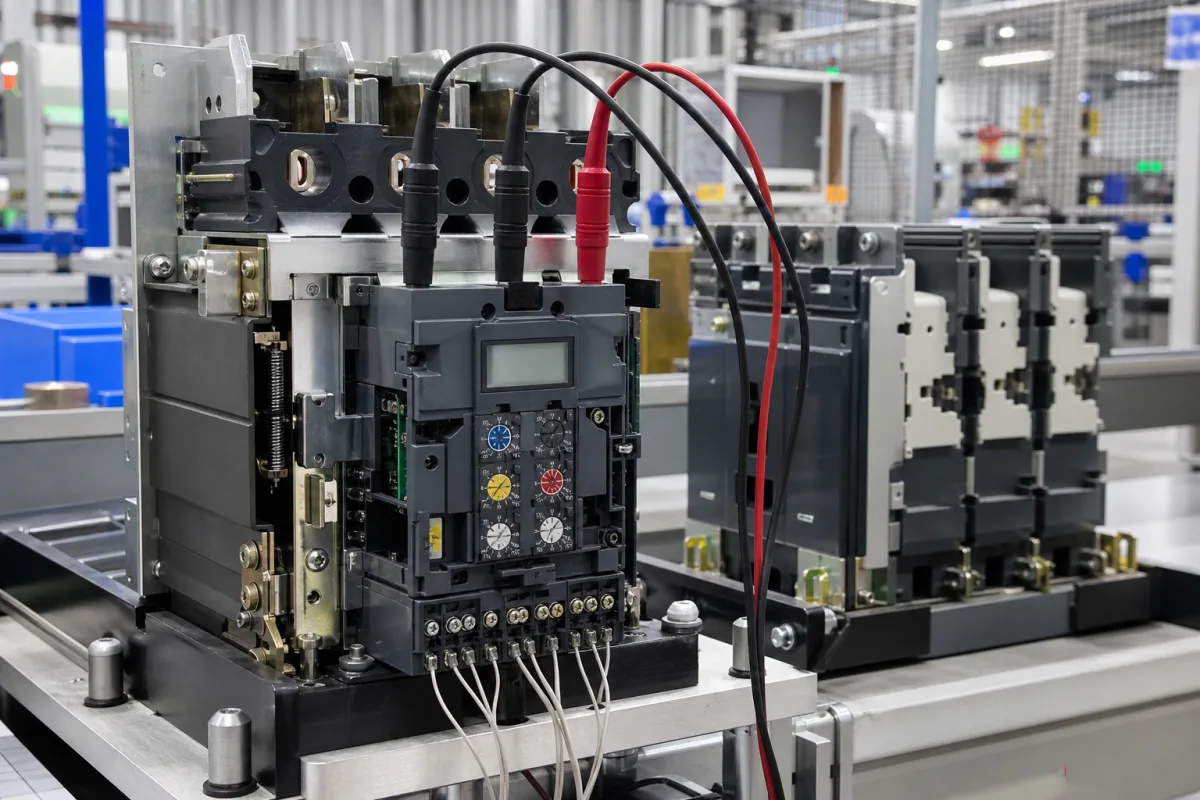
Representative product image. Confirm appearance and specifications with the manufacturer.

Product Specifications

Technical details and manufacturing context for Circuit Breaker Trip Unit

Definition
A circuit breaker trip unit is a modular electronic component that monitors electrical current flow and triggers circuit breaker disconnection during overload or short-circuit conditions. It integrates sensing, processing, and actuation functions within protective devices. This component is essential for electrical safety in distribution panels and industrial equipment. Manufacturers produce standardized units compatible with various breaker models.

The trip unit operates by using current sensors to detect abnormal flow, processing circuits to analyze signals, and solenoid actuators to trigger mechanical disconnection when thresholds are exceeded. It is designed to meet various electrical parameters, including rated current from 16 to 630 A, short-circuit rating from 25 to 100 kA, and operating voltage from 24 to 690 V, all per IEC 60947-2. Trip class ranges from 10A to 30 per IEC 60947-4-1. Trip accuracy is ±5% at rated conditions. Operating temperature range is -40 to 85 °C, and humidity range is 5 to 95% RH non-condensing. Degree of protection is IP40 to IP65 per IEC 60529. Insulation voltage is 1000 V, and rated impulse withstand voltage is 8 kV. Power consumption is 3 to 10 W, and weight ranges from 0.5 to 2.5 kg depending on frame size and accessories.

Materials typically include PCB assembly, copper windings, thermoset plastic housing, and silicon semiconductors. These components are used in electrical distribution and industrial equipment. When selecting a trip unit, verify model-specific values and standards with the legal manufacturer or supplier, as the listed ranges are reference values. The trip unit is not a standalone product; it must be integrated into a circuit breaker. It does not provide isolation or overvoltage protection beyond its specified ratings. Maintenance signals include visual indicators or remote alarms for trip events, and failure boundaries include loss of sensing accuracy or actuation failure. Always consult the manufacturer's documentation for installation, testing, and maintenance procedures.
Working Principle
Current sensors detect abnormal flow, processing circuits analyze signals, and solenoid actuators trigger mechanical disconnection when thresholds are exceeded. The trip unit continuously monitors current and compares it to preset thresholds. In case of overload or short circuit, the processing circuit sends a signal to the actuator, which releases the breaker mechanism. The trip unit also provides time-current characteristics to coordinate with downstream devices. It may include communication interfaces for remote monitoring, but these are not specified in the source facts. The unit operates within specified temperature and humidity ranges, and its accuracy is ±5% under rated conditions.
Common Materials
PCB assembly, copper windings, thermoset plastic housing, silicon semiconductors
Technical Parameters
ParameterTypical rangeNotes & selection driver
Rated CurrentRequired16–630 AMaximum continuous currentIEC 60947-2
Short-Circuit RatingRequired25–100 kAMaximum interrupting capacityIEC 60947-2
Trip ClassRequired10A–30Time-current characteristicIEC 60947-4-1
Operating Voltage24–690 VControl circuit voltageIEC 60947-2
Trip Accuracy±5 %Deviation from set trip current at rated conditions.IEC 60947-2
Operating Temperature-40–85 °CAmbient temperature range for reliable operation.IEC 60947-2
Humidity5–95 % RHNon-condensing relative humidity range.IEC 60068-2-78
Degree of ProtectionIP40–IP65Enclosure protection against dust and water.IEC 60529
Insulation Voltage1000 VMaximum voltage for insulation design.IEC 60947-2
Rated Impulse Withstand Voltage8 kVPeak impulse voltage the unit can withstand.IEC 60947-2
Power Consumption3–10 WPower drawn by the trip unit electronics.
Weight0.5–2.5 kgDepends on frame size and accessories.

Ranges are indicative industry figures for RFQ preparation, not a supplier commitment. Confirm every value and standard with the legal manufacturer before ordering.

Components / BOM

Industry Taxonomies & Aliases

Commonly used trade names and technical identifiers for Circuit Breaker Trip Unit.

Industrial Ecosystem & Supply Chain Structure

Complementary Systems
Downstream Applications
Specialized Tooling

Application Fit & Sizing Matrix

Operational Limits
voltage: Up to 690V AC, 1000V DC
frequency: 50/60 Hz ±10%
temperature: -20°C to +70°C
current rating: 100A to 6300A
operating humidity: 5% to 95% non-condensing
Media Compatibility
✓ Indoor electrical panels ✓ Clean industrial environments ✓ HVAC control rooms
Unsuitable: Corrosive chemical atmospheres (e.g., chlorine gas, salt spray)
Sizing Data Required
  • Rated current (Amps)
  • Short-circuit breaking capacity (kA)
  • Protection settings (overload, short-circuit, ground fault)

Reliability & Engineering Risk Analysis

Failure Mode & Root Cause
Electronic Component Degradation
Cause: Thermal cycling, voltage spikes, or prolonged exposure to high temperatures leading to capacitor failure, semiconductor breakdown, or memory corruption in microprocessor-based units.
Mechanical Mechanism Failure
Cause: Wear and tear from repeated operations, contamination by dust or moisture, or corrosion of moving parts such as solenoids, latches, or springs, resulting in improper tripping or failure to reset.
Maintenance Indicators
  • Unusual buzzing, humming, or clicking sounds from the trip unit during normal operation, indicating internal arcing, loose components, or mechanical stress.
  • Visible signs of overheating such as discoloration, melting, or charring on the trip unit housing or adjacent wiring, suggesting excessive current or poor connections.
Engineering Tips
  • Implement regular infrared thermography inspections to detect abnormal heat patterns in the trip unit and connections, allowing proactive intervention before thermal damage occurs.
  • Ensure proper environmental controls, such as maintaining clean, dry, and cool conditions in the enclosure, and use surge protection devices to shield against voltage transients that can degrade electronic components.

Indicative industry ranges for design and RFQ preparation. Confirm the exact figures and applicable standard with the manufacturer before specifying.

Compliance & Manufacturing Standards

Applicable Standards
IEC 60947-2: Low-voltage switchgear and controlgear - Circuit-breakers ANSI C37.13: Low-Voltage AC Power Circuit Breakers Used in Enclosures EN 60898-1: Circuit-breakers for overcurrent protection for household and similar installations

Quoted from the published standard.

Manufacturing Precision
  • Contact resistance: +/- 10% of rated value
  • Trip time accuracy: +/- 5% of specified time-current curve
Quality Inspection
  • Dielectric withstand test (high-potential test)
  • Time-current characteristic verification test

Manufacturers of Circuit Breaker Trip Unit

Manufacturer profiles associated with Circuit Breaker Trip Unit.

Sourcing Circuit Breaker Trip Unit from China?
Tell us your specification and target quantity — we will match it against manufacturer records and come back with the factories that fit.
Request manufacturers We manufacture this

Manufacturer listings support early research and capability understanding. They are not certification, ranking, or transaction guarantees.

Technical documentation
Request current drawings, revision history, and a signed specification sheet.
Manufacturing capability
Verify equipment lists, process limits, capacity, and representative production evidence.
Inspection readiness
Confirm test methods, calibrated equipment, sampling plans, and traceable reports.
Supplier transparency
Check the legal entity, factory address, ownership, certifications, and direct contacts.

CNFX does not score or rank suppliers. Buyers must verify all claims and documents with the legal manufacturer before ordering.

Supply Chain Commonly Integrated Components

Flange Assembly

A structural component that provides mechanical connection and sealing interface in high-voltage insulating bushings.

Explore Specs →
Slurry Supply System

A system that precisely meters and delivers electrode slurry to the coating head in lithium-ion battery electrode production.

Explore Specs →
Voltage Control Unit

A precision electronic component that regulates and adjusts the output voltage in an Industrial Dielectric Strength Tester.

Explore Specs →
Main Circuit Breaker

Primary protective device in a smart home electrical panel that controls and safeguards the entire electrical circuit.

Explore Specs →

Frequently Asked Questions

What is the function of a circuit breaker trip unit?

A circuit breaker trip unit monitors electrical current and triggers disconnection during overload or short-circuit conditions. It integrates sensing, processing, and actuation functions to protect electrical circuits.

What are the typical parameters of a trip unit?

Typical parameters include rated current (16-630 A), short-circuit rating (25-100 kA), operating voltage (24-690 V), trip accuracy (±5%), and operating temperature (-40 to 85 °C). These are reference ranges; verify with the manufacturer for specific models.

What standards apply to trip units?

Relevant standards include IEC 60947-2 for low-voltage switchgear and controlgear, IEC 60947-4-1 for contactors and motor-starters, IEC 60529 for degrees of protection, and IEC 60068-2-78 for damp heat. Compliance must be confirmed with the manufacturer.

How do I select the right trip unit for my application?

Consider the rated current, short-circuit rating, operating voltage, and environmental conditions of your installation. Consult the manufacturer's documentation and verify that the trip unit is compatible with your circuit breaker model.

Data Basis

Editorial classification, named public sources where available, and source-reviewed manufacturer records.

Preliminary Technical Classification
This page supports structured research, RFQ preparation, and supplier evaluation. It does not replace buyer-led supplier qualification, standards review, or technical approval.
Buyer enquiry

Request manufacturing insight for Circuit Breaker Trip Unit

Ask for use case, specification boundaries, supplier type, and RFQ preparation information for this product.

Where it goes
Straight to the CNFX editorial desk, and to the manufacturer if this product is linked to a claimed profile. Nothing is broadcast to a supplier list.
Your details stay here
We do not sell or rent enquiry data, and we do not add you to a mailing list. Used only to answer this request.
No commission, no middleman
CNFX is a directory. We take no cut of any order and never negotiate on a supplier's behalf.
What we don't claim
A listing is not an endorsement. Qualify every supplier and verify every figure yourself before ordering.

Your business information is used only to process this request.

Thank you! Your message has been sent. We'll respond within 1–3 business days.
Sorry, we couldn't send your message. Please try again, or email us at contact@cnfx.com.

Need to Manufacture Circuit Breaker Trip Unit?

Compare manufacturer profiles with relevant product and process capability.

Previous Product
Wire Tensioning System
Last Product
Get QuotesChat