Cooling Fan
View system integration details
This page explains how Motor Hub is classified within Electrical Equipment Manufacturing. Technical values and manufacturer relationships are research references; confirm the current specification and supplier evidence for each order.
The central rotating component of a cooling fan that connects the motor shaft to the fan blades.
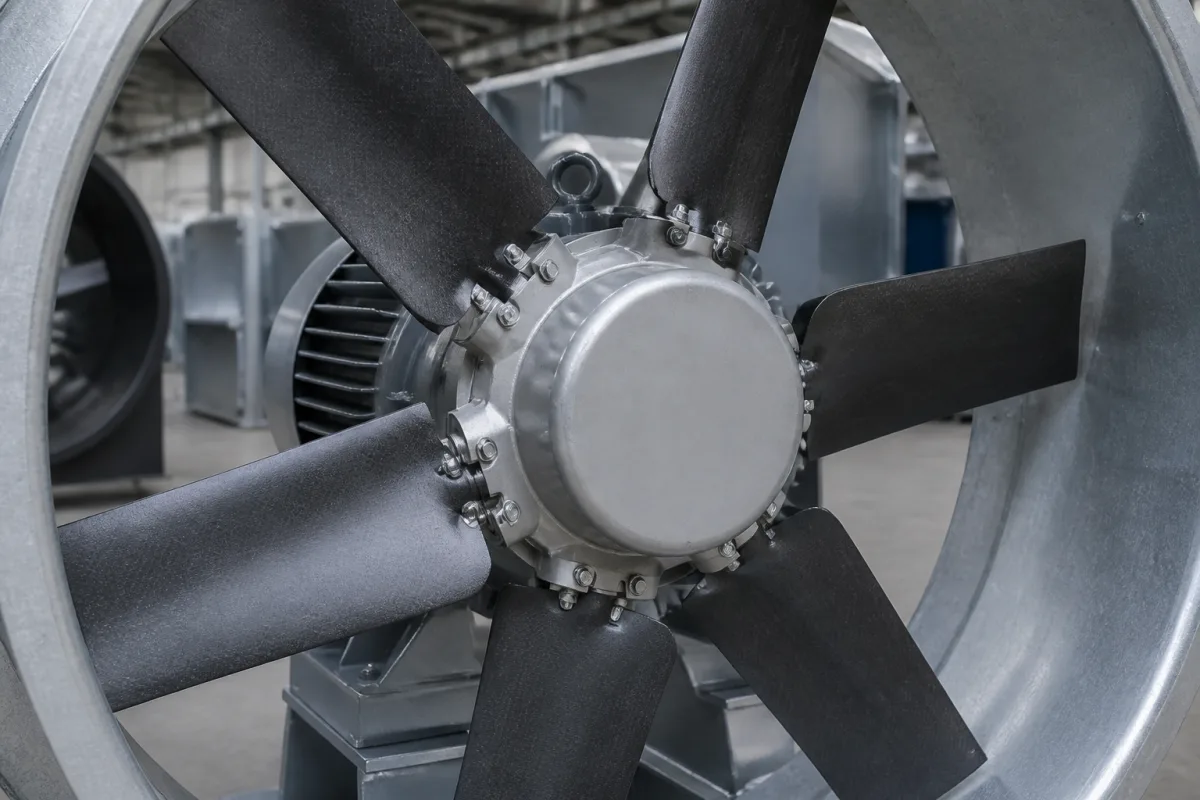
Technical details and manufacturing context for Motor Hub
| Parameter | Typical range | Notes & selection driver |
|---|---|---|
| Shaft Diameter | 8–24 mm | Must match motor shaft toleranceISO 286 |
| Hub Diameter | 40–120 mm | Determines fan blade mounting size |
| Overall Length | 30–80 mm | Affects fan assembly clearance |
| Radial Runout | ≤0.05 mm | Excessive runout causes vibrationISO 1101 |
| Surface Roughness | Ra 0.8–1.6 μm | Critical for sealing surfacesISO 1302 |
| Material Hardness | 80–120 HB | Too soft leads to wearISO 6506 |
| Max Operating Temperature | 80–150 °C | Exceeding causes material degradation |
| Min Operating Temperature | -40–-20 °C | Below may cause brittleness |
| Max Speed | 3000–6000 rpm | Exceeding causes imbalance |
| Static Load Capacity | 500–2000 N | Insufficient leads to deformationISO 76 |
| Weight | 0.2–1.5 kg | Affects fan inertia and motor load |
| Material Grade | 6061–6063 Al alloy | Higher strength for larger hubsGB/T 3190 |
Ranges are indicative industry figures for RFQ preparation, not a supplier commitment. Confirm every value and standard with the legal manufacturer before ordering.
| pressure: | 0 to 2 bar (gauge) |
| flow rate: | Up to 50,000 CFM |
| temperature: | -20°C to 120°C |
| slurry concentration: | Not applicable (dry operation only) |
Indicative industry ranges for design and RFQ preparation. Confirm the exact figures and applicable standard with the manufacturer before specifying.
Quoted from the published standard.
A practical evidence checklist for RFQ preparation and supplier evaluation.
Compare the published product scope and source details, then include your specifications and quantity in an enquiry.
Manufacturer profiles associated with Motor Hub.
Explore company information and manufacturing capabilities, then discuss the scope of your project with a relevant supplier.
Ask for use case, specification boundaries, supplier type, and RFQ preparation information for this product.
Motor hubs are typically made from aluminum alloy, steel, or engineering plastic. The choice depends on factors like strength, weight, and cost. Aluminum alloys (e.g., 6061–6063) are common for their balance of strength and weight, while steel offers higher strength, and plastics may be used for lighter-duty applications.
Selection involves matching the hub's shaft diameter to the motor shaft tolerance (per ISO 286), ensuring the hub diameter fits the fan blade mounting, and considering operating conditions like temperature, speed, and load. Always verify the hub's parameters against your specific motor and blade specifications.
Radial runout is a measure of how much the hub's rotation deviates from a true circle. Excessive runout can cause vibration, noise, and premature wear. The reference value is ≤0.05 mm per ISO 1101, but the acceptable limit depends on the application's precision requirements.
The standards listed (e.g., ISO 286, ISO 1101) are references for dimensional and geometric tolerances. They are not mandatory unless specified by the application or contract. Always confirm with the manufacturer which standards apply to your specific hub model.
This component is essential for the following industrial systems and equipment:
Editorial classification, named public sources where available, and source-reviewed manufacturer records.
Compare manufacturer profiles with relevant product and process capability.